
 Aforika
 Asia
Asia Yuropa
 Amerika Borwa
 Australia le Oceania
 Antarctica
 Lewatle la Pacific
 Lewatle la Atlantic
 Lewatle la India
 Lewatle la Arctic
 Lewatle la Mediterranean
 Lewatle le Lehibidu
 Lewatle la Caribbean
 Lewatle la Coral
 Lewatle la China Borwa
 Lewatle la Philippines
 Lewatle la Andaman
 Lewatle la Bokone
 Lewatle la Timor le la Arafura
 Kou ya Bengal
 Gulf ya California
Natterjack toad
 Botlhole mo letlalong la yoneE ja: DikhukhwaneE botlhole go e ama kgotsa go e ja, ga e tsenye botlhole
The natterjack toad is a toad that lives on sandy ground and heathland in Europe. It is easy to tell apart from other toads by the yellow line down its back, and it is known for its very loud mating call. In Ireland, it is the only native toad.1


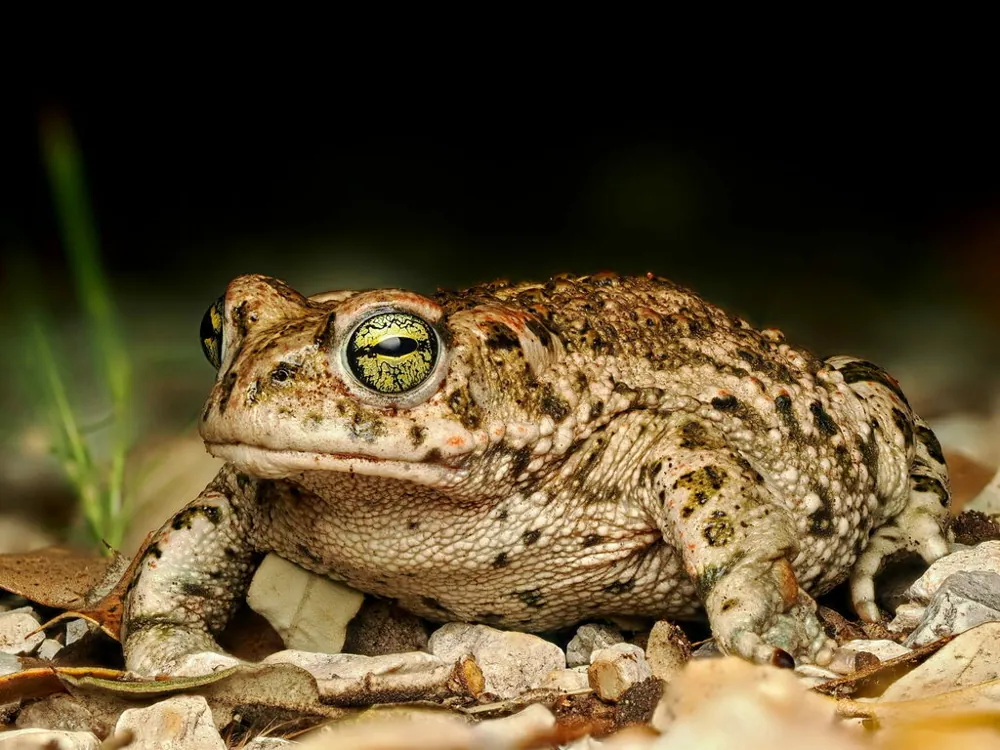
 Tsela ya go e lemoga
- A yellow line runs down the middle of the back.1
- Parallel paratoid glands (the raised glands behind the eyes) are a key feature.1
- Adults are 60 to 70 mm long.1
- Short legs give it a distinctive walk, unlike the hopping of many other toads.1
- Males have a single vocal sac under the chin that amplifies a very loud, distinctive call.1
Gantsi e tlhakanngwa le: It is often confused with common toads. Natterjacks are told apart by the yellow line down the back and the parallel paratoid glands.1
Maatla a botlhole
Letlalo la yone le botlhole. Go kotsi go e ama, go e latswa kgotsa go e ja.
E kotsi go le kae go batho?
Kotsi go batho: Kotsi e nnyeJaaka go tlhabiwa ke notshe kgotsa go le kwa tlase. Ga e na kotsi go batho. Fa mongwe a e amile kgotsa a e jele
- Fa mongwe a amile e nngwe: tlhatswa diatla sentle mme o se ka wa ama matlho kgotsa molomo. Fa ngwana kgotsa phologolo ya gae e latswitse kgotsa e jele e nngwe: leletsa senthara ya botlhole kgotsa nomoro ya tshoganyetso.
Ka gale leletsa nomoro ya gago ya tshoganyetso pele (112, 000, 911). Se ke kaelo e e akaretsang ya thuso ya ntlha, ga se kgakololo ya bongaka. Motheo wa thuso ya ntlha
 Nna o babalesegile
- O se ka wa ama, wa tshwara kgotsa wa tshwenya phologolo ya naga, le fa e le e nnye, le fa e lebega e robetse kgotsa e sule.
- E fe sebaka. Fa o kopana le yone, ritibala, boela morago ka bonya mme o e tlogele e tsamaye ka tsela ya yone.
- Fa o e amile kgotsa o e jele: o se ka wa gotlha matlho kgotsa molomo wa gago, tlhatswa diatla mme o batle thuso ya bongaka.
Ga e go batle. Botlhole jwa yone bo teng fela gore sepe se se ka se e je. Go le gontsi ka go nna o babalesegile
Kae mo lefatsheng?
E kgolo go le kae?
E telele go le kae?
 boleele jo bo lekanang le diboloko tsa go aga tsa ditshamekisi di le 2 mo moleng
 e ka taboga dimetara di le 100 ka metsotswana e le 180 (motho yo o bonako go gaisa o tlhoka 9,6)
Natterjack toad e kgolo go le kae fa e bapisiwa le WENA?
Ke dipalo fela mo sefetleng sa gago (browser). Ga go sepe se se bolokwang kgotsa se se romelwang gope.
E bonako go le kae?


Dintlha
Their loud mating calls matter because the toads are often present in low numbers, helping the sexes find each other.1
Natterjacks can live for up to 15 years.1
Natterjacks can only spawn in pools with a very slightly sloping bottom and sparse vegetation.1
They spread their breeding over a long summer period, so some young survive if temporary pools dry out.1
Some females spawn twice in one year.1
Ya baitseanape ba botlhole
- Leina la saense
- Epidalea calamita
- Setlhopha
- Digwagwa tsa botlhole, digwagwa tse dingwe le dinewt
- Lelapa
- Bufonidae2
- Lekoko
- Anura
- Dikontinente
- Yuropa
- Masea
- It spawns from the end of April to July, laying strings of eggs in shallow, warm pools.1
- Dingwaga tsa botshelo
- e ka nna dingwaga di le 151
- Seemo sa yone kwa nageng
- Endangered in Ireland1
- Kotsi go batho
- 1 / 5: Kotsi e nnye3
Kwa dintlha di tswang teng
- Natterjack toad (Wikipedia (CC BY-SA 4.0))
- Epidalea calamita (iNaturalist): maina le thulaganyo ya mefuta.
- Venom Wiki: seelo sa kotsi, bogolo jo bo tlwaelegileng le kakanyo ya lebelo ke tsa rona. Bona kafa re di balang ka teng: Kafa re lekanyang kotsi ka teng.
Ntlha nngwe le nngwe mo tsebeng e e na le nomoro e e supang motswedi wa yone. Fa re dirile phoso, maitshwarelo, re barati ba diphologolo, e seng kgatiso ya saense. Re bolelele kwa [email protected] mme re tla e baakanya.
 Phepheng e tshwerwe ke tlala! Venom Wiki ke porojeke ya motho a le mongwe: ke mahala, ga e na dipapatso le ditraka. Mpho e nnye e thusa go e tshegetsa mo inthaneteng.Fepa phepheng
Tse dingwe tsa setlhopha se se tshwanang: Digwagwa tsa botlhole, digwagwa tse dingwe le dinewt
 Fire salamanderDigwagwa tsa botlhole, digwagwa tse dingwe le dinewtE utlwisa botlhoko felaO se ka wa ama
 Common toadDigwagwa tsa botlhole, digwagwa tse dingwe le dinewtE utlwisa botlhoko felaO se ka wa ama
 European fire-bellied toadDigwagwa tsa botlhole, digwagwa tse dingwe le dinewtGa e na kotsi
 Iberian ribbed newtDigwagwa tsa botlhole, digwagwa tse dingwe le dinewtGa e na kotsi
 Alpine salamanderDigwagwa tsa botlhole, digwagwa tse dingwe le dinewtGa e na kotsi
 European green toadDigwagwa tsa botlhole, digwagwa tse dingwe le dinewtGa e na kotsi
E tshela gape kwa: Yuropa
 Common European adderDivaepara le diboloboloE tlhoka ngaka
 Spanish flyDiphologolo tse dingwe tse di botlhole go di ama kgotsa go di jaE tlhoka ngakaO se ka wa ama
 Common waspDinotshe, diwasepe le dihoneteE utlwisa botlhoko fela
 European hornetDinotshe, diwasepe le dihoneteE utlwisa botlhoko fela
 Western honey beeDinotshe, diwasepe le dihoneteE utlwisa botlhoko fela
 Blunt-nosed viperDivaepara le diboloboloE ka bolaya