
 Afrig
Afrig Asi
Asi Tugal
Tugal Amerig gu Bëj-saalum
 Ostarali ak Oseyani
 Antarktig
 Mbàmbulaanu Pasifik
 Mbàmbulaanu Atlantig
 Mbàmbulaanu End
 Mbàmbulaanu Arktik
 Géeju Mediteraane
 Géej gu Xonq
 Géeju Karayib
 Géeju Koraay
 Géeju Siin gu Bëj-saalum
 Géeju Filipin
 Géeju Andaman
 Géeju Bëj-gànnaar
 Géeju Timor ak Arafura
 Golfu Bengal
 Golfu Kaliforni
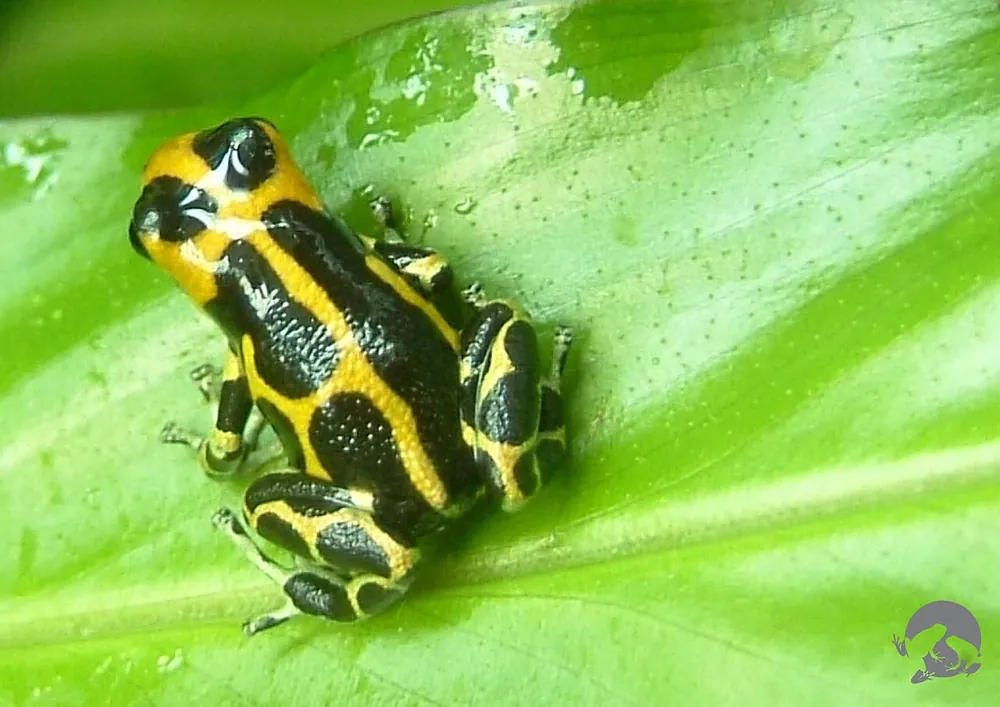
Mimic poison frog
 Daŋar ci deramDafay lekk: GunóorAm daŋar ci yaram, du màtt walla jam
The mimic poison frog is a small, brightly coloured frog from the rainforests of north-central eastern Peru. It is one of the best known dart frogs, and it is special because different populations copy the colours of other poison frogs. Scientists have studied it closely for its unusual family life.1



 Ni ngay ko xàmmee
- Its colour depends on its population. The striped morph has stripes, the spotted morph is mainly blue-green (sometimes yellow), the banded morph has bands, and the varadero morph is a separate form.1
- Each colour morph copies a different, closely related poison frog that lives in the same area.1
- It is active twice a day, once early in the day and again later on.1
Ñu ngi koy faral di jaxasoo ak: The striped morph closely resembles the striped Ranitomeya variabilis in colour. The two species differ in family life: this frog provides biparental care and is monogamous, while R. variabilis provides only paternal care and is polygamous.1
Kàttanu daŋar
Deram am na daŋar. Musiba la ci laal, mar walla lekk.
Lan la daŋar bi ci yaramam di def?
Its skin contains pumiliotoxin B, a potent toxin. Because the frog is small, it can only secrete a limited amount of poison. Frogs kept in captivity do not make the toxin, so it probably comes from toxic insects and other invertebrates eaten in the wild.1
Ni mu lore nit ñi?
Musiba ci nit: WoyofNi jamu yamb walla lu ko yées. Lu jege, amul lor ci nit.Its toxicity is mild compared with other poison dart frogs. Its small size limits how much poison it can secrete.1
 Su kenn laalee ko walla mu lekk ko
- Su kenn laalee benn: raxas loxo yi bu baax te bul laal bët yi walla gémmiñ gi. Su ab xale walla ab mala bu kër maree benn walla mu lekk benn: woo sa centre antipoison walla sa nimerob urgence.
Saa su nekk, woo jëkk sa nimerob urgence (112, 000, 911). Lii ay ndigal yu yaatu ci ndimbal yu jëkk la, du ndigalu doktoor. Li war a xam ci ndimbal yu jëkk
 Sàmmal sa bopp
- Bul laal mukk, bul jàpp, bul sonal ab rab bu àll, doonte bu ndaw la, te doonte dafa mel ni dafa nelaw walla dafa dee.
- May ko bérab. Su nga ko gisee, dalal, dellu ginnaaw ndànk-ndànk te bàyyi ko mu dem yoonam.
- Su nga ko laalee walla nga lekk ko: bul moos say bët walla sa gémmiñ, raxas say loxo te wutal ndimbal doktoor.
Du la wut. Daŋaram nekk na rekk ngir kenn bañ ko lekk. Yeneen ci ni ngay sàmme sa bopp
Ni mu réye?
Ni mu guddoo?
 guddu na lu tollu ci trombone
 mën na daw 100 meetar ci 110 segond (nit ki gën a gaaw soxla na 9,6)
Mimic poison frog ni mu réye ci wetu YOW?
Ay waññ rekk ci sa navigateur. Dara du denc te dara du yónnee fenn.
Ni mu gaawe?


Xibaar
It is the first amphibian shown to be monogamous, meaning a pair stays together.1
After the eggs hatch, the female feeds the tadpoles with unfertilised eggs, which are a source of food.1
It evolved biparental care independently, so both parents look after the young.1
Male frogs attack other males that enter their territory.1
Ngir boroom xam-xam ci daŋar
- Turu xam-xam
- Ranitomeya imitator
- Mbooloo
- Mbott yu am daŋar, crapaud ak triton
- Njaboot
- Dendrobatidae2
- Toftal
- Anura
- Kontinaa yi
- Amerig gu Bëj-saalum
- Liir yi
- After mating, the female lays fertilised eggs on a plant, and the male guards them and carries each tadpole to a small pool of water in a plant. One study recorded 1 to 4 tadpoles per mated pair reaching the breeding pool.1
- Musiba ci nit
- 1 / 5: Woyof3
Fa xibaar yi jóge
- Mimic poison frog (Wikipedia (CC BY-SA 4.0))
- Ranitomeya imitator (iNaturalist): tur ak ni ñu leen séddale.
- Venom Wiki: tolluwaayu musiba bi, réyaay bu yem bi ak xalaatu gaawaay bi, nun ñoo leen defar. Seetal ni nu leen waññe: Ni nuy natte musiba.
Xibaar bu nekk ci xët wii am na ab nimero buy won fa mu jóge. Su nu juumee, baal nu, nun ay nit ñu bëgg rab lanu, du ab jurnaalu xam-xam. Wax nu ko ci [email protected] te dinanu ko jubbanti.
 Jiit bi dafa xiif! Venom Wiki ab liggéeyu kenn la: amul pay, amul piblisite te amul traceur. Ab may bu tuuti dafay dimbali ngir mu des ci internet.Leel jiit bi
Yeneen ci mbooloo mi: Mbott yu am daŋar, crapaud ak triton
 Golden poison frogMbott yu am daŋar, crapaud ak tritonMën a reyBul laal
 Cane toadMbott yu am daŋar, crapaud ak tritonSoxla na doktoorBul laal
 Dyeing poison dart frogMbott yu am daŋar, crapaud ak tritonDafay metti rekkBul laal
 Black-legged poison frogMbott yu am daŋar, crapaud ak tritonMën na reyBul laal
 Bruno's casque-headed frogMbott yu am daŋar, crapaud ak tritonSoxla na doktoorBul laal
 Harlequin poison frogMbott yu am daŋar, crapaud ak tritonSoxla na doktoorBul laal
 Terciopelo
 Brazilian wandering spider
 Eyelash viper
 Golden lancehead
 South American bushmaster
 Peruvian giant centipede