
 Afrig
Afrig Asi
Asi Tugal
Tugal Amerig gu Bëj-saalum
 Ostarali ak Oseyani
 Antarktig
 Mbàmbulaanu Pasifik
 Mbàmbulaanu Atlantig
 Mbàmbulaanu End
 Mbàmbulaanu Arktik
 Géeju Mediteraane
 Géej gu Xonq
 Géeju Karayib
 Géeju Koraay
 Géeju Siin gu Bëj-saalum
 Géeju Filipin
 Géeju Andaman
 Géeju Bëj-gànnaar
 Géeju Timor ak Arafura
 Golfu Bengal
 Golfu Kaliforni
Platypus
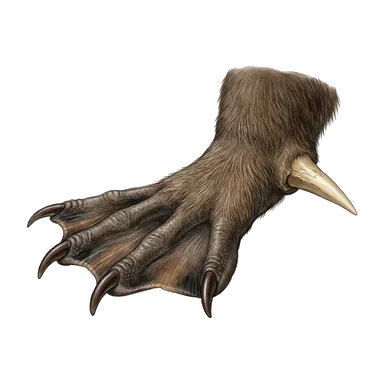 Dagi tànk yu am daŋar
The platypus is a semiaquatic mammal that lays eggs, and it has a duck-like bill and a beaver-like tail. It lives in eastern Australia, including Tasmania. It is special because it is one of the few venomous mammals.1

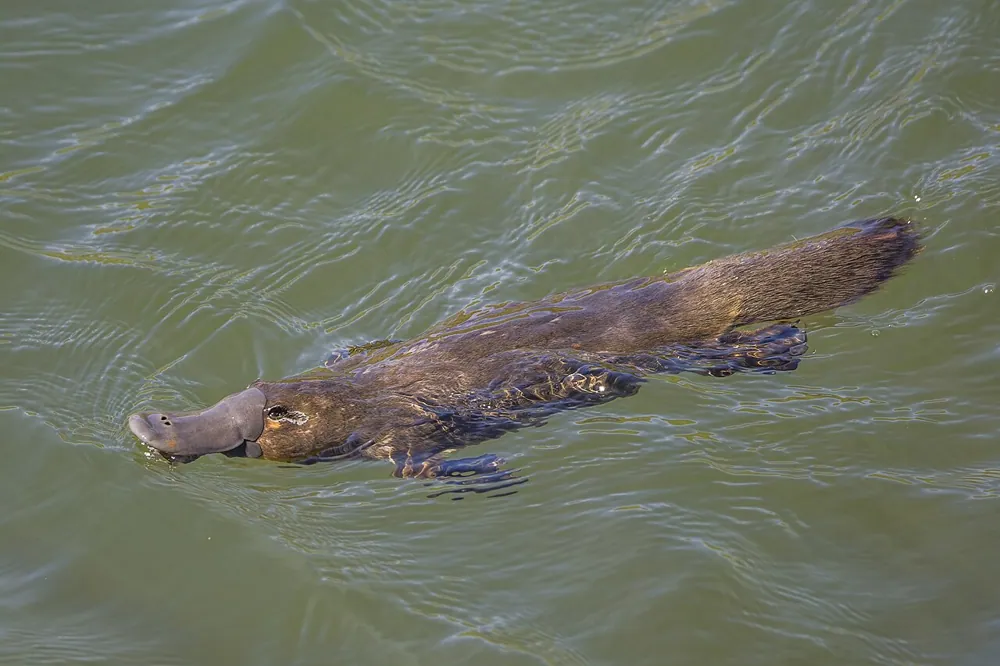
 Ni ngay ko xàmmee
- Short, dense, brown fur that is waterproof1
- A soft, duck-like bill1
- A wide, flat, furry tail, unlike the scaly tail of a beaver1
- Short legs with webbing, most noticeably on the front feet1
- Small eyes and ears that sit in a groove that closes underwater1
Ñu ngi koy faral di jaxasoo ak: Early European naturalists were confused by the platypus and thought it was a fake, made by sewing a duck's beak onto a beaver-like body. Its tail looks like a beaver's, but it is furry rather than scaly.1
Kàttanu daŋar
Ab dagu tànk bu ñaw ci tànki ginnaawam moo yor daŋar bi.
Lan la daŋar biy sóob di def?
Only the male platypus has venom, which it injects through a spur on each hind foot. The venom is powerful enough to cause extreme pain in humans. The affected limb then develops swelling, which starts at the wound and spreads.1
Ni mu lore nit ñi?
Musiba ci nit: Dafay mettiMën na metti lool, waaye lu bon du faral di am.The venom is extremely painful.1
 Su dagu tànkam jamee la
- Raxas gaañu-gaañu bi bu baax te wutal ndimbal doktoor.
Saa su nekk, woo jëkk sa nimerob urgence (112, 000, 911). Lii ay ndigal yu yaatu ci ndimbal yu jëkk la, du ndigalu doktoor. Li war a xam ci ndimbal yu jëkk
 Sàmmal sa bopp
- Bul laal mukk, bul jàpp, bul sonal ab rab bu àll, doonte bu ndaw la, te doonte dafa mel ni dafa nelaw walla dafa dee.
- May ko bérab. Su nga ko gisee, dalal, dellu ginnaaw ndànk-ndànk te bàyyi ko mu dem yoonam.
- Su dagu tànkam jamee la: dalal, bul yëngu, woo sa nimerob urgence (112, 000, 911) walla dem lopitaan ci gaaw. Bul fàtte ni mu meloon, ab nataal dina dimbali.
Du la wut. Dafay jëfandikoo daŋaram ngir jàpp lu muy lekk walla ngir aar boppam, te nëbbu moo ko gën a neex. Yeneen ci ni ngay sàmme sa bopp
Ni mu réye?
Ni mu guddoo?
Ni mu diise?
 guddu na ni 3 banaana yu ñu toftale
 guddu na ni 16 bloku tabax yu ñu toftale
 mën na féey guddaayu pisin bu réy (50 m) ci 51 segond
Platypus ni mu réye ci wetu YOW?
Ay waññ rekk ci sa navigateur. Dara du denc te dara du yónnee fenn.
Ni mu gaawe?
Xibaar
The platypus has about 40,000 electroreceptors in its bill, which detect electric signals from prey in murky water.1
Its fur is one of the most densely packed of any mammal, behind only otters. It also glows cyan and green under ultraviolet light.1
The platypus lacks a functional stomach, because it does not have the genes needed to make pepsin, a digestive enzyme.1
Adult platypuses have no teeth. They have heavily keratinised grinding pads instead, and young platypuses lose their teeth around the time they leave their burrow.1
Its average body temperature is about 32 °C, lower than the 37 °C typical of placental mammals.1
Tasukatu léeb
Xalaat bu juum: The platypus is a hoax, made by sewing several animals together.
Dëgg: The platypus is a real species. When the first scientists examined a preserved body in 1799, they doubted it, and George Shaw even used scissors to check for stitches.1
Ngir boroom xam-xam ci daŋar
- Turu xam-xam
- Ornithorhynchus anatinus
- Mbooloo
- Rab yuy nàmpal yu am daŋar
- Njaboot
- Ornithorhynchidae2
- Toftal
- Monotremata
- Kontinaa yi
- Ostarali ak Oseyani
- Liir yi
- The platypus lays eggs instead of giving birth to live young.1
- Ni mu nekke ci àll bi
- Near-threatened (IUCN). A November 2020 report recommended upgrading it to threatened under Australia's federal EPBC Act.1
- Musiba ci nit
- 2 / 5: Dafay metti3
Fa xibaar yi jóge
- Platypus (Wikipedia (CC BY-SA 4.0))
- Ornithorhynchus anatinus (iNaturalist): tur ak ni ñu leen séddale.
- Venom Wiki: tolluwaayu musiba bi, réyaay bu yem bi ak xalaatu gaawaay bi, nun ñoo leen defar. Seetal ni nu leen waññe: Ni nuy natte musiba.
Xibaar bu nekk ci xët wii am na ab nimero buy won fa mu jóge. Su nu juumee, baal nu, nun ay nit ñu bëgg rab lanu, du ab jurnaalu xam-xam. Wax nu ko ci [email protected] te dinanu ko jubbanti.
 Jiit bi dafa xiif! Venom Wiki ab liggéeyu kenn la: amul pay, amul piblisite te amul traceur. Ab may bu tuuti dafay dimbali ngir mu des ci internet.Leel jiit bi
Yeneen ci mbooloo mi: Rab yuy nàmpal yu am daŋar
 Common vampire batRab yuy nàmpal yu am daŋarDafay metti rekk
 Bengal slow lorisRab yuy nàmpal yu am daŋarDafay metti rekk
 Cuban solenodonRab yuy nàmpal yu am daŋarDafay metti rekk
 Hispaniolan solenodonRab yuy nàmpal yu am daŋarDafay metti rekk
 Javan slow lorisRab yuy nàmpal yu am daŋarDafay metti rekk
 Pygmy slow lorisRab yuy nàmpal yu am daŋarDafay metti rekk
 Coastal taipan
 Common death adder
 Eastern brown snake
 Taypan bu ëll-bi (Inland taipan)
 Sydney funnel-web spider
 Jaan-tigr
_Scottsdale.jpg)