
 Afrig
Afrig Asi
Asi Tugal
Tugal Amerig gu Bëj-saalum
 Ostarali ak Oseyani
 Antarktig
 Mbàmbulaanu Pasifik
 Mbàmbulaanu Atlantig
 Mbàmbulaanu End
 Mbàmbulaanu Arktik
 Géeju Mediteraane
 Géej gu Xonq
 Géeju Karayib
 Géeju Koraay
 Géeju Siin gu Bëj-saalum
 Géeju Filipin
 Géeju Andaman
 Géeju Bëj-gànnaar
 Géeju Timor ak Arafura
 Golfu Bengal
 Golfu Kaliforni
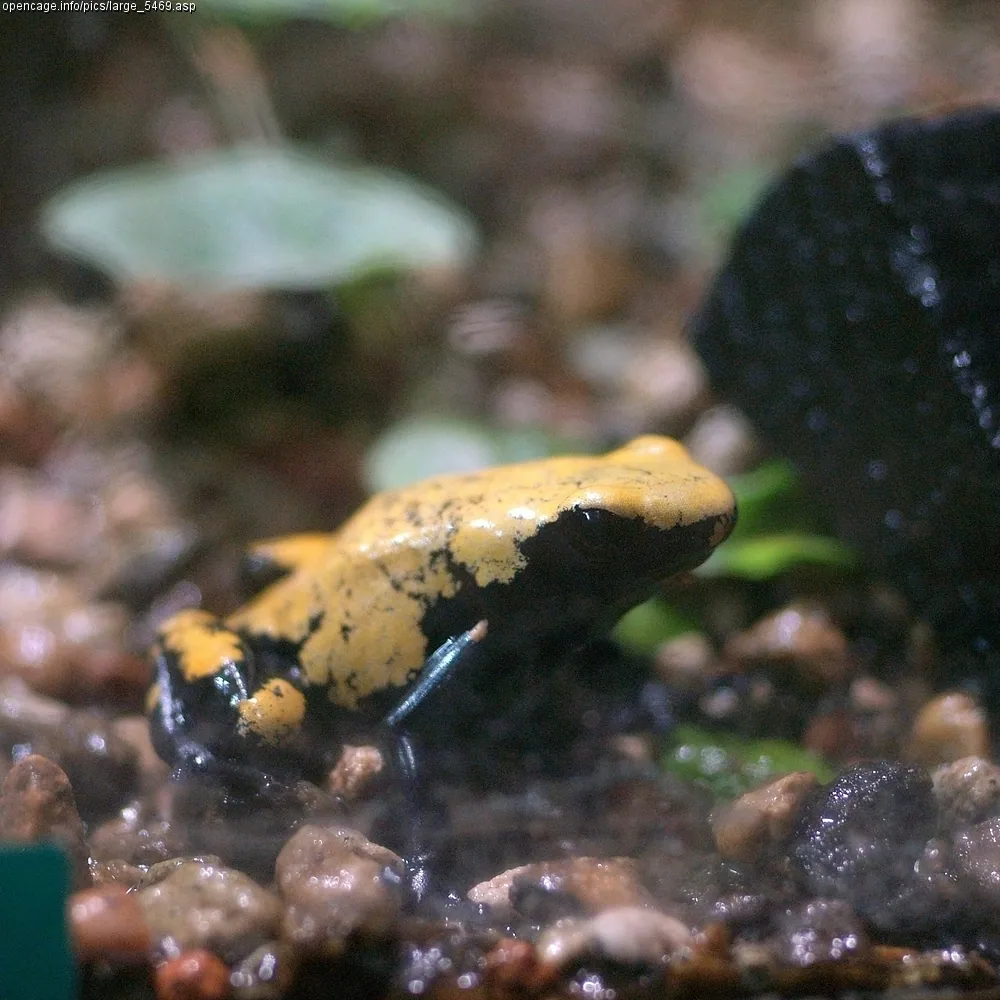
Splash-backed poison frog
 Daŋar ci deram
The splash-backed poison frog is a fairly large, brightly coloured frog from the rainforests of the southern Amazon Basin in Brazil. It is poisonous, not venomous, which means its skin is harmful to touch or eat rather than injecting venom with a bite. Its colours vary a great deal, which has made it an interesting case for scientists studying bright colours in poisonous frogs.1
 Ni ngay ko xàmmee
- The best-known form is black below and yellow, orange or red above.1
- Its colour is very variable. Some have whitish-mint or light blue upperparts, and some have a mottled or spotted pattern on top.1
- Some individuals are almost all whitish, yellow-orange or black. Captive keepers call the whitish ones 'moonshine'.1
- A relatively large poison dart frog, with a snout-vent length of up to 42 mm.1
Kàttanu daŋar
Deram am na daŋar. Musiba la ci laal, mar walla lekk.
Ni mu lore nit ñi?
Musiba ci nit: Dafay mettiMën na metti lool, waaye lu bon du faral di am. Su kenn laalee ko walla mu lekk ko
- Su kenn laalee benn: raxas loxo yi bu baax te bul laal bët yi walla gémmiñ gi. Su ab xale walla ab mala bu kër maree benn walla mu lekk benn: woo sa centre antipoison walla sa nimerob urgence.
Saa su nekk, woo jëkk sa nimerob urgence (112, 000, 911). Lii ay ndigal yu yaatu ci ndimbal yu jëkk la, du ndigalu doktoor. Li war a xam ci ndimbal yu jëkk
 Sàmmal sa bopp
- Bul laal mukk, bul jàpp, bul sonal ab rab bu àll, doonte bu ndaw la, te doonte dafa mel ni dafa nelaw walla dafa dee.
- May ko bérab. Su nga ko gisee, dalal, dellu ginnaaw ndànk-ndànk te bàyyi ko mu dem yoonam.
- Su nga ko laalee walla nga lekk ko: bul moos say bët walla sa gémmiñ, raxas say loxo te wutal ndimbal doktoor.
Du la wut. Daŋaram nekk na rekk ngir kenn bañ ko lekk. Yeneen ci ni ngay sàmme sa bopp
Ni mu réye?
Ni mu guddoo?
 gën a gàtt sa baaraam bu ndaw
 mën na daw 100 meetar ci 97 segond (nit ki gën a gaaw soxla na 9,6)
Splash-backed poison frog ni mu réye ci wetu YOW?
Ay waññ rekk ci sa navigateur. Dara du denc te dara du yónnee fenn.
Ni mu gaawe?


Xibaar
Bright colour in poisonous frogs is often thought to warn predators away, but studies of this frog suggest the colour may matter more for recognising each other and for choosing mates.1
Adults carry their tadpoles to water, and scientists believe Brazil nut husks may be among the places they use.1
Its colours vary so much that some forms were once thought to be separate species, but genetic tests found almost no difference between them.1
The two most different-looking colour forms have largely the same poison profile.1
It is relatively common and regularly bred in captivity, but wild populations are still at risk from illegal collection.1
Tasukatu léeb
Xalaat bu juum: Bright colours on a poisonous frog always warn predators that it will poison them if they try to eat it.
Dëgg: That is a longstanding interpretation, but studies of this frog suggest its colour may have more to do with recognising others of its kind and sexual selection than with deterring predators.1
Ngir boroom xam-xam ci daŋar
- Turu xam-xam
- Adelphobates galactonotus
- Mbooloo
- Mbott yu am daŋar, crapaud ak triton
- Njaboot
- Dendrobatidae2
- Toftal
- Anura
- Kontinaa yi
- Amerig gu Bëj-saalum
- Liir yi
- Eggs are laid on the ground. After they hatch, the adults carry the tadpoles to water, possibly including water collected in Brazil nut husks.1
- Ni mu nekke ci àll bi
- Least Concern1
- Musiba ci nit
- 2 / 5: Dafay metti3
Fa xibaar yi jóge
- Adelphobates galactonotus (Wikipedia (CC BY-SA 4.0))
- Adelphobates galactonotus (iNaturalist): tur ak ni ñu leen séddale.
- Venom Wiki: tolluwaayu musiba bi, réyaay bu yem bi ak xalaatu gaawaay bi, nun ñoo leen defar. Seetal ni nu leen waññe: Ni nuy natte musiba.
Xibaar bu nekk ci xët wii am na ab nimero buy won fa mu jóge. Su nu juumee, baal nu, nun ay nit ñu bëgg rab lanu, du ab jurnaalu xam-xam. Wax nu ko ci [email protected] te dinanu ko jubbanti.
 Jiit bi dafa xiif! Venom Wiki ab liggéeyu kenn la: amul pay, amul piblisite te amul traceur. Ab may bu tuuti dafay dimbali ngir mu des ci internet.Leel jiit bi
Yeneen ci mbooloo mi: Mbott yu am daŋar, crapaud ak triton
 Golden poison frogMbott yu am daŋar, crapaud ak tritonMën a reyBul laal
 Cane toadMbott yu am daŋar, crapaud ak tritonSoxla na doktoorBul laal
 Dyeing poison dart frogMbott yu am daŋar, crapaud ak tritonDafay metti rekkBul laal
 Black-legged poison frogMbott yu am daŋar, crapaud ak tritonMën na reyBul laal
 Bruno's casque-headed frogMbott yu am daŋar, crapaud ak tritonSoxla na doktoorBul laal
 Harlequin poison frogMbott yu am daŋar, crapaud ak tritonSoxla na doktoorBul laal
 Terciopelo
 Brazilian wandering spider
 Eyelash viper
 Golden lancehead
 South American bushmaster
 Peruvian giant centipede