
 IAfrika
 IAsiya
 IYurophu
 uMzantsi Melika
 IOstreliya neOceania
 IAntarctica
 uLwandlekazi lwePasifiki
 uLwandlekazi lweAtlantiki
 uLwandlekazi lwaseIndiya
 uLwandlekazi lweArctic
 uLwandle lweMeditera
 uLwandle oluBomvu
 uLwandle lweKharibhiya
 uLwandle lweCoral
 uLwandle lwaseMzantsi China
 uLwandle lwePhilippines
 uLwandle lweAndaman
 uLwandle lwaseMntla (North Sea)
 uLwandle lweTimor ne-Arafura
 iBhayi yaseBengal
 iGulf yaseCalifornia
Anchieta's cobra
 Ukuluma
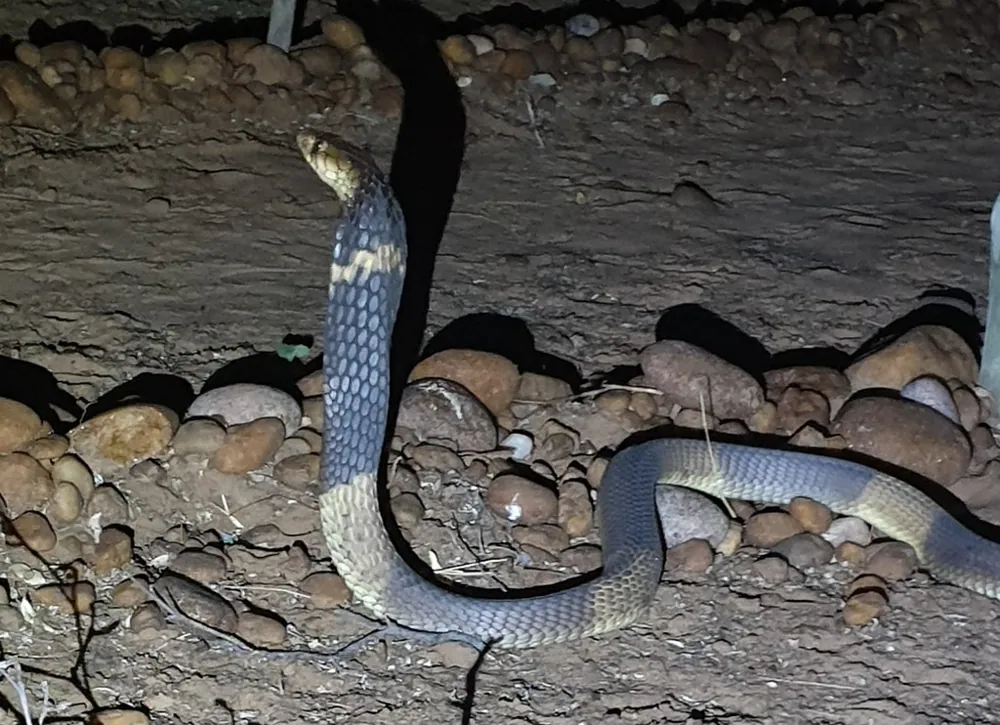
Anchieta's cobra is a venomous snake that lives in parts of southwestern Africa. It is a ground-dwelling cobra that spreads a broad hood when threatened. It is active at night and often comes close to human homes and farmyards.1



 Indlela yokusiqaphela
- Young snakes are yellowish to light brown, with a black band circling the neck.1
- As it grows, it becomes a darker brown and the neck band fades away.1
- The throat band, which covers the front belly scales, is blue-black.1
- When threatened, it spreads a large, impressive hood about 10 to 12 cm wide.1
- In the southernmost parts of its range, some snakes are black with yellow bands across the body and tail.1
Sidla ngokubhidaniswa no: The snouted cobra is very similar in shape, size and habits. The Anchieta's cobra is more inclined to stand its ground when confronted by a threat.1
Amandla etyhefu yokuluma nokuhlaba
Ityhefu iphuma ngamazinyo aso etyhefu okanye ngamazinyo aso xa siluma.
Ityhefu yaso yokuluma okanye yokuhlaba yenza ntoni?
Its venom is mainly a potent neurotoxin, which attacks the nerves. It may also contain cardiotoxic components, which harm the heart. Because it has moderately large size and relatively large fangs, it can inject a large volume of venom in a single bite.1
Siyingozi kangakanani ebantwini?
Ingozi ebantwini: Siyingozi kakhuluSinokubulala umntu ongafumani nyango.Bites are rare, but they have been known to cause human deaths.1
Senza ntoni xa soyika?
When provoked it lifts its front body off the ground, spreads its hood and takes a defensive posture, but it will flee if it gets the chance, and it sometimes feigns death.1
 Ukuba siyaluma
- Gcina umntu engashukumi kwaye ezolile, susa imisesane nezinto eziqinileyo, uze umse esibhedlele ngokukhawuleza: i-antivenom lunyango.
Soloko utsalela inombolo kaxakeka kuqala (112, 000, 911). Esi sisikhokelo soncedo lokuqala ngokubanzi, asilocebiso lwezonyango. Iziseko zoncedo lokuqala
 Hlala ukhuselekile
- Ungaze uchukumise, ubambe okanye uqhule isilwanyana sasendle, nokuba sincinci, kwaye nokuba sibonakala silele okanye sifile.
- Sinike indawo. Ukuba udibana naso, hlala uzolile, buyela umva kancinci kwaye usiyeke sihambe ngendlela yaso.
- Ukuba siyakuluma: hlala uzolile, musa ukushukuma, tsalela inombolo kaxakeka (112, 000, 911) okanye uye esibhedlele ngokukhawuleza. Khumbula ukuba sasikhangeleka njani, ifoto iyanceda.
Asikuzingeli. Sisebenzisa ityhefu yaso ukubamba ukutya okanye ukuzikhusela, kwaye singakhetha ukuzimela. Okungakumbi malunga nokuhlala ukhuselekile
Sikhulu kangakanani?
Side kangakanani?
 ubude obulingana neekati zasekhaya eziyi-5 ukusuka empumlweni ukuya emsileni
 ubude obulingana neebhanana eziyi-13 zilandelelana
 singagqiba iimitha ezili-100 ngemizuzwana eyi-46 (owona mntu ukhawulezayo udinga i-9,6)
U-Anchieta's cobra mkhulu kangakanani xa uthelekisa NAWE?
Zizibalo nje kwibhrawuza yakho. Akukho nto igcinwayo okanye ithunyelwa naphi na.
Sikhawuleza kangakanani?


Iinyaniso
The longest recorded male was 2.31 metres long and was caught in Windhoek, Namibia.1
It is hunted by birds of prey such as secretary birds and snake eagles, and by honey badgers and white-throated monitors.1
Males and females grow to similar sizes, although males usually have larger heads and longer tails.1
A banded form has been noted in roughly 13% of males and up to 22% of females.1
Kwiingcali zetyhefu
Apho iinyaniso zivela khona
- Anchieta's cobra (Wikipedia (CC BY-SA 4.0))
- Naja anchietae (iNaturalist): amagama nokuhlelwa.
- Venom Wiki: inqanaba lengozi, ubungakanani obuqhelekileyo noqikelelo lwesantya zezethu. Bona indlela esizifumana ngayo: Indlela esilinganisa ngayo ingozi.
Inyaniso nganye kweli phepha inenombolo ebonisa umthombo wayo. Ukuba senze impazamo, uxolo, sithanda izilwanyana, asiyomagazini yenzululwazi. Sixelele ku-[email protected] kwaye siza kuyilungisa.
 Unomadudwane ulambile! I-Venom Wiki yiprojekthi yomntu omnye: isimahla, ayinazibhengezo kwaye ayinazilandeli. Isipho esincinci sinceda ukuyigcina ikwi-intanethi.Yondla unomadudwane
Okungakumbi kwiqela elinye: Amaphimpi, iimamba nee-krait
 Black mambaAmaphimpi, iimamba nee-kraitSiyabulala
 Egyptian cobraAmaphimpi, iimamba nee-kraitSiyabulala
 Cape cobraAmaphimpi, iimamba nee-kraitSiyabulala
 Eastern green mambaAmaphimpi, iimamba nee-kraitSiyabulala
 Jameson's mambaAmaphimpi, iimamba nee-kraitSiyabulala
 Western green mambaAmaphimpi, iimamba nee-kraitSiyabulala
 Deathstalker
 Puff adder
 Boomslang
 Fat-tailed scorpion
 Gaboon viper
 Western honey bee