
 IAfrika
 IAsiya
 IYurophu
 uMzantsi Melika
 IOstreliya neOceania
 IAntarctica
 uLwandlekazi lwePasifiki
 uLwandlekazi lweAtlantiki
 uLwandlekazi lwaseIndiya
 uLwandlekazi lweArctic
 uLwandle lweMeditera
 uLwandle oluBomvu
 uLwandle lweKharibhiya
 uLwandle lweCoral
 uLwandle lwaseMzantsi China
 uLwandle lwePhilippines
 uLwandle lweAndaman
 uLwandle lwaseMntla (North Sea)
 uLwandle lweTimor ne-Arafura
 iBhayi yaseBengal
 iGulf yaseCalifornia
Greenland shark
 Siyatyhefa xa sityiwaSitya: InyamaSiyatyhefa, asinatyhefu yokuluma okanye yokuhlaba
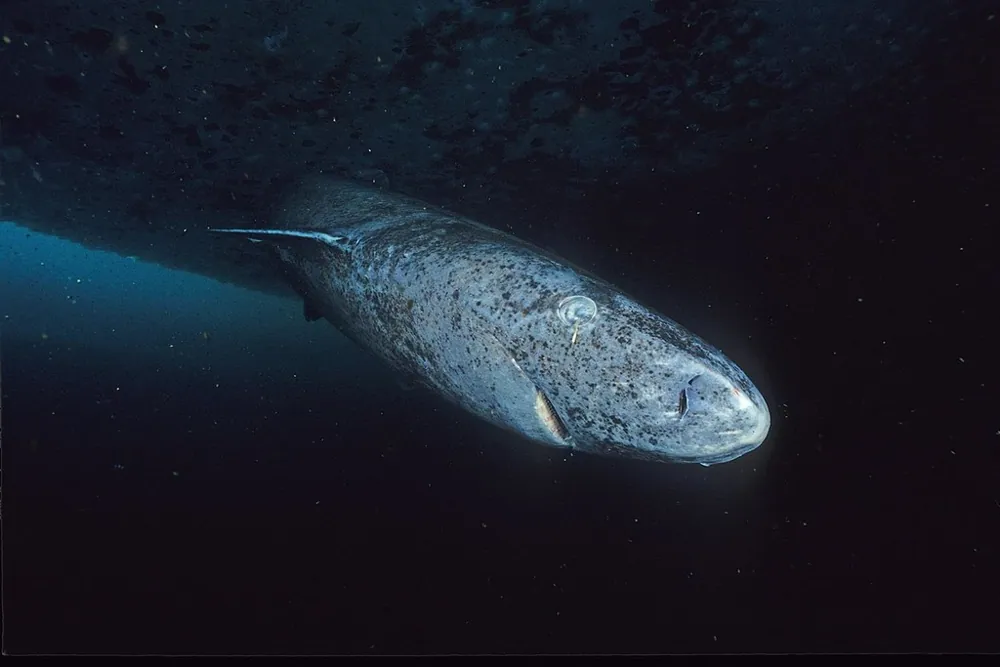
The Greenland shark is a huge, slow shark that lives in the cold, deep waters of the North Atlantic and Arctic Oceans. It is famous for living longer than any known vertebrate (animal with a backbone). Its flesh is poisonous to eat unless it is specially prepared.1



 Indlela yokusiqaphela
- A thickset, heavy body with a short, rounded snout1
- Small eyes and small dorsal and pectoral fins1
- Five very small gill openings for its size1
- Colour ranges from pale creamy-grey to blackish-brown, usually uniform, sometimes with whitish spots or faint dark streaks on the back1
- Often has small parasitic copepods (crustaceans) attached to its eyes1
Amandla etyhefu
Siyingozi kuphela ukuba kukho into esityayo.
Ityhefu yaso etyhefayo (xa usichukumisa okanye usitya) yenza ntoni?
The shark is not venomous. Its meat is poisonous to mammals because it contains high levels of trimethylamine N-oxide (TMAO), a natural chemical that makes the flesh toxic.1
Siyingozi kangakanani ebantwini?
Ingozi ebantwini: KubuhlunguKunokuba buhlungu ngokwenene, kodwa phantse akusoze kube kubi kakhulu.Greenland sharks are not considered a threat to people, because they live deep in remote, cold waters. Only one possible attack is recorded, in 1936, and it was never linked to this species. One unverified report from around 1859 describes a human leg found in a shark's stomach.1
Senza ntoni xa soyika?
When hauled onto a boat, it thrashes its tail so violently that it is dangerous to stand near it, and its muscles can still twitch after death.1
 Ukuba umntu usichukumisile okanye usityile
- Ukuba umntu usityile okanye uneempawu emva kokusitya: tsalela inombolo kaxakeka okanye iziko lezityhefu (poison centre) ngoko nangoko.
Soloko utsalela inombolo kaxakeka kuqala (112, 000, 911). Esi sisikhokelo soncedo lokuqala ngokubanzi, asilocebiso lwezonyango. Iziseko zoncedo lokuqala
 Hlala ukhuselekile
- Ungaze uchukumise, ubambe okanye uqhule isilwanyana sasendle, nokuba sincinci, kwaye nokuba sibonakala silele okanye sifile.
- Sinike indawo. Ukuba udibana naso, hlala uzolile, buyela umva kancinci kwaye usiyeke sihambe ngendlela yaso.
- Ukuba usichukumisile okanye usityile: musa ukukhuhla amehlo okanye umlomo wakho, hlamba izandla zakho kwaye ufumane uncedo lwezonyango.
Asikuzingeli. Ityhefu yaso ikhona nje ukuze kungabikho nto isityayo. Okungakumbi malunga nokuhlala ukhuselekile
Phi emhlabeni?
Sikhulu kangakanani?
Side kangakanani?
Sinzima kangakanani?
 ubude obulingana nezinja eziyi-6 ukusuka empumlweni ukuya emsileni
 ubude obulingana neebhanana eziyi-36 zilandelelana
 singaqubha ubude bechibi elikhulu lokuqubha (50 m) ngemizuzwana eyi-69
U-Greenland shark mkhulu kangakanani xa uthelekisa NAWE?
Zizibalo nje kwibhrawuza yakho. Akukho nto igcinwayo okanye ithunyelwa naphi na.
Sikhawuleza kangakanani?

Iinyaniso
It is thought to have the longest lifespan of any known vertebrate, estimated at between 272 and 510 years.1
It is one of the slowest-swimming fish for its size, with a fastest cruising speed of about 2.7 km/h.1
Parasitic copepods often attach to its eyes and can damage them, but this does not seem to shorten its life, because it relies mainly on smell and hearing.1
It is one of the largest shark species alive, with the largest confirmed specimen weighing around 1,023 kg.1
In Iceland, a specially treated form of its meat is eaten as a pungent delicacy called kæstur hákarl.1
Its slow metabolism is thought to be linked to its very long life, although this is still a hypothesis.1
Umqhekezi weentsomi
Intsomi: The Greenland shark is a dangerous threat to humans.
Inyaniso: It is not considered a threat to people. It lives deep in cold, remote waters, and the only report of a possible attack was never confirmed as this species.1
Kwiingcali zetyhefu
- Igama lenzululwazi
- Somniosus microcephalus
- Iqela
- Ezinye izilwanyana ezityhefayo
- Usapho
- Somniosidae2
- Ucwangco
- Squaliformes
- Amazwekazi
- uLwandlekazi lweArctic, uLwandlekazi lweAtlantiki, Iilwandlekazi
- Iintsana
- Pups are born alive, after an estimated gestation period of 8 to 18 years. Females reach sexual maturity at around 150 years of age.1
- Ingozi ebantwini
- 2 / 5: Kubuhlungu3
Apho iinyaniso zivela khona
- Greenland shark (Wikipedia (CC BY-SA 4.0))
- Somniosus microcephalus (iNaturalist): amagama nokuhlelwa.
- Venom Wiki: inqanaba lengozi, ubungakanani obuqhelekileyo noqikelelo lwesantya zezethu. Bona indlela esizifumana ngayo: Indlela esilinganisa ngayo ingozi.
Inyaniso nganye kweli phepha inenombolo ebonisa umthombo wayo. Ukuba senze impazamo, uxolo, sithanda izilwanyana, asiyomagazini yenzululwazi. Sixelele ku-[email protected] kwaye siza kuyilungisa.
 Unomadudwane ulambile! I-Venom Wiki yiprojekthi yomntu omnye: isimahla, ayinazibhengezo kwaye ayinazilandeli. Isipho esincinci sinceda ukuyigcina ikwi-intanethi.Yondla unomadudwane
Okungakumbi kwiqela elinye: Ezinye izilwanyana ezityhefayo
 Japanese pufferfishEzinye izilwanyana ezityhefayoSiyabulala
 Hawksbill sea turtleEzinye izilwanyana ezityhefayoSinokubulala
 Silver-cheeked toadfishEzinye izilwanyana ezityhefayoSiyabulala
 Blackspotted pufferEzinye izilwanyana ezityhefayoSinokubulala
 White-spotted pufferEzinye izilwanyana ezityhefayoSinokubulala
 Long-spine porcupinefishEzinye izilwanyana ezityhefayoKufuna ugqirha
Sikwahlala: uLwandlekazi lweArctic
 Lion's mane jellyfishIijelifishi nezinye izilwanyana zaselwandle ezihlabayoKubuhlungu njeMusa ukuchukumisa
 Moon jellyfishIijelifishi nezinye izilwanyana zaselwandle ezihlabayoAsinangozi
 Spiny dogfishIintlanzi ezinetyhefuKubuhlungu njeMusa ukuchukumisa
 Bootlace wormIi-sea urchin, iinkwenkwezi zolwandle neentshulubeAsinangozi