
 IAfrika
 IAsiya
 IYurophu
 uMzantsi Melika
 IOstreliya neOceania
 IAntarctica
 uLwandlekazi lwePasifiki
 uLwandlekazi lweAtlantiki
 uLwandlekazi lwaseIndiya
 uLwandlekazi lweArctic
 uLwandle lweMeditera
 uLwandle oluBomvu
 uLwandle lweKharibhiya
 uLwandle lweCoral
 uLwandle lwaseMzantsi China
 uLwandle lwePhilippines
 uLwandle lweAndaman
 uLwandle lwaseMntla (North Sea)
 uLwandle lweTimor ne-Arafura
 iBhayi yaseBengal
 iGulf yaseCalifornia
Horn shark
 Amava anetyhefu
The horn shark is a small shark with a blunt head and two tall fins, each with a large spine at the front. It lives along the western coast of North America, from California to the Gulf of California. It spends its days hidden in caves and crevices and hunts at night.1



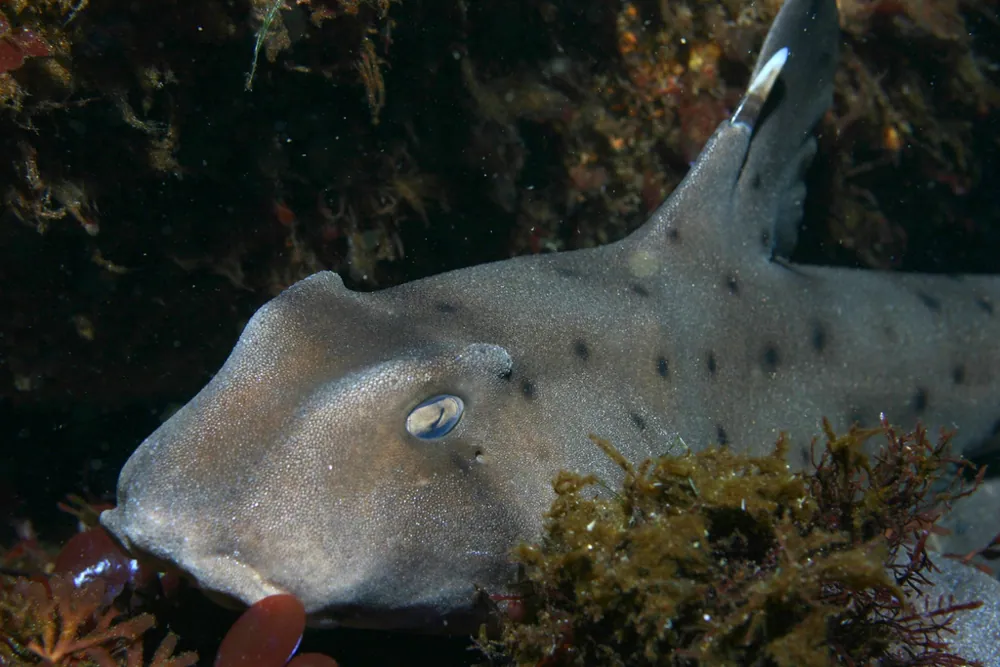
 Indlela yokusiqaphela
Amandla etyhefu yokuluma nokuhlaba
Amava abukhali aphethe ityhefu. Ukusinyathela okanye ukusibamba kubuhlungu.
Siyingozi kangakanani ebantwini?
Ingozi ebantwini: KuthambileNjengokuhlatywa yinyosi okanye ngaphantsi. Phantse asinangozi ebantwini.Horn sharks are harmless unless they are harassed. They are not targeted by commercial or recreational fisheries, though small numbers are caught by accident.1
Senza ntoni xa soyika?
During the day they stay still in hiding places, but they swim away quickly if disturbed.1
 Ukuba amava aso ayakugwaza
- Faka inxeba emanzini ashushu, ashushu kangangoko umntu angakwazi ukunyamezela ngaphandle kokutshiswa (wavavanye ngesandla sakho), imizuzu engama-30 ukuya kwengama-90. Fumana uncedo lwezonyango, ingakumbi kwii-stonefish nakwii-stingray.
Soloko utsalela inombolo kaxakeka kuqala (112, 000, 911). Esi sisikhokelo soncedo lokuqala ngokubanzi, asilocebiso lwezonyango. Iziseko zoncedo lokuqala
 Hlala ukhuselekile
- Ungaze uchukumise, ubambe okanye uqhule isilwanyana sasendle, nokuba sincinci, kwaye nokuba sibonakala silele okanye sifile.
- Sinike indawo. Ukuba udibana naso, hlala uzolile, buyela umva kancinci kwaye usiyeke sihambe ngendlela yaso.
- Ukuba amava aso ayakugwaza: hlala uzolile, musa ukushukuma, tsalela inombolo kaxakeka (112, 000, 911) okanye uye esibhedlele ngokukhawuleza. Khumbula ukuba sasikhangeleka njani, ifoto iyanceda.
Asikuzingeli. Sisebenzisa ityhefu yaso ukubamba ukutya okanye ukuzikhusela, kwaye singakhetha ukuzimela. Okungakumbi malunga nokuhlala ukhuselekile
Phi emhlabeni?
Sikhulu kangakanani?
Side kangakanani?
 ubude obulingana neekati zasekhaya eziyi-2,5 ukusuka empumlweni ukuya emsileni
 ubude obulingana neebhanana eziyi-7 zilandelelana
 singaqubha ubude bechibi elikhulu lokuqubha (50 m) ngemizuzwana eyi-9
U-Horn shark mkhulu kangakanani xa uthelekisa NAWE?
Zizibalo nje kwibhrawuza yakho. Akukho nto igcinwayo okanye ithunyelwa naphi na.
Sikhawuleza kangakanani?

Iinyaniso
For its size, the horn shark has the strongest bite of any shark that has been measured.1
To pull prey loose, the shark pushes its head up with a downward stroke of its tail. No other shark has been seen doing this.1
Large horn sharks that eat many sea urchins can have purple-stained teeth and fin spines.1
A Pacific angelshark was filmed trying to swallow a juvenile horn shark, but spat it out because of the spines.1
Horn sharks have only 148 electroreceptors (ampullae of Lorenzini), far fewer than most sharks, which may have over 2,000. They rely mainly on smell to find food.1
A dropped tooth takes about 4 weeks to be replaced.1
Kwiingcali zetyhefu
- Igama lenzululwazi
- Heterodontus francisci
- Iqela
- Iintlanzi ezinetyhefu
- Usapho
- Heterodontidae2
- Ucwangco
- Heterodontiformes
- Amazwekazi
- uLwandlekazi lwePasifiki, iGulf yaseCalifornia, Iilwandlekazi
- Iintsana
- They lay eggs. From February to April, females lay up to 24 eggs, two at a time, every 11 to 14 days, and wedge the egg cases into crevices to protect them.1
- Imeko yaso endle
- Insufficient data (IUCN); population listed as stable on 10 October 20251
- Ingozi ebantwini
- 1 / 5: Kuthambile3
Apho iinyaniso zivela khona
- Horn shark (Wikipedia (CC BY-SA 4.0))
- Heterodontus francisci (iNaturalist): amagama nokuhlelwa.
- Venom Wiki: inqanaba lengozi, ubungakanani obuqhelekileyo noqikelelo lwesantya zezethu. Bona indlela esizifumana ngayo: Indlela esilinganisa ngayo ingozi.
Inyaniso nganye kweli phepha inenombolo ebonisa umthombo wayo. Ukuba senze impazamo, uxolo, sithanda izilwanyana, asiyomagazini yenzululwazi. Sixelele ku-[email protected] kwaye siza kuyilungisa.
 Unomadudwane ulambile! I-Venom Wiki yiprojekthi yomntu omnye: isimahla, ayinazibhengezo kwaye ayinazilandeli. Isipho esincinci sinceda ukuyigcina ikwi-intanethi.Yondla unomadudwane
Okungakumbi kwiqela elinye: Iintlanzi ezinetyhefu
 Reef stonefishIintlanzi ezinetyhefuSinokubulalaMusa ukuchukumisa
 Red lionfishIintlanzi ezinetyhefuKufuna ugqirhaMusa ukuchukumisa
 Estuarine stonefishIintlanzi ezinetyhefuSinokubulalaMusa ukuchukumisa
 Short-tail stingrayIintlanzi ezinetyhefuSinokubulala
 Striped eel catfishIintlanzi ezinetyhefuSinokubulalaMusa ukuchukumisa
 Bluespotted ribbontail rayIintlanzi ezinetyhefuKufuna ugqirha
Sikwahlala: uLwandlekazi lwePasifiki
 Australian box jellyfishIijelifishi nezinye izilwanyana zaselwandle ezihlabayoSiyabulalaMusa ukuchukumisa
 Geography coneIinkumba ze-cone neengwaneSiyabulala
 Greater blue-ringed octopusIinkumba ze-cone neengwaneSiyabulala
 Japanese pufferfishEzinye izilwanyana ezityhefayoSiyabulala
 Southern blue-ringed octopusIinkumba ze-cone neengwaneSiyabulala
 Hawksbill sea turtleEzinye izilwanyana ezityhefayoSinokubulala