
 IAfrika
 IAsiya
 IYurophu
 uMzantsi Melika
 IOstreliya neOceania
 IAntarctica
 uLwandlekazi lwePasifiki
 uLwandlekazi lweAtlantiki
 uLwandlekazi lwaseIndiya
 uLwandlekazi lweArctic
 uLwandle lweMeditera
 uLwandle oluBomvu
 uLwandle lweKharibhiya
 uLwandle lweCoral
 uLwandle lwaseMzantsi China
 uLwandle lwePhilippines
 uLwandle lweAndaman
 uLwandle lwaseMntla (North Sea)
 uLwandle lweTimor ne-Arafura
 iBhayi yaseBengal
 iGulf yaseCalifornia
Jararaca
 Ukuluma
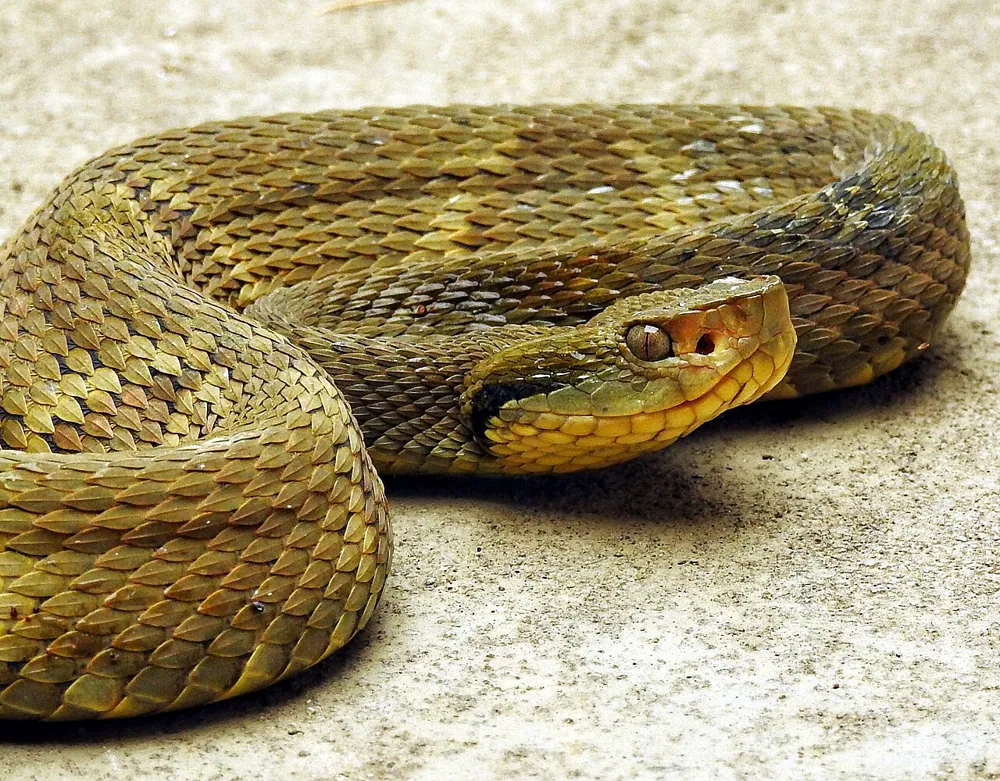
The jararaca is a highly venomous pit viper from South America. It is an important cause of snakebites in the areas where it lives. Its venom also gave scientists a peptide that was used to develop a family of heart and blood pressure drugs.1



 Indlela yokusiqaphela
- Slender body. Adults can reach a maximum total length of 160 cm, but most are much shorter.1
- Colour varies a lot, from tan, brown, grey, yellow and olive to almost maroon.1
- Rows of pale-edged, dark brown, triangular or trapezoidal markings run along each side of the body.1
- A prominent dark brown stripe runs from behind each eye to the corner of the mouth.1
- Juveniles have a white tip on the tail. The tongue is black and the iris is gold to greenish gold.1
Amandla etyhefu yokuluma nokuhlaba
Ityhefu iphuma ngamazinyo aso etyhefu okanye ngamazinyo aso xa siluma.
Ityhefu yaso yokuluma okanye yokuhlaba yenza ntoni?
The venom is quite toxic and affects blood clotting. Typical effects include local swelling, bruising and blistering of the bitten limb, and bleeding from the gums and into the skin. Serious cases can involve bleeding in the brain, shock and kidney failure.1
Siyingozi kangakanani ebantwini?
Ingozi ebantwini: Siyingozi kakhuluSinokubulala umntu ongafumani nyango.In southeastern Brazil, this species caused 52% (3,446 cases) of snakebites recorded between 1902 and 1945, with a fatality rate of 0.7%. Its systemic symptoms can be fatal.1
 Iindaba ezimnandi: oogqirha banamayeza (i-antivenom) okanye unyango lwale nto.1
 Ukuba siyaluma
- Get to a hospital fast. In a recorded case, a patient was treated in hospital with bothropic antivenom and fluid replacement.1
- Gcina umntu engashukumi kwaye ezolile, gcina ilungu elilunyiweyo kwinqanaba lentliziyo, susa imisesane nezinto eziqinileyo, uze umse esibhedlele ngokukhawuleza.
Soloko utsalela inombolo kaxakeka kuqala (112, 000, 911). Esi sisikhokelo soncedo lokuqala ngokubanzi, asilocebiso lwezonyango. Iziseko zoncedo lokuqala
 Hlala ukhuselekile
- Ungaze uchukumise, ubambe okanye uqhule isilwanyana sasendle, nokuba sincinci, kwaye nokuba sibonakala silele okanye sifile.
- Sinike indawo. Ukuba udibana naso, hlala uzolile, buyela umva kancinci kwaye usiyeke sihambe ngendlela yaso.
- Ukuba siyakuluma: hlala uzolile, musa ukushukuma, tsalela inombolo kaxakeka (112, 000, 911) okanye uye esibhedlele ngokukhawuleza. Khumbula ukuba sasikhangeleka njani, ifoto iyanceda.
Asikuzingeli. Sisebenzisa ityhefu yaso ukubamba ukutya okanye ukuzikhusela, kwaye singakhetha ukuzimela. Okungakumbi malunga nokuhlala ukhuselekile
Sikhulu kangakanani?
Side kangakanani?
 ubude obulingana neekati zasekhaya eziyi-3 ukusuka empumlweni ukuya emsileni
 ubude obulingana neebhanana eziyi-9 zilandelelana
 singagqiba iimitha ezili-100 ngemizuzwana eyi-97 (owona mntu ukhawulezayo udinga i-9,6)
U-Jararaca mkhulu kangakanani xa uthelekisa NAWE?
Zizibalo nje kwibhrawuza yakho. Akukho nto igcinwayo okanye ithunyelwa naphi na.
Sikhawuleza kangakanani?


Iinyaniso
The drugs known as ACE inhibitors, used to treat high blood pressure and some types of heart failure, were developed from a peptide found in this snake's venom. Brazilian scientist Sérgio Henrique Ferreira developed them in 1965.1
An enzyme derived from the venom, called haemocoagulase, is used as an anti-haemorrhagic drug, meaning it helps stop bleeding.1
Males mate with more than one female, and males sometimes fight over females.1
Apho iinyaniso zivela khona
- Bothrops jararaca (Wikipedia (CC BY-SA 4.0))
- Bothrops jararaca (iNaturalist): amagama nokuhlelwa.
- Venom Wiki: inqanaba lengozi, ubungakanani obuqhelekileyo noqikelelo lwesantya zezethu. Bona indlela esizifumana ngayo: Indlela esilinganisa ngayo ingozi.
Inyaniso nganye kweli phepha inenombolo ebonisa umthombo wayo. Ukuba senze impazamo, uxolo, sithanda izilwanyana, asiyomagazini yenzululwazi. Sixelele ku-[email protected] kwaye siza kuyilungisa.
 Unomadudwane ulambile! I-Venom Wiki yiprojekthi yomntu omnye: isimahla, ayinazibhengezo kwaye ayinazilandeli. Isipho esincinci sinceda ukuyigcina ikwi-intanethi.Yondla unomadudwane
Okungakumbi kwiqela elinye: Ii-pit viper
 Terciopelo
 Eyelash viper
 Golden lancehead
 South American bushmaster
 Common lancehead
 Jararacussu
Sikwahlala: uMzantsi Melika
 Golden poison frogAmasele atyhefayo, amaxoxo nee-newtSiyabulalaMusa ukuchukumisa
 Brazilian wandering spiderIzigcawuSinokubulala
 Cane toadAmasele atyhefayo, amaxoxo nee-newtKufuna ugqirhaMusa ukuchukumisa
 Peruvian giant centipedeIinkumeKufuna ugqirha
 Bullet antIimbovaneKubuhlungu nje
 Common vampire batIzilwanyana ezincancisayo ezinetyhefuKubuhlungu nje