
 IAfrika
 IAsiya
 IYurophu
 uMzantsi Melika
 IOstreliya neOceania
 IAntarctica
 uLwandlekazi lwePasifiki
 uLwandlekazi lweAtlantiki
 uLwandlekazi lwaseIndiya
 uLwandlekazi lweArctic
 uLwandle lweMeditera
 uLwandle oluBomvu
 uLwandle lweKharibhiya
 uLwandle lweCoral
 uLwandle lwaseMzantsi China
 uLwandle lwePhilippines
 uLwandle lweAndaman
 uLwandle lwaseMntla (North Sea)
 uLwandle lweTimor ne-Arafura
 iBhayi yaseBengal
 iGulf yaseCalifornia
Pine processionary
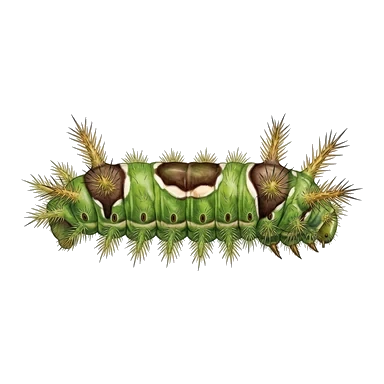 Iinwele ezihlabayo
The pine processionary is a moth whose caterpillars are famous for marching in long, nose-to-tail lines through pine woods. Their hairs cause painful rashes and eye irritation, and they can strip the needles from whole trees. It lives around the Mediterranean and is spreading north.1
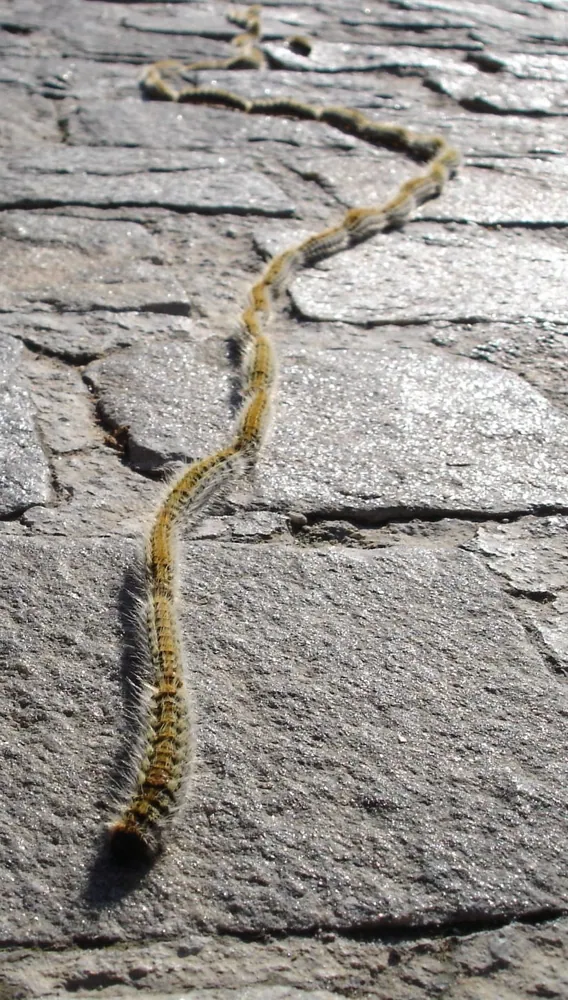
 Indlela yokusiqaphela
- Caterpillars are orange-brown and hairy, with blue bands.1
- Large silken nests in pine trees, often with several in one tree and signs of stripped needles.1
- Caterpillars move in single-file processions, usually at night and when leaving the tree to pupate.1
- Adults have predominantly light brown forewings with brown markings and white hindwings.1
- Adult males have a crescent marking on the wings and are larger than the oak processionary.1
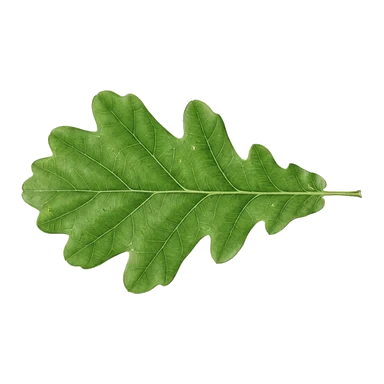
Sidla ngokubhidaniswa no: The oak processionary (Thaumetopoea processionea) is smaller as an adult, has an indistinct wing marking rather than a crescent, and lives in broad-leaved rather than coniferous forests. The pale eggar moth has no crescent marking on its wings.1
Amandla etyhefu yokuluma nokuhlaba
Iinwele ezincinci okanye iinwele ezirhabaxa ziyaqhawuka esikhumbeni kwaye ziyahlaba.
Ityhefu yaso yokuluma okanye yokuhlaba yenza ntoni?
The species is not venomous. Its caterpillars have hairs containing an irritant chemical called thaumetopoein, which causes skin rashes (urticaria) and eye irritation on contact. Some people may have an allergic reaction. The hairs of fifth-stage larvae can also break off and spread across nearby exposed skin.1
Siyingozi kangakanani ebantwini?
Ingozi ebantwini: KubuhlunguKunokuba buhlungu ngokwenene, kodwa phantse akusoze kube kubi kakhulu.Simple contact with the caterpillar hairs can cause severe rashes and eye irritation in humans and other mammals. Some individuals may have an allergic reaction.1
Senza ntoni xa soyika?
When stressed or threatened, fifth-stage caterpillars eject harpoon-shaped hairs that irritate any exposed skin nearby.1
 Ukuba uchukumisa iinwele zaso
- Kwiinwele zemibungu ehlabayo: zisuse ngeteyipu encamathelayo, emva koko uhlambe isikhumba. Musa ukukhuhla.
- Kukulunywa: hlamba uze upholise. Fumana uncedo lwezonyango ukuba umntu uziva engaphilanga kakuhle okanye wopha lula.
Soloko utsalela inombolo kaxakeka kuqala (112, 000, 911). Esi sisikhokelo soncedo lokuqala ngokubanzi, asilocebiso lwezonyango. Iziseko zoncedo lokuqala
 Hlala ukhuselekile
- Ungaze uchukumise, ubambe okanye uqhule isilwanyana sasendle, nokuba sincinci, kwaye nokuba sibonakala silele okanye sifile.
- Sinike indawo. Ukuba udibana naso, hlala uzolile, buyela umva kancinci kwaye usiyeke sihambe ngendlela yaso.
- Ukuba uchukumisa iinwele zaso: hlala uzolile, musa ukushukuma, tsalela inombolo kaxakeka (112, 000, 911) okanye uye esibhedlele ngokukhawuleza. Khumbula ukuba sasikhangeleka njani, ifoto iyanceda.
Asikuzingeli. Sisebenzisa ityhefu yaso ukubamba ukutya okanye ukuzikhusela, kwaye singakhetha ukuzimela. Okungakumbi malunga nokuhlala ukhuselekile
Sikhulu kangakanani?
Side kangakanani?
 malunga nobude besiqhobosho sephepha
 sicotha kunenkumba yasegadini
U-Pine processionary mkhulu kangakanani xa uthelekisa NAWE?
Zizibalo nje kwibhrawuza yakho. Akukho nto igcinwayo okanye ithunyelwa naphi na.
Sikhawuleza kangakanani?


Iinyaniso
Caterpillars in a procession hold together through touch from the caterpillar in front, which takes priority over the trail pheromone or silk.1
The caterpillars are one of the few temperate-zone insects whose larvae develop through the winter, living in silk nests high in pine trees.1
Adults live for only a single day, during which they mate and lay eggs.1
The Greek physician Dioscorides described the itching caused by this caterpillar in the 1st century AD, and Pliny the Elder recorded a treatment for it.1
Outbreaks are somewhat cyclical, with a period of 7 to 9 years.1
Umqhekezi weentsomi
Intsomi: Fabre's caterpillars marched in a circle around a flower pot only because they were trapped on its rim.
Inyaniso: Young caterpillars' circular trails continue for as long as 12 hours even when they are free on a flat surface.1
Kwiingcali zetyhefu
- Igama lenzululwazi
- Thaumetopoea pityocampa
- Iqela
- Imibungu nezinambuzane
- Usapho
- Notodontidae2
- Ucwangco
- Lepidoptera
- Amazwekazi
- IYurophu, IAfrika, IAsiya
- Iintsana
- Each female lays an enormous number of eggs near the tops of pine trees, in cylindrical egg masses 4 to 5 cm long covered with scales that mimic pine shoots.1
- Ingozi ebantwini
- 2 / 5: Kubuhlungu3
Apho iinyaniso zivela khona
- Pine processionary (Wikipedia (CC BY-SA 4.0))
- Thaumetopoea pityocampa (iNaturalist): amagama nokuhlelwa.
- Venom Wiki: inqanaba lengozi, ubungakanani obuqhelekileyo noqikelelo lwesantya zezethu. Bona indlela esizifumana ngayo: Indlela esilinganisa ngayo ingozi.
Inyaniso nganye kweli phepha inenombolo ebonisa umthombo wayo. Ukuba senze impazamo, uxolo, sithanda izilwanyana, asiyomagazini yenzululwazi. Sixelele ku-[email protected] kwaye siza kuyilungisa.
 Unomadudwane ulambile! I-Venom Wiki yiprojekthi yomntu omnye: isimahla, ayinazibhengezo kwaye ayinazilandeli. Isipho esincinci sinceda ukuyigcina ikwi-intanethi.Yondla unomadudwane
Okungakumbi kwiqela elinye: Imibungu nezinambuzane
 Oak processionaryImibungu nezinambuzaneKubuhlungu njeMusa ukuchukumisa
 White-spotted assassin bugImibungu nezinambuzaneKubuhlungu nje
 Common bombardier beetleImibungu nezinambuzaneAsinangozi
 Asian giant water bugImibungu nezinambuzaneKubuhlungu nje
 Blue-striped nettle grubImibungu nezinambuzaneKubuhlungu njeMusa ukuchukumisa
 Brown-tail mothImibungu nezinambuzaneKubuhlungu njeMusa ukuchukumisa
Sikwahlala: IYurophu
 Common European adderIi-viper namarhambaKufuna ugqirha
 Spanish flyEzinye izilwanyana ezityhefayoKufuna ugqirhaMusa ukuchukumisa
 Common waspIinyosi, oonomeva nee-hornetKubuhlungu nje
 European hornetIinyosi, oonomeva nee-hornetKubuhlungu nje
 Fire salamanderAmasele atyhefayo, amaxoxo nee-newtKubuhlungu njeMusa ukuchukumisa
 Western honey beeIinyosi, oonomeva nee-hornetKubuhlungu nje