
 IAfrika
 IAsiya
 IYurophu
 uMzantsi Melika
 IOstreliya neOceania
 IAntarctica
 uLwandlekazi lwePasifiki
 uLwandlekazi lweAtlantiki
 uLwandlekazi lwaseIndiya
 uLwandlekazi lweArctic
 uLwandle lweMeditera
 uLwandle oluBomvu
 uLwandle lweKharibhiya
 uLwandle lweCoral
 uLwandle lwaseMzantsi China
 uLwandle lwePhilippines
 uLwandle lweAndaman
 uLwandle lwaseMntla (North Sea)
 uLwandle lweTimor ne-Arafura
 iBhayi yaseBengal
 iGulf yaseCalifornia
Rock rattlesnake
 Ukuluma
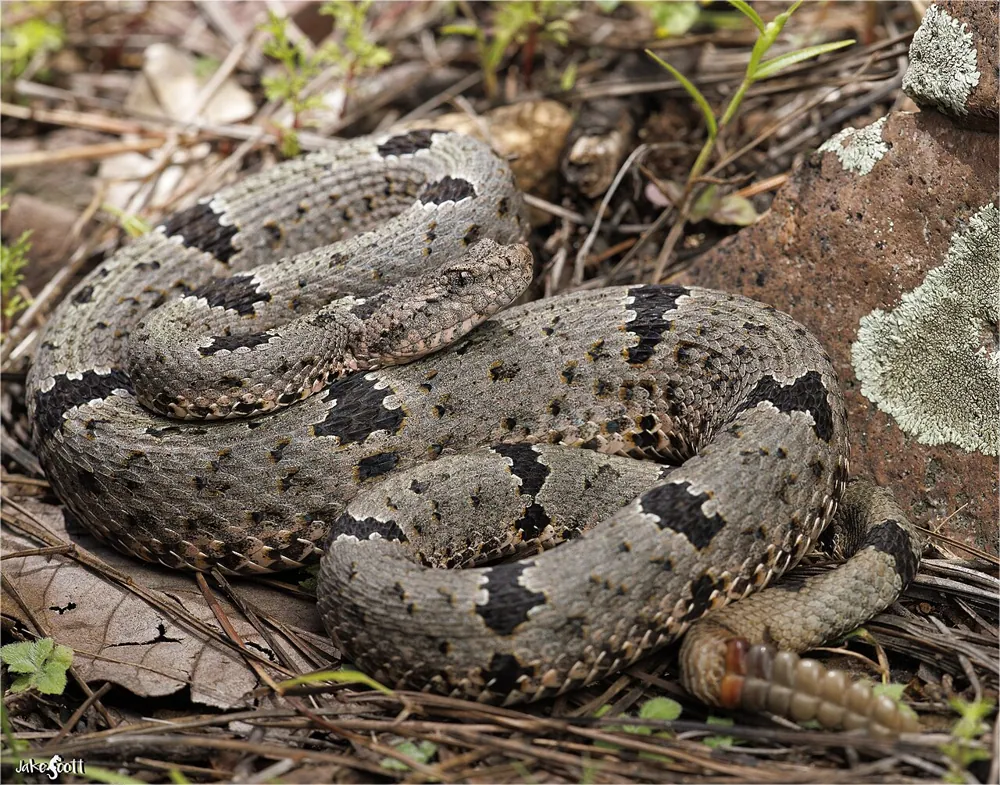
The rock rattlesnake is a small rattlesnake that lives in the south-western United States and northern central Mexico. It spends most of its life among rocks and hides well by blending in with its surroundings. It is venomous, so it is important to know what it looks like and to give it plenty of room.1



 Indlela yokusiqaphela
- Usually light grey with darker grey banding, especially near areas of limestone1
- Snakes at higher altitudes tend to be darker1
- The mottled form from the Davis Mountains is often pinkish with dark-grey speckling rather than clear banding1
- The banded form has clean, distinct banding with little speckling or mottling1
- Has a large, rounded head, vertical pupils and a rattle on the tail. It rarely grows longer than 81.3 cm1
Amandla etyhefu yokuluma nokuhlaba
Ityhefu iphuma ngamazinyo aso etyhefu okanye ngamazinyo aso xa siluma.
Ityhefu yaso yokuluma okanye yokuhlaba yenza ntoni?
Its venom is mainly a hemotoxin, a type of venom that acts on the blood and body tissues. It can also have significant neurotoxic effects, which attack the nerves.1
Siyingozi kangakanani ebantwini?
Ingozi ebantwini: Kubi kakhuluUkulunywa kufuna ugqirha. Ukufa kunqabe kakhulu.The snake is not aggressive and relies on camouflage, so it often will not strike or rattle unless it is harassed. However, if someone steps on it or touches it by accident, its immediate reaction is to bite. Most people bitten by this snake were hiking among rocks.1
 Iindaba ezimnandi: oogqirha banamayeza (i-antivenom) okanye unyango lwale nto.1
Senza ntoni xa soyika?
It relies on camouflage and will often stay still rather than strike or rattle unless it is physically harassed.1
 Ukuba siyaluma
- Gcina umntu engashukumi kwaye ezolile, gcina ilungu elilunyiweyo kwinqanaba lentliziyo, susa imisesane nezinto eziqinileyo, uze umse esibhedlele ngokukhawuleza.
Soloko utsalela inombolo kaxakeka kuqala (112, 000, 911). Esi sisikhokelo soncedo lokuqala ngokubanzi, asilocebiso lwezonyango. Iziseko zoncedo lokuqala
 Hlala ukhuselekile
- Ungaze uchukumise, ubambe okanye uqhule isilwanyana sasendle, nokuba sincinci, kwaye nokuba sibonakala silele okanye sifile.
- Sinike indawo. Ukuba udibana naso, hlala uzolile, buyela umva kancinci kwaye usiyeke sihambe ngendlela yaso.
- Ukuba siyakuluma: hlala uzolile, musa ukushukuma, tsalela inombolo kaxakeka (112, 000, 911) okanye uye esibhedlele ngokukhawuleza. Khumbula ukuba sasikhangeleka njani, ifoto iyanceda.
Asikuzingeli. Sisebenzisa ityhefu yaso ukubamba ukutya okanye ukuzikhusela, kwaye singakhetha ukuzimela. Okungakumbi malunga nokuhlala ukhuselekile
Sikhulu kangakanani?
Side kangakanani?
 ubude obulingana neekati zasekhaya eziyi-1,5 ukusuka empumlweni ukuya emsileni
 ubude obulingana neebhanana eziyi-5 zilandelelana
 singagqiba iimitha ezili-100 ngemizuzwana eyi-110 (owona mntu ukhawulezayo udinga i-9,6)
U-Rock rattlesnake mkhulu kangakanani xa uthelekisa NAWE?
Zizibalo nje kwibhrawuza yakho. Akukho nto igcinwayo okanye ithunyelwa naphi na.
Sikhawuleza kangakanani?


Iinyaniso
A new segment is added to the rattle each time the snake sheds its skin, but the rattle can break off, so segments do not give a reliable age.1
Its rattle is made of keratin, the same material as human fingernails.1
Its colour generally reflects the colour of the rock where it lives, which helps it stay hidden.1
The young take three or more years to mature.1
Umqhekezi weentsomi
Intsomi: You can tell a rock rattlesnake's age by counting the segments on its rattle.
Inyaniso: A segment is added each time the snake sheds, but the rattle is fragile and can break off, and shedding frequency varies. So the number of segments cannot tell you its age.1
Kwiingcali zetyhefu
- Igama lenzululwazi
- Crotalus lepidus
- Iqela
- Ii-rattlesnake
- Usapho
- Viperidae2
- Ucwangco
- Squamata
- Amazwekazi
- uMntla Melika
- Iintsana
- It is ovoviviparous, so it gives birth to live young, six to eight at a time, about four months after breeding in spring. The young look like small versions of the parents.1
- Imeko yaso endle
- Least Concern (IUCN Red List). It is listed as a threatened species by New Mexico.1
- Ingozi ebantwini
- 3 / 5: Kubi kakhulu3
Apho iinyaniso zivela khona
- Crotalus lepidus (Wikipedia (CC BY-SA 4.0))
- Crotalus lepidus (iNaturalist): amagama nokuhlelwa.
- Venom Wiki: inqanaba lengozi, ubungakanani obuqhelekileyo noqikelelo lwesantya zezethu. Bona indlela esizifumana ngayo: Indlela esilinganisa ngayo ingozi.
Inyaniso nganye kweli phepha inenombolo ebonisa umthombo wayo. Ukuba senze impazamo, uxolo, sithanda izilwanyana, asiyomagazini yenzululwazi. Sixelele ku-[email protected] kwaye siza kuyilungisa.
 Unomadudwane ulambile! I-Venom Wiki yiprojekthi yomntu omnye: isimahla, ayinazibhengezo kwaye ayinazilandeli. Isipho esincinci sinceda ukuyigcina ikwi-intanethi.Yondla unomadudwane
 Eastern diamondback rattlesnake
 Timber rattlesnake
 Western diamondback rattlesnake
 Sidewinder
 Mojave rattlesnake
 Aruba rattlesnake
 Terciopelo
 Eastern coral snake
 Eyelash viper
 Arizona bark scorpion
 Brown recluse
 Cane toad