
 IAfrika
 IAsiya
 IYurophu
 uMzantsi Melika
 IOstreliya neOceania
 IAntarctica
 uLwandlekazi lwePasifiki
 uLwandlekazi lweAtlantiki
 uLwandlekazi lwaseIndiya
 uLwandlekazi lweArctic
 uLwandle lweMeditera
 uLwandle oluBomvu
 uLwandle lweKharibhiya
 uLwandle lweCoral
 uLwandle lwaseMzantsi China
 uLwandle lwePhilippines
 uLwandle lweAndaman
 uLwandle lwaseMntla (North Sea)
 uLwandle lweTimor ne-Arafura
 iBhayi yaseBengal
 iGulf yaseCalifornia
South American rattlesnake
 Ukuluma
The South American rattlesnake is a large, highly venomous pit viper. It lives across much of South America, except the Andes Mountains, and also on some Caribbean islands. It is the most widely spread member of its genus, which is why it matters to people in so many places.1


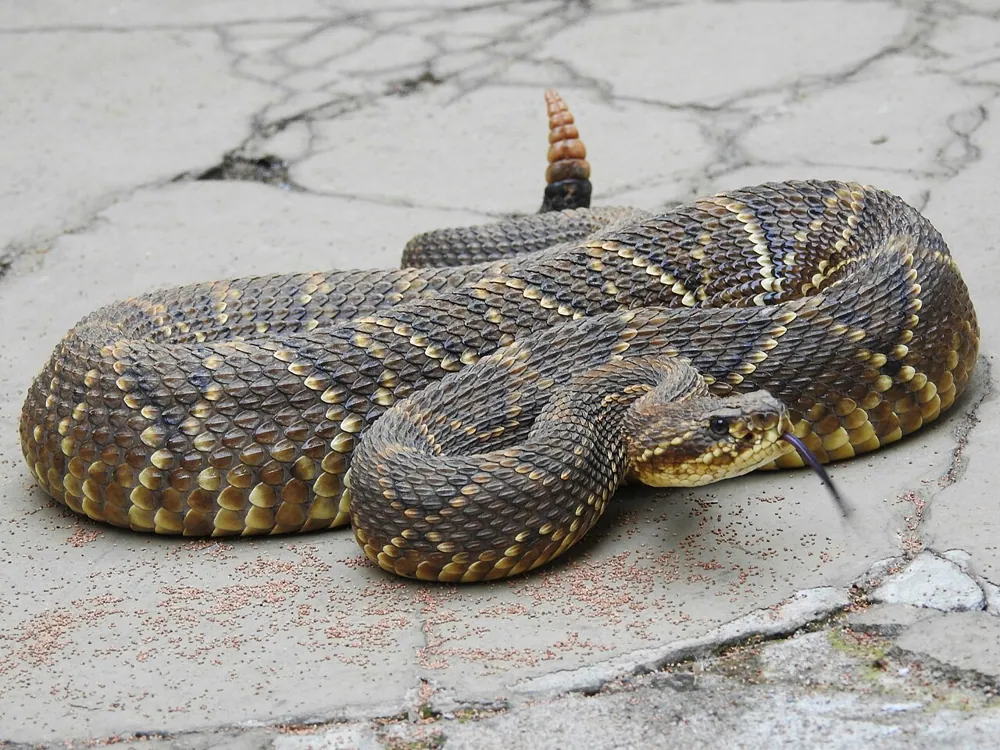
 Indlela yokusiqaphela
- Two distinct stripes start at the base of the head, and the colour between the lines is lighter than the stripes.1
- Body colour and pattern vary, but most have 18 to 32 dark diamond or rhombic spots along the back.1
- The head has a dark brown bar at the top and a dark band behind the eye.1
- The tail is usually grey, with dark, faint crossed bands.1
- The belly is white or yellowish with light grey spots, getting darker towards the tail.1
Amandla etyhefu yokuluma nokuhlaba
Ityhefu iphuma ngamazinyo aso etyhefu okanye ngamazinyo aso xa siluma.
Ityhefu yaso yokuluma okanye yokuhlaba yenza ntoni?
Its venom contains neurotoxins, which attack the nerves, and myotoxins, which damage muscle. These cause progressive paralysis, including impaired or lost vision, hearing problems, drooping eyelids and weakness in the neck muscles, which can become so limp that the head appears broken. Breathing can eventually be stopped by paralysis, and the muscle damage can cause dark urine.1
Siyingozi kangakanani ebantwini?
Ingozi ebantwini: Siyingozi kakhuluSinokubulala umntu ongafumani nyango.It is a highly venomous snake. The mortality rate is 72% for bite cases without specific serum treatment, and 11% for cases with it. Acute kidney failure is considered the main cause of death.1
 Iindaba ezimnandi: oogqirha banamayeza (i-antivenom) okanye unyango lwale nto.1
Senza ntoni xa soyika?
It is highly alert and gives little warning before it strikes, but it is seldom aggressive towards people.1
 Ukuba siyaluma
- Specific serum treatment (antivenom) greatly lowers the death rate, so a bite needs urgent hospital care to give it.1
- Gcina umntu engashukumi kwaye ezolile, gcina ilungu elilunyiweyo kwinqanaba lentliziyo, susa imisesane nezinto eziqinileyo, uze umse esibhedlele ngokukhawuleza.
Soloko utsalela inombolo kaxakeka kuqala (112, 000, 911). Esi sisikhokelo soncedo lokuqala ngokubanzi, asilocebiso lwezonyango. Iziseko zoncedo lokuqala
 Hlala ukhuselekile
- Ungaze uchukumise, ubambe okanye uqhule isilwanyana sasendle, nokuba sincinci, kwaye nokuba sibonakala silele okanye sifile.
- Sinike indawo. Ukuba udibana naso, hlala uzolile, buyela umva kancinci kwaye usiyeke sihambe ngendlela yaso.
- Ukuba siyakuluma: hlala uzolile, musa ukushukuma, tsalela inombolo kaxakeka (112, 000, 911) okanye uye esibhedlele ngokukhawuleza. Khumbula ukuba sasikhangeleka njani, ifoto iyanceda.
Asikuzingeli. Sisebenzisa ityhefu yaso ukubamba ukutya okanye ukuzikhusela, kwaye singakhetha ukuzimela. Okungakumbi malunga nokuhlala ukhuselekile
Sikhulu kangakanani?
Side kangakanani?
 ubude obulingana neekati zasekhaya eziyi-4 ukusuka empumlweni ukuya emsileni
 ubude obulingana neebhanana eziyi-11 zilandelelana
 singagqiba iimitha ezili-100 ngemizuzwana eyi-90 (owona mntu ukhawulezayo udinga i-9,6)
U-South American rattlesnake mkhulu kangakanani xa uthelekisa NAWE?
Zizibalo nje kwibhrawuza yakho. Akukho nto igcinwayo okanye ithunyelwa naphi na.
Sikhawuleza kangakanani?


Iinyaniso
The lethal dose for a 60 kg human is possibly 18 mg, while a snake's venom yield is 20 to 100 mg.1
Crotoxin, a neurotoxin, makes up about 48.5% to 89.4% of the venom proteins in one subspecies, though it is typically 60% to 70%.1
It is the most widely distributed member of its genus, and seven subspecies are currently recognised.1
It is more active at dusk and in the early hours of the morning.1
Males compete for access to females from the end of summer, with mating in autumn and the young born the following spring or summer.1
Umqhekezi weentsomi
Intsomi: Yellow venom means the bite damages blood and tissue, and white venom means it attacks the nerves.
Inyaniso: Venom colour does not determine the type. Colour depends on pigments in the venom, not on whether it is haemorrhagic or neurotoxic.1
Kwiingcali zetyhefu
- Igama lenzululwazi
- Crotalus durissus
- Iqela
- Ii-rattlesnake
- Usapho
- Viperidae2
- Ucwangco
- Squamata
- Amazwekazi
- uMzantsi Melika
- Iintsana
- It gives birth to live young (ovoviviparous), usually four to eight at a time. In Roraima, Brazil, gestation has been reported to last five months, with up to 14 young.1
- Ingozi ebantwini
- 4 / 5: Siyingozi kakhulu3
Apho iinyaniso zivela khona
- Crotalus durissus (Wikipedia (CC BY-SA 4.0))
- Crotalus durissus (iNaturalist): amagama nokuhlelwa.
- Venom Wiki: inqanaba lengozi, ubungakanani obuqhelekileyo noqikelelo lwesantya zezethu. Bona indlela esizifumana ngayo: Indlela esilinganisa ngayo ingozi.
Inyaniso nganye kweli phepha inenombolo ebonisa umthombo wayo. Ukuba senze impazamo, uxolo, sithanda izilwanyana, asiyomagazini yenzululwazi. Sixelele ku-[email protected] kwaye siza kuyilungisa.
 Unomadudwane ulambile! I-Venom Wiki yiprojekthi yomntu omnye: isimahla, ayinazibhengezo kwaye ayinazilandeli. Isipho esincinci sinceda ukuyigcina ikwi-intanethi.Yondla unomadudwane
 Uracoan rattlesnake
 Eastern diamondback rattlesnake
 Timber rattlesnake
 Western diamondback rattlesnake
 Sidewinder
 Mojave rattlesnake
 Golden poison frog
 Terciopelo
 Brazilian wandering spider
 Eyelash viper
 Golden lancehead
 South American bushmaster