
 IAfrika
 IAsiya
 IYurophu
 uMzantsi Melika
 IOstreliya neOceania
 IAntarctica
 uLwandlekazi lwePasifiki
 uLwandlekazi lweAtlantiki
 uLwandlekazi lwaseIndiya
 uLwandlekazi lweArctic
 uLwandle lweMeditera
 uLwandle oluBomvu
 uLwandle lweKharibhiya
 uLwandle lweCoral
 uLwandle lwaseMzantsi China
 uLwandle lwePhilippines
 uLwandle lweAndaman
 uLwandle lwaseMntla (North Sea)
 uLwandle lweTimor ne-Arafura
 iBhayi yaseBengal
 iGulf yaseCalifornia
South American sea nettle
 Ii-tentacle ezihlabayo
The South American sea nettle is a large jellyfish with a red-brown bell and long, spiralling arms. It drifts in the open ocean along both the Pacific and Atlantic coasts of South America. Its stinging tentacles catch the tiny animals it eats.1

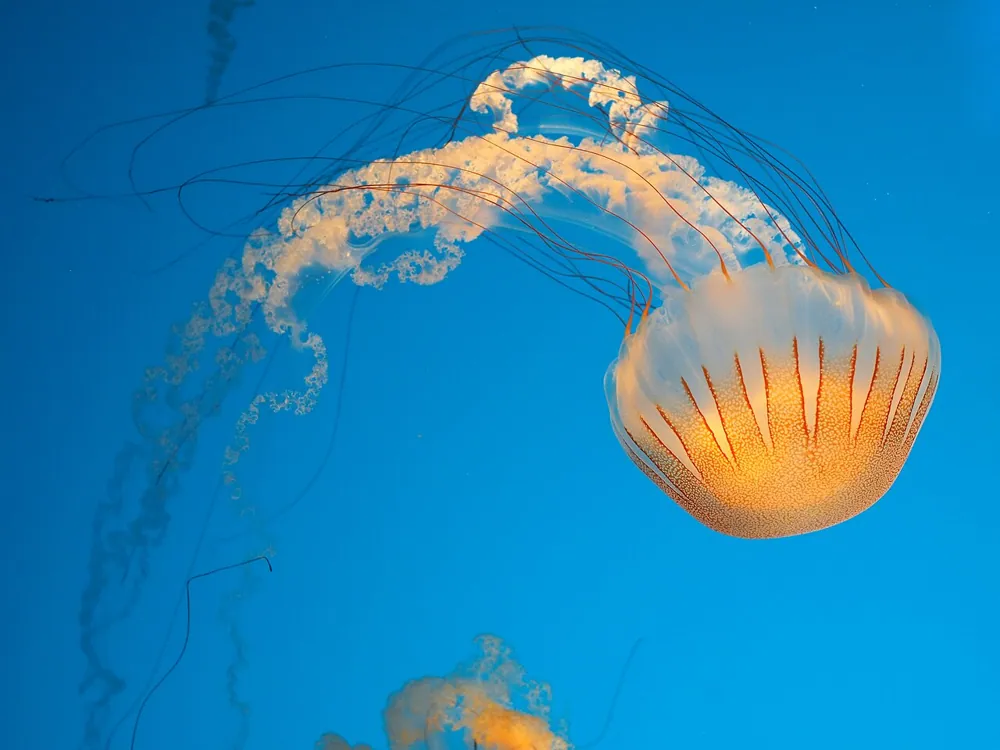
 Indlela yokusiqaphela
- Red-brown bell1
- Long, spiralling arms1
- Thin outer tentacles that surround inner tentacles which are often white and fluffy in appearance1
- Most mature individuals have a bell 25 to 40 cm across1
Sidla ngokubhidaniswa no: It was historically confused with C. hysoscella. That species is now known to be restricted to the northeast Atlantic, so it is not found in South American waters.1
Amandla etyhefu yokuluma nokuhlaba
Amawaka eeseli ezincinci ezihlabayo ziyadubula xa kukho into ezichukumisayo.
Siyingozi kangakanani ebantwini?
Ingozi ebantwini: KubuhlunguKunokuba buhlungu ngokwenene, kodwa phantse akusoze kube kubi kakhulu. Ukuba siyahlaba
- Phuma emanzini kwaye ususe naziphi na ii-tentacle (ngeiglavu okanye ngelaphu).
- Kwiijelifishi zebhokisi (box jellyfish) zasetropiki: thela iviniga kwiindawo ezihlatyiweyo ubuncinane imizuzwana engama-30, biza uncedo kwaye ulungele ukwenza i-CPR. Kwii-bluebottle nakwezinye ezininzi: hlambulula ngamanzi olwandle, emva koko usebenzise amanzi ashushu ngenxa yeentlungu.
Soloko utsalela inombolo kaxakeka kuqala (112, 000, 911). Esi sisikhokelo soncedo lokuqala ngokubanzi, asilocebiso lwezonyango. Iziseko zoncedo lokuqala
 Hlala ukhuselekile
- Ungaze uchukumise, ubambe okanye uqhule isilwanyana sasendle, nokuba sincinci, kwaye nokuba sibonakala silele okanye sifile.
- Sinike indawo. Ukuba udibana naso, hlala uzolile, buyela umva kancinci kwaye usiyeke sihambe ngendlela yaso.
- Ukuba siyakuhlaba: hlala uzolile, musa ukushukuma, tsalela inombolo kaxakeka (112, 000, 911) okanye uye esibhedlele ngokukhawuleza. Khumbula ukuba sasikhangeleka njani, ifoto iyanceda.
Asikuzingeli. Sisebenzisa ityhefu yaso ukubamba ukutya okanye ukuzikhusela, kwaye singakhetha ukuzimela. Okungakumbi malunga nokuhlala ukhuselekile
Phi emhlabeni?
Sikhulu kangakanani?
Side kangakanani?
 ubude obulingana neekati zasekhaya eziyi-2 ukusuka empumlweni ukuya emsileni
 ubude obulingana neebhanana eziyi-6 zilandelelana
 singaqubha ubude bechibi elikhulu lokuqubha (50 m) ngemizuzwana eyi-160
U-South American sea nettle mkhulu kangakanani xa uthelekisa NAWE?
Zizibalo nje kwibhrawuza yakho. Akukho nto igcinwayo okanye ithunyelwa naphi na.
Sikhawuleza kangakanani?


Iinyaniso
Its bell can grow up to 1 metre across, but most adults are much smaller.1
Crab larvae may form a parasitic relationship with it, using it for food and shelter.1
A single polyp can produce between 3 and 10 young jellyfish called ephyrae in about 7 to 10 days.1
Its population has increased in recent years, which may be linked to climate change and major changes to ocean ecosystems.1
Its stinging tentacles are used to catch its prey, and the adults are eaten by sea turtles and some fish.1
Umqhekezi weentsomi
Intsomi: It is the only sea nettle found in South America.
Inyaniso: Despite its common name, it is not the only sea nettle in the region. C. lactea is another sea nettle found there.1
Kwiingcali zetyhefu
- Igama lenzululwazi
- Chrysaora plocamia
- Iqela
- Iijelifishi nezinye izilwanyana zaselwandle ezihlabayo
- Usapho
- Pelagiidae2
- Ucwangco
- Semaeostomeae
- Amazwekazi
- uLwandlekazi lweAtlantiki, Iilwandlekazi
- Iintsana
- Fertilised eggs drift in the ocean, and often attach to the arms of adults for safety. They develop into swimming larvae called planulae, which later settle and grow into polyps.1
- Ingozi ebantwini
- 2 / 5: Kubuhlungu3
Apho iinyaniso zivela khona
- Chrysaora plocamia (Wikipedia (CC BY-SA 4.0))
- Chrysaora plocamia (iNaturalist): amagama nokuhlelwa.
- Venom Wiki: inqanaba lengozi, ubungakanani obuqhelekileyo noqikelelo lwesantya zezethu. Bona indlela esizifumana ngayo: Indlela esilinganisa ngayo ingozi.
Inyaniso nganye kweli phepha inenombolo ebonisa umthombo wayo. Ukuba senze impazamo, uxolo, sithanda izilwanyana, asiyomagazini yenzululwazi. Sixelele ku-[email protected] kwaye siza kuyilungisa.
 Unomadudwane ulambile! I-Venom Wiki yiprojekthi yomntu omnye: isimahla, ayinazibhengezo kwaye ayinazilandeli. Isipho esincinci sinceda ukuyigcina ikwi-intanethi.Yondla unomadudwane
Okungakumbi kwiqela elinye: Iijelifishi nezinye izilwanyana zaselwandle ezihlabayo
 Australian box jellyfishIijelifishi nezinye izilwanyana zaselwandle ezihlabayoSiyabulalaMusa ukuchukumisa
 Irukandji jellyfishIijelifishi nezinye izilwanyana zaselwandle ezihlabayoSinokubulalaMusa ukuchukumisa
 Portuguese man o' warIijelifishi nezinye izilwanyana zaselwandle ezihlabayoKufuna ugqirhaMusa ukuchukumisa
 Lion's mane jellyfishIijelifishi nezinye izilwanyana zaselwandle ezihlabayoKubuhlungu njeMusa ukuchukumisa
 Moon jellyfishIijelifishi nezinye izilwanyana zaselwandle ezihlabayoAsinangozi
 Common kingslayerIijelifishi nezinye izilwanyana zaselwandle ezihlabayoSinokubulalaMusa ukuchukumisa
Sikwahlala: uLwandlekazi lweAtlantiki
 Hawksbill sea turtleEzinye izilwanyana ezityhefayoSinokubulala
 Blue sea dragonIinkumba ze-cone neengwaneKubuhlungu nje
 Greenland sharkEzinye izilwanyana ezityhefayoKubuhlungu nje
 Common octopusIinkumba ze-cone neengwaneAsinangozi
 Common stingrayIintlanzi ezinetyhefuKufuna ugqirha
 Greater weeverIintlanzi ezinetyhefuKufuna ugqirhaMusa ukuchukumisa