
 IAfrika
 IAsiya
 IYurophu
 uMzantsi Melika
 IOstreliya neOceania
 IAntarctica
 uLwandlekazi lwePasifiki
 uLwandlekazi lweAtlantiki
 uLwandlekazi lwaseIndiya
 uLwandlekazi lweArctic
 uLwandle lweMeditera
 uLwandle oluBomvu
 uLwandle lweKharibhiya
 uLwandle lweCoral
 uLwandle lwaseMzantsi China
 uLwandle lwePhilippines
 uLwandle lweAndaman
 uLwandle lwaseMntla (North Sea)
 uLwandle lweTimor ne-Arafura
 iBhayi yaseBengal
 iGulf yaseCalifornia
Southern stingray
 Ukuhlaba
The southern stingray is a flat, diamond-shaped fish that lives on the sea bed in warm waters of the western Atlantic Ocean. It hides under sand and mud and is famous for the venomous spine on its tail. Divers and snorkellers often meet it in the Caribbean.1



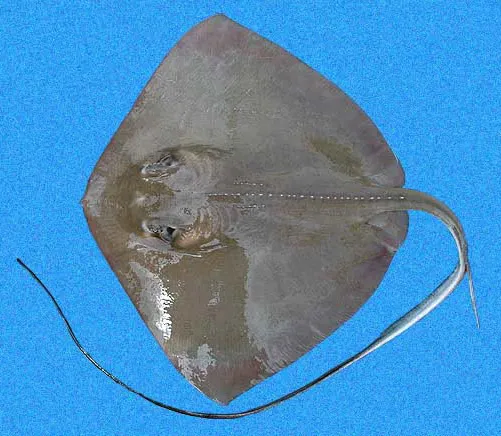
 Indlela yokusiqaphela
- A flat, diamond-shaped body that is more angular than other rays1
- Top of the body is olive brown or green in adults and dark grey in juveniles1
- Underside is white1
- A slender tail with a long, serrated, venomous spine at the base1
- Eyes sit on top of the head, with small breathing openings called spiracles behind them1
Amandla etyhefu yokuluma nokuhlaba
Ityhefu iphuma ngenaliti yokuhlaba.
Ityhefu yaso yokuluma okanye yokuhlaba yenza ntoni?
The barb on the tail is covered in venomous mucus. The spines are not fatal to humans, but stepping on one causes intense pain.1
Siyingozi kangakanani ebantwini?
Ingozi ebantwini: Kubi kakhuluUkuhlatywa kufuna ugqirha. Ukufa kunqabe kakhulu.The spines are not fatal to humans, but they are incredibly painful if stepped on. They are used to defend the stingray against predators, including humans.1
Senza ntoni xa soyika?
It buries itself in the sea bed to avoid predators and uses its venomous tail spines to drive them off.1
 Ukuba siyahlaba
- Faka inxeba emanzini ashushu, ashushu kangangoko umntu angakwazi ukunyamezela ngaphandle kokutshiswa (wavavanye ngesandla sakho), imizuzu engama-30 ukuya kwengama-90. Fumana uncedo lwezonyango, ingakumbi kwii-stonefish nakwii-stingray.
Soloko utsalela inombolo kaxakeka kuqala (112, 000, 911). Esi sisikhokelo soncedo lokuqala ngokubanzi, asilocebiso lwezonyango. Iziseko zoncedo lokuqala
 Hlala ukhuselekile
- Ungaze uchukumise, ubambe okanye uqhule isilwanyana sasendle, nokuba sincinci, kwaye nokuba sibonakala silele okanye sifile.
- Sinike indawo. Ukuba udibana naso, hlala uzolile, buyela umva kancinci kwaye usiyeke sihambe ngendlela yaso.
- Ukuba siyakuhlaba: hlala uzolile, musa ukushukuma, tsalela inombolo kaxakeka (112, 000, 911) okanye uye esibhedlele ngokukhawuleza. Khumbula ukuba sasikhangeleka njani, ifoto iyanceda.
Asikuzingeli. Sisebenzisa ityhefu yaso ukubamba ukutya okanye ukuzikhusela, kwaye singakhetha ukuzimela. Okungakumbi malunga nokuhlala ukhuselekile
Phi emhlabeni?
Sikhulu kangakanani?
Side kangakanani?
 ubude obulingana neekati zasekhaya eziyi-3 ukusuka empumlweni ukuya emsileni
 ubude obulingana neebhanana eziyi-8 zilandelelana
 singaqubha ubude bechibi elikhulu lokuqubha (50 m) ngemizuzwana eyi-8,2
U-Southern stingray mkhulu kangakanani xa uthelekisa NAWE?
Zizibalo nje kwibhrawuza yakho. Akukho nto igcinwayo okanye ithunyelwa naphi na.
Sikhawuleza kangakanani?


Iinyaniso
In shallow waters, birds follow the stingrays as they dig, eating the fish that the stingrays uncover.1
Its eyes and breathing openings sit on top of its head, so it can take in water while lying on the sea bed or buried in sand.1
It senses hidden prey through Ampullae of Lorenzini, which pick up the electric fields that prey give off.1
It is nocturnal, so most of its hunting happens at night.1
Female southern stingrays grow much larger than males.1
Kwiingcali zetyhefu
- Igama lenzululwazi
- Hypanus americanus
- Iqela
- Iintlanzi ezinetyhefu
- Usapho
- Dasyatidae2
- Ucwangco
- Myliobatiformes
- Amazwekazi
- uLwandlekazi lweAtlantiki, iGulf yaseMexico, uLwandle lweKharibhiya, Iilwandlekazi
- Iintsana
- It gives live birth after a pregnancy lasting about seven to eight months. In captivity, a litter of two to ten young has been recorded.1
- Ingozi ebantwini
- 3 / 5: Kubi kakhulu3
Apho iinyaniso zivela khona
- Southern stingray (Wikipedia (CC BY-SA 4.0))
- Hypanus americanus (iNaturalist): amagama nokuhlelwa.
- Venom Wiki: inqanaba lengozi, ubungakanani obuqhelekileyo noqikelelo lwesantya zezethu. Bona indlela esizifumana ngayo: Indlela esilinganisa ngayo ingozi.
Inyaniso nganye kweli phepha inenombolo ebonisa umthombo wayo. Ukuba senze impazamo, uxolo, sithanda izilwanyana, asiyomagazini yenzululwazi. Sixelele ku-[email protected] kwaye siza kuyilungisa.
 Unomadudwane ulambile! I-Venom Wiki yiprojekthi yomntu omnye: isimahla, ayinazibhengezo kwaye ayinazilandeli. Isipho esincinci sinceda ukuyigcina ikwi-intanethi.Yondla unomadudwane
Okungakumbi kwiqela elinye: Iintlanzi ezinetyhefu
 Reef stonefishIintlanzi ezinetyhefuSinokubulalaMusa ukuchukumisa
 Red lionfishIintlanzi ezinetyhefuKufuna ugqirhaMusa ukuchukumisa
 Estuarine stonefishIintlanzi ezinetyhefuSinokubulalaMusa ukuchukumisa
 Short-tail stingrayIintlanzi ezinetyhefuSinokubulala
 Striped eel catfishIintlanzi ezinetyhefuSinokubulalaMusa ukuchukumisa
 Bluespotted ribbontail rayIintlanzi ezinetyhefuKufuna ugqirha
Sikwahlala: uLwandlekazi lweAtlantiki
 Hawksbill sea turtleEzinye izilwanyana ezityhefayoSinokubulala
 Portuguese man o' warIijelifishi nezinye izilwanyana zaselwandle ezihlabayoKufuna ugqirhaMusa ukuchukumisa
 Blue sea dragonIinkumba ze-cone neengwaneKubuhlungu nje
 Greenland sharkEzinye izilwanyana ezityhefayoKubuhlungu nje
 Lion's mane jellyfishIijelifishi nezinye izilwanyana zaselwandle ezihlabayoKubuhlungu njeMusa ukuchukumisa
 Common octopusIinkumba ze-cone neengwaneAsinangozi