
 Áfíríkà
 Éṣíà
Éṣíà Yúróòpù
 Gúúsù Amẹ́ríkà
 Ọsirélíà àti Òṣéáníà
 Antáktíkà
 Òkun Pàsífíìkì
 Òkun Àtìláńtíìkì
 Òkun Íńdíà
 Òkun Áktíkì
 Òkun Mẹditaréníà
 Òkun Pupa
 Òkun Káríbíànù
 Òkun Coral
 Òkun Gúúsù Ṣáínà
 Òkun Fílípínì
 Òkun Andaman
 Òkun Àríwá
 Òkun Tímọ̀ àti Òkun Àráfúrà
 Ìyawọlẹ̀ Òkun Bẹ̀ngál
 Ìyawọlẹ̀ Òkun Kalifọ́níà
Brown widow
 Ìbùjẹ
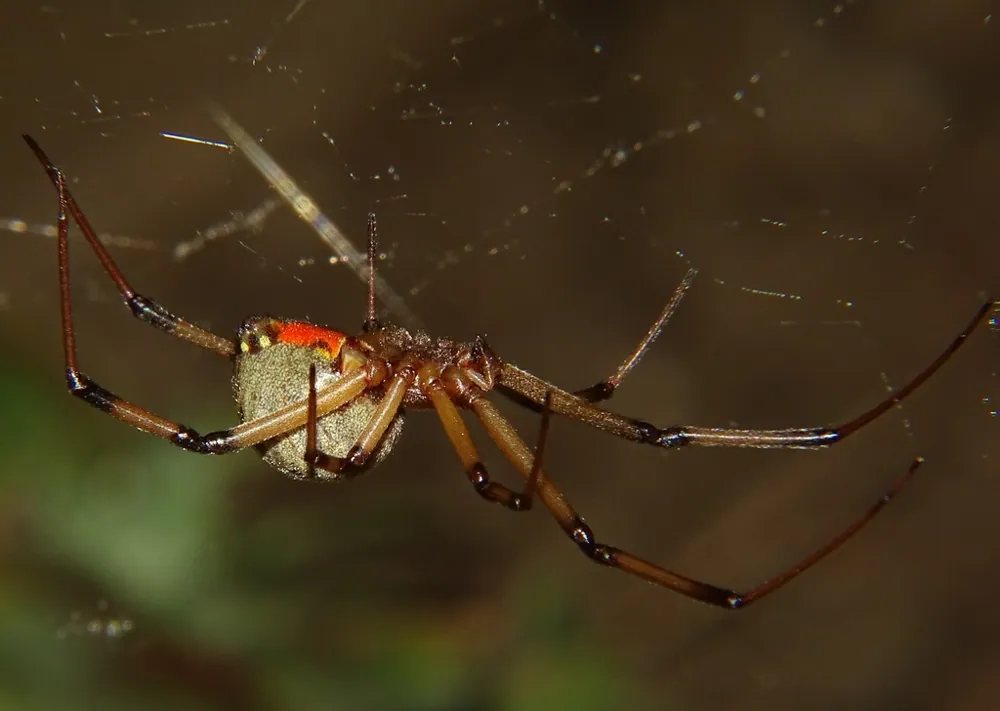
ÌbùjẹThe brown widow is a spider in the widow family, a close cousin of the black widow. It lives in many parts of the world, often around houses and buildings. Its bite is painful but usually not dangerous.1
 Bí o ṣe lè dá a mọ̀
- Black and white geometric pattern on the top of the abdomen1
- Usually a bright orange or yellowish hourglass marking on the underside of the abdomen1
- Body colour ranges from tan and dark brown to black, with shades of grey also possible1
- Stripes on the legs1
- Egg sacs are spiky, like a sandspur, and sometimes described as tufted, fluffy or spiky1
A sábà máa ń ṣì í mọ̀ sí: The black widow is slightly larger and darker, and has a red hourglass on the underside. The brown widow is lighter, has an orange or yellow hourglass, and has a black and white pattern on top of the abdomen that the black widow does not have. In southern Africa, the brown widow's relative L. rhodesiensis, native to Zimbabwe, is also called a brown button spider.1
Agbára oró
Oró ń jáde láti inú eyín oró tàbí eyín rẹ̀ nígbà tí ó bá bùjẹ.
Kí ni oró rẹ̀ máa ń ṣe?
Like all widow spiders, the brown widow has a neurotoxic venom, which attacks the nerves. It causes latrodectism, a set of very unpleasant symptoms. The effects are usually confined to the bite area and the tissue around it.1
Báwo ló ṣe léwu tó fún ènìyàn?
Ewu fún ènìyàn: Ó ń dunniÓ lè dunni gan-an, ṣùgbọ́n kì í fẹ́rẹ̀ẹ́ le rárá.Brown widow bites are usually not very dangerous, and are much less dangerous than black widow bites. The spider cannot deliver as much venom as a black widow, so its bites are considered minor. They are painful.1
 Bí ó bá bùjẹ
- Fọ ibi ìbùjẹ náà kí o sì fi àpò yìnyín lé e fún ìrora. Wá ìrànlọ́wọ́ ìṣègùn bí ìrora bá le, tí ó ń tàn kálẹ̀, tàbí tí ara ẹni náà kò bá yá.
Máa kọ́kọ́ pe nọ́ńbà pàjáwìrì rẹ nígbà gbogbo (112, 000, 911). Èyí jẹ́ ìtọ́sọ́nà ìtọ́jú àkọ́kọ́ gbogbogbò, kì í ṣe ìmọ̀ràn ìṣègùn. Ìpìlẹ̀ ìtọ́jú àkọ́kọ́
 Wà láìléwu
- Má ṣe fọwọ́ kan, mú tàbí yọ ẹranko igbó lẹ́nu láéláé, kódà bí ó bá kéré, kódà bí ó bá dà bí ẹni pé ó ń sùn tàbí ó ti kú.
- Fún un ní àyè. Bí o bá pàdé ọ̀kan, farabalẹ̀, sẹ́yìn díẹ̀díẹ̀ kí o sì jẹ́ kí ó máa bá ọ̀nà rẹ̀ lọ.
- Bí ọ̀kan bá bù ọ́ jẹ: farabalẹ̀, má ṣe mira, pe nọ́ńbà pàjáwìrì rẹ (112, 000, 911) tàbí lọ sí ilé ìwòsàn kíákíá. Rántí bí ó ṣe rí, fọ́tò máa ń ṣèrànwọ́.
Kò wá ọ kiri láti ṣe ọ́ léṣe. Ó ń lo oró rẹ̀ láti mú oúnjẹ tàbí láti dáàbò bo ara rẹ̀, ó sì fẹ́ràn láti farapamọ́ jù. Sí i nípa wíwà láìléwu
Báwo ló ṣe tóbi tó?
Báwo ló ṣe gùn tó?
 ó gùn tó pínì ìwé (paper clip)
Báwo ni Brown widow ṣe tóbi tó tí a bá fi wé ÌWỌ?
Ìṣirò nìkan nínú bráwúsà rẹ. A kò fi ohunkóhun pamọ́, a kò sì fi ránṣẹ́ sí ibikíbi.
Báwo ló ṣe yára tó?


Òtítọ́
In Southern California, researchers suggest the brown widow may be pushing black widows out of the area by competing and fighting for territory.1
Its egg sacs are so spiky that they are easy to tell apart from those of most other spiders.1
A female can make up to 20 egg sacs over her lifetime, with 120 to 150 eggs in each.1
Brown widows are preyed upon by wasps, including blue mud-dauber wasps and digger wasps.1
Olùfọ́ àròsọ
Àròsọ: The brown widow is as dangerous as the black widow.
Òtítọ́: Brown widow bites are usually not very dangerous and are much less dangerous than black widow bites.1
Fún àwọn amòye oró
- Orúkọ sáyẹ́ǹsì
- Latrodectus geometricus
- Ẹgbẹ́
- Alántakùn
- Ìdílé
- Theridiidae2
- Ètò
- Araneae
- Àwọn kọ́ńtínẹ́ńtì
- Áfíríkà
- Àwọn ọmọ
- Eggs hatch in about 20 days. Each female lays about 120 to 150 eggs per sac and can make up to 20 sacs in her lifetime.1
- Bí ó ṣe ń ṣe nínú igbó
- Least Concern (South African National Biodiversity Institute)1
- Ewu fún ènìyàn
- 2 / 5: Ó ń dunni3
Ibi tí àwọn òtítọ́ ti wá
- Latrodectus geometricus (Wikipedia (CC BY-SA 4.0))
- Latrodectus geometricus (iNaturalist): orúkọ àti ìpínsísọ̀rí.
- Venom Wiki: ìpele ewu, ìtóbi déédé àti àfojúbù ìyára jẹ́ tiwa. Wo bí a ṣe ń ṣírò wọn: Bí a ṣe ń díwọ̀n ewu.
Gbogbo òtítọ́ ojú-ìwé yìí ní nọ́ńbà tó tọ́ka sí orísun rẹ̀. Bí a bá ṣe àṣìṣe, má bínú, olólùfẹ́ ẹranko ni wá, kì í ṣe ìwé ìròyìn sáyẹ́ǹsì. Sọ fún wa ní [email protected] a ó sì tún un ṣe.
 Ebi ń pa àkekèé! Iṣẹ́ akanṣe ẹnì kan ṣoṣo ni Venom Wiki: ọ̀fẹ́ ni, kò sí ìpolówó, kò sì sí olùtọpinpin. Ẹ̀bùn kékeré ń ràn án lọ́wọ́ láti wà lórí íńtánẹ́ẹ̀tì.Bọ́ àkekèé
 Mediterranean black widow
 Six-eyed sand spider
 Noble false widow
 Darwin's bark spider
 Wasp spider
 Black button spider
 Black mamba
 Deathstalker
 Egyptian cobra
 Puff adder
 Boomslang
 Fat-tailed scorpion