
 Áfíríkà
 Éṣíà
Éṣíà Yúróòpù
 Gúúsù Amẹ́ríkà
 Ọsirélíà àti Òṣéáníà
 Antáktíkà
 Òkun Pàsífíìkì
 Òkun Àtìláńtíìkì
 Òkun Íńdíà
 Òkun Áktíkì
 Òkun Mẹditaréníà
 Òkun Pupa
 Òkun Káríbíànù
 Òkun Coral
 Òkun Gúúsù Ṣáínà
 Òkun Fílípínì
 Òkun Andaman
 Òkun Àríwá
 Òkun Tímọ̀ àti Òkun Àráfúrà
 Ìyawọlẹ̀ Òkun Bẹ̀ngál
 Ìyawọlẹ̀ Òkun Kalifọ́níà
Diving bell spider
 Ìbùjẹ
ÌbùjẹThe diving bell spider is the only spider known to live almost entirely underwater. It makes its home in clean freshwater across Europe and Asia. It is special because it breathes air that it carries down from the surface and keeps in a silk bell under the water.1
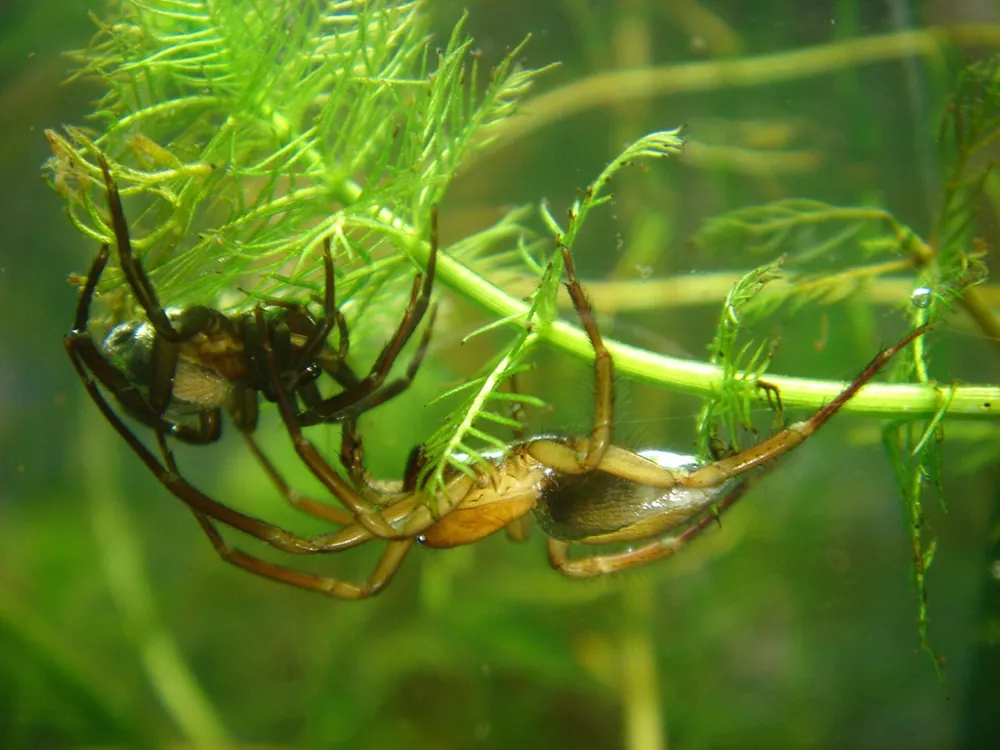
 Bí o ṣe lè dá a mọ̀
- Out of the water, it is mid to dark brown.1
- Hairs on the abdomen give it a dark grey, velvet-like look.1
- Underwater, an air bubble trapped by dense hairs on the abdomen and legs makes it look silvery.1
- Males have a head-and-body length of 10 to 15 mm, and females 8 to 12 mm.1
- It spends most of its time inside a silk diving bell, darting out to catch prey.1
Agbára oró
Oró ń jáde láti inú eyín oró tàbí eyín rẹ̀ nígbà tí ó bá bùjẹ.
Kí ni oró rẹ̀ máa ń ṣe?
Reports describe a bite that is painful, with local swelling, vomiting and a slight fever that lasts 5 to 10 days. These reports are old and unverified, so the effects are not well confirmed.1
Báwo ló ṣe léwu tó fún ènìyàn?
Ewu fún ènìyàn: Ó ń dunniÓ lè dunni gan-an, ṣùgbọ́n kì í fẹ́rẹ̀ẹ́ le rárá.The bite is reputedly painful, but there is no solid evidence of serious harm to people. Recent confirmed reports are lacking.1
 Bí ó bá bùjẹ
- Fọ ibi ìbùjẹ náà kí o sì fi àpò yìnyín lé e fún ìrora. Wá ìrànlọ́wọ́ ìṣègùn bí ìrora bá le, tí ó ń tàn kálẹ̀, tàbí tí ara ẹni náà kò bá yá.
Máa kọ́kọ́ pe nọ́ńbà pàjáwìrì rẹ nígbà gbogbo (112, 000, 911). Èyí jẹ́ ìtọ́sọ́nà ìtọ́jú àkọ́kọ́ gbogbogbò, kì í ṣe ìmọ̀ràn ìṣègùn. Ìpìlẹ̀ ìtọ́jú àkọ́kọ́
 Wà láìléwu
- Má ṣe fọwọ́ kan, mú tàbí yọ ẹranko igbó lẹ́nu láéláé, kódà bí ó bá kéré, kódà bí ó bá dà bí ẹni pé ó ń sùn tàbí ó ti kú.
- Fún un ní àyè. Bí o bá pàdé ọ̀kan, farabalẹ̀, sẹ́yìn díẹ̀díẹ̀ kí o sì jẹ́ kí ó máa bá ọ̀nà rẹ̀ lọ.
- Bí ọ̀kan bá bù ọ́ jẹ: farabalẹ̀, má ṣe mira, pe nọ́ńbà pàjáwìrì rẹ (112, 000, 911) tàbí lọ sí ilé ìwòsàn kíákíá. Rántí bí ó ṣe rí, fọ́tò máa ń ṣèrànwọ́.
Kò wá ọ kiri láti ṣe ọ́ léṣe. Ó ń lo oró rẹ̀ láti mú oúnjẹ tàbí láti dáàbò bo ara rẹ̀, ó sì fẹ́ràn láti farapamọ́ jù. Sí i nípa wíwà láìléwu
Báwo ló ṣe tóbi tó?
Báwo ló ṣe gùn tó?
 ó kúrú ju ọmọdínrín ìka rẹ lọ
Báwo ni Diving bell spider ṣe tóbi tó tí a bá fi wé ÌWỌ?
Ìṣirò nìkan nínú bráwúsà rẹ. A kò fi ohunkóhun pamọ́, a kò sì fi ránṣẹ́ sí ibikíbi.
Báwo ló ṣe yára tó?


Òtítọ́
It is the only known spider that spends almost its whole life underwater, including resting, hunting, mating, laying eggs and overwintering. It surfaces only briefly to refill its air supply.1
Its diving bell is made of waterproof silk and lets gases pass through. Oxygen flows in and carbon dioxide flows out, so the bell works like a kind of gill.1
Nitrogen slowly leaves the bell, so the air bubble shrinks and the spider must keep refilling it.1
Unlike most spiders, the males are larger than the females, and they are more active hunters.1
Olùfọ́ àròsọ
Àròsọ: Its bite is very painful and causes vomiting and fever.
Òtítọ́: These effects are based on old, unverified reports. There is no solid evidence for them, and recent confirmed reports are lacking.1
Fún àwọn amòye oró
- Orúkọ sáyẹ́ǹsì
- Argyroneta aquatica
- Ẹgbẹ́
- Alántakùn
- Ìdílé
- Argyronetidae2
- Ètò
- Araneae
- Àwọn kọ́ńtínẹ́ńtì
- Yúróòpù, Éṣíà
- Àwọn ọmọ
- After mating in the female's bell, she builds an egg sac inside it and lays between 30 and 70 eggs.1
- Ọjọ́ ayé
- nǹkan bí ọdún 21
- Bí ó ṣe ń ṣe nínú igbó
- Endangered in South Korea1
- Ewu fún ènìyàn
- 2 / 5: Ó ń dunni3
Ibi tí àwọn òtítọ́ ti wá
- Diving bell spider (Wikipedia (CC BY-SA 4.0))
- Argyroneta aquatica (iNaturalist): orúkọ àti ìpínsísọ̀rí.
- Venom Wiki: ìpele ewu, ìtóbi déédé àti àfojúbù ìyára jẹ́ tiwa. Wo bí a ṣe ń ṣírò wọn: Bí a ṣe ń díwọ̀n ewu.
Gbogbo òtítọ́ ojú-ìwé yìí ní nọ́ńbà tó tọ́ka sí orísun rẹ̀. Bí a bá ṣe àṣìṣe, má bínú, olólùfẹ́ ẹranko ni wá, kì í ṣe ìwé ìròyìn sáyẹ́ǹsì. Sọ fún wa ní [email protected] a ó sì tún un ṣe.
 Ebi ń pa àkekèé! Iṣẹ́ akanṣe ẹnì kan ṣoṣo ni Venom Wiki: ọ̀fẹ́ ni, kò sí ìpolówó, kò sì sí olùtọpinpin. Ẹ̀bùn kékeré ń ràn án lọ́wọ́ láti wà lórí íńtánẹ́ẹ̀tì.Bọ́ àkekèé
Sí i láti inú ẹgbẹ́ kan náà: Alántakùn
 Mediterranean black widow
 European yellow sac spider
 Noble false widow
 Tarantula wolf spider
 Daddy long-legs spider
 European garden spider
Ó tún ń gbé ní: Yúróòpù
 Common European adderViper àti paramọ́lẹ̀Ó nílò dókítà
 Spanish flyÀwọn ẹranko onímájèlé mìírànÓ nílò dókítàMá ṣe fọwọ́ kàn án
 Common waspOyin, agbọ́n àti agbọ́n ńláÓ kàn ń dunni
 European hornetOyin, agbọ́n àti agbọ́n ńláÓ kàn ń dunni
 Fire salamanderÀkèré onímájèlé, ọ̀pọ̀lọ́ àti newtÓ kàn ń dunniMá ṣe fọwọ́ kàn án
 Western honey beeOyin, agbọ́n àti agbọ́n ńláÓ kàn ń dunni