
 Áfíríkà
 Éṣíà
Éṣíà Yúróòpù
 Gúúsù Amẹ́ríkà
 Ọsirélíà àti Òṣéáníà
 Antáktíkà
 Òkun Pàsífíìkì
 Òkun Àtìláńtíìkì
 Òkun Íńdíà
 Òkun Áktíkì
 Òkun Mẹditaréníà
 Òkun Pupa
 Òkun Káríbíànù
 Òkun Coral
 Òkun Gúúsù Ṣáínà
 Òkun Fílípínì
 Òkun Andaman
 Òkun Àríwá
 Òkun Tímọ̀ àti Òkun Àráfúrà
 Ìyawọlẹ̀ Òkun Bẹ̀ngál
 Ìyawọlẹ̀ Òkun Kalifọ́níà
Eastern mouse spider
 Ìbùjẹ
ÌbùjẹThe eastern mouse spider is a spider from the family Actinopodidae. It lives only on the eastern coast of Australia. People often mistake it for the Australian funnel-web spider, which is more dangerous, so knowing the difference matters.1
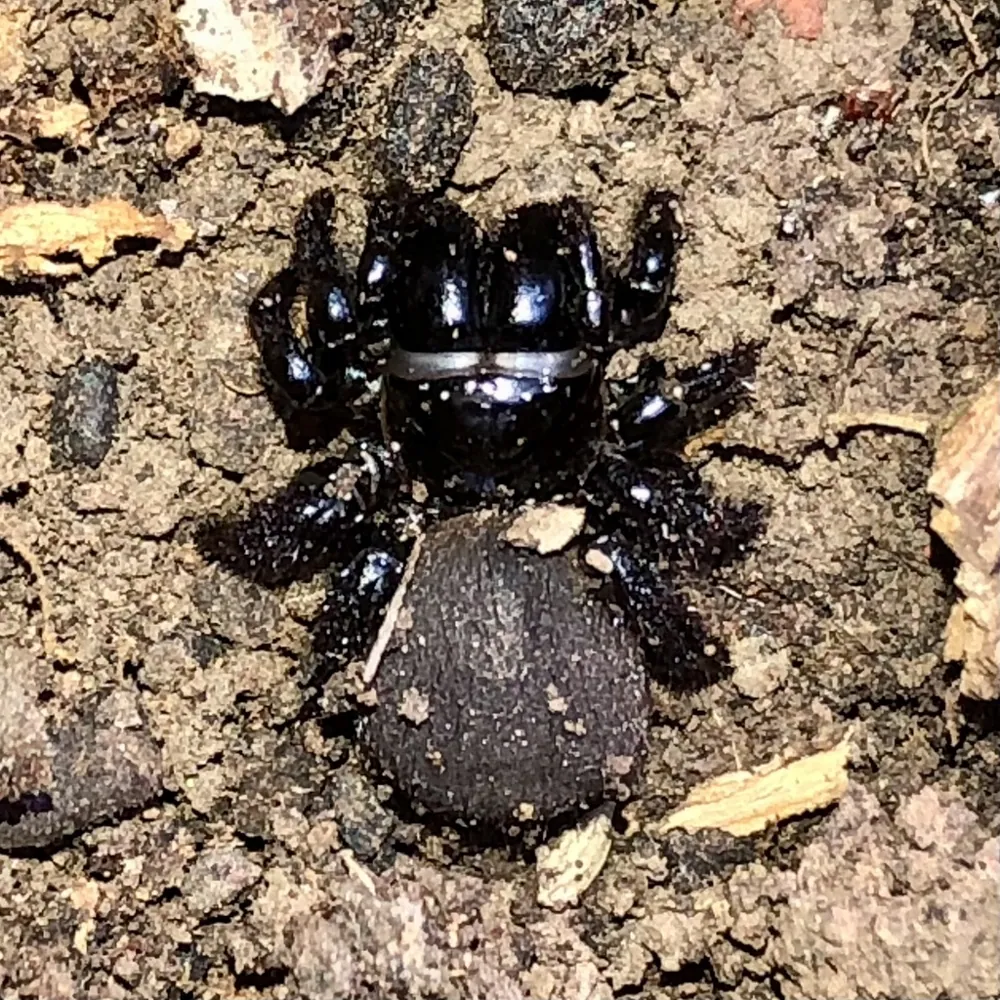
 Bí o ṣe lè dá a mọ̀
- Females are large and very strong, with powerful jaws called chelicerae.1
- Females have a shiny black carapace (the hard upper shell of the body) and an abdomen (rear body) coloured brown to almost black.1
- Males have an all-black carapace and a trapezium-shaped (four-sided, with two parallel sides) lighter patch on top of the abdomen, which can be white, pale blue or mauve.1
- Their fangs often cross over slightly.1
- The burrow entrance is hidden by a flap of silk, which can be found by brushing away loose soil.1
A sábà máa ń ṣì í mọ̀ sí: It is often mistaken for the Australian funnel-web spider. Funnel-web fangs stay parallel, while mouse spider fangs often cross over slightly. Funnel-webs often have a drop of venom on their fang tips and have longer spinnerets (silk-producing organs at the rear of the abdomen).1
Agbára oró
Oró ń jáde láti inú eyín oró tàbí eyín rẹ̀ nígbà tí ó bá bùjẹ.
Kí ni oró rẹ̀ máa ń ṣe?
Common symptoms of a bite are numbness and tingling at the bite site, sweating, headache and nausea. Its venom contains toxins similar to robustoxin, the toxin found in Australian funnel-web spider venom. Severe reactions are rare.1
Báwo ló ṣe léwu tó fún ènìyàn?
Ewu fún ènìyàn: Ó le gan-anÌbùjẹ nílò dókítà. Ikú kò wọ́pọ̀ rárá.Although it appears to be the most dangerous member of its genus, serious envenomations by this species are relatively rare. Most documented bites did not need antivenom or cause serious symptoms. Only one severe case is recorded: a 19-month-old child who developed high blood pressure, muscle spasms, an arched back and unconsciousness.1
 Ìròyìn ayọ̀: àwọn dókítà ní oògùn (antivenom) tàbí ìtọ́jú fún èyí.1
Kí ni ó máa ń ṣe nígbà tí ẹ̀rù bá bà á?
Compared with the Australian funnel-web spider, it is far less aggressive towards humans and often gives dry bites, which deliver no venom.1
 Bí ó bá bùjẹ
- The child with the severe case responded well to funnel-web spider antivenom. Australian funnel-web spider antivenom has been found to be effective in treating severe mouse spider bites.1
- Fọ ibi ìbùjẹ náà kí o sì tù ú. Wá ìrànlọ́wọ́ ìṣègùn bí ìrora bá le tàbí tí ara ẹni náà kò bá yá.
- Ní Ọsirélíà, ka ìbùjẹ alántakùn dúdú ńlá èyíkéyìí sí ìbùjẹ funnel-web: Dídì pẹ̀lú ìfúnpá láìmira (pressure immobilisation): fi bándéèjì rọ́bà (elastic) tó le wé ibi ìbùjẹ náà, lẹ́yìn náà wé e sókè títí bo gbogbo apá tàbí ẹsẹ̀ náà, fi igi ìdábùú (splint) dì í, kí o sì jẹ́ kí ẹni náà wà láìmira rárá títí ìrànlọ́wọ́ yóò fi dé.
Máa kọ́kọ́ pe nọ́ńbà pàjáwìrì rẹ nígbà gbogbo (112, 000, 911). Èyí jẹ́ ìtọ́sọ́nà ìtọ́jú àkọ́kọ́ gbogbogbò, kì í ṣe ìmọ̀ràn ìṣègùn. Ìpìlẹ̀ ìtọ́jú àkọ́kọ́
 Wà láìléwu
- Má ṣe fọwọ́ kan, mú tàbí yọ ẹranko igbó lẹ́nu láéláé, kódà bí ó bá kéré, kódà bí ó bá dà bí ẹni pé ó ń sùn tàbí ó ti kú.
- Fún un ní àyè. Bí o bá pàdé ọ̀kan, farabalẹ̀, sẹ́yìn díẹ̀díẹ̀ kí o sì jẹ́ kí ó máa bá ọ̀nà rẹ̀ lọ.
- Bí ọ̀kan bá bù ọ́ jẹ: farabalẹ̀, má ṣe mira, pe nọ́ńbà pàjáwìrì rẹ (112, 000, 911) tàbí lọ sí ilé ìwòsàn kíákíá. Rántí bí ó ṣe rí, fọ́tò máa ń ṣèrànwọ́.
Kò wá ọ kiri láti ṣe ọ́ léṣe. Ó ń lo oró rẹ̀ láti mú oúnjẹ tàbí láti dáàbò bo ara rẹ̀, ó sì fẹ́ràn láti farapamọ́ jù. Sí i nípa wíwà láìléwu
Báwo ló ṣe tóbi tó?
Báwo ló ṣe gùn tó?
 ó kúrú ju ọmọdínrín ìka rẹ lọ
 lè sáré mítà 100 ní ìṣẹ́jú-àáyá 300 (ènìyàn tó yára jùlọ nílò 9.6)
Báwo ni Eastern mouse spider ṣe tóbi tó tí a bá fi wé ÌWỌ?
Ìṣirò nìkan nínú bráwúsà rẹ. A kò fi ohunkóhun pamọ́, a kò sì fi ránṣẹ́ sí ibikíbi.
Báwo ló ṣe yára tó?


Òtítọ́
Its venom contains toxins similar to robustoxin, which is found in Australian funnel-web spider venom.1
Australian funnel-web spider antivenom has been found to work against severe mouse spider bites.1
Males roam in autumn and early winter, which is when envenomation cases have peaked.1
Rainbow described the specimen as a beautiful and strikingly marked novelty.1
Olùfọ́ àròsọ
Àròsọ: It is as dangerous as the Australian funnel-web spider.
Òtítọ́: It is far less aggressive towards humans, often gives dry bites, and serious envenomations are relatively rare.1
Ibi tí àwọn òtítọ́ ti wá
- Missulena bradleyi (Wikipedia (CC BY-SA 4.0))
- Missulena bradleyi (iNaturalist): orúkọ àti ìpínsísọ̀rí.
- Venom Wiki: ìpele ewu, ìtóbi déédé àti àfojúbù ìyára jẹ́ tiwa. Wo bí a ṣe ń ṣírò wọn: Bí a ṣe ń díwọ̀n ewu.
Gbogbo òtítọ́ ojú-ìwé yìí ní nọ́ńbà tó tọ́ka sí orísun rẹ̀. Bí a bá ṣe àṣìṣe, má bínú, olólùfẹ́ ẹranko ni wá, kì í ṣe ìwé ìròyìn sáyẹ́ǹsì. Sọ fún wa ní [email protected] a ó sì tún un ṣe.
 Ebi ń pa àkekèé! Iṣẹ́ akanṣe ẹnì kan ṣoṣo ni Venom Wiki: ọ̀fẹ́ ni, kò sí ìpolówó, kò sì sí olùtọpinpin. Ẹ̀bùn kékeré ń ràn án lọ́wọ́ láti wà lórí íńtánẹ́ẹ̀tì.Bọ́ àkekèé
Sí i láti inú ẹgbẹ́ kan náà: Tarantula àti funnel-web
 Sydney funnel-web spiderTarantula àti funnel-webApani
 Northern tree-dwelling funnel-web spiderTarantula àti funnel-webApani
 Red-headed mouse spiderTarantula àti funnel-webÓ nílò dókítà
 Queensland whistling tarantulaTarantula àti funnel-webÓ kàn ń dunni
 Blue Mountains funnel-web spiderTarantula àti funnel-webÓ lè pani
 Darling Downs funnel-web spiderTarantula àti funnel-webÓ lè pani
 Coastal taipan
 Common death adder
 Eastern brown snake
 Ejò taipan inú ilẹ̀
 Ejò ẹkùn
 Redback spider