
 Áfíríkà
 Éṣíà
Éṣíà Yúróòpù
 Gúúsù Amẹ́ríkà
 Ọsirélíà àti Òṣéáníà
 Antáktíkà
 Òkun Pàsífíìkì
 Òkun Àtìláńtíìkì
 Òkun Íńdíà
 Òkun Áktíkì
 Òkun Mẹditaréníà
 Òkun Pupa
 Òkun Káríbíànù
 Òkun Coral
 Òkun Gúúsù Ṣáínà
 Òkun Fílípínì
 Òkun Andaman
 Òkun Àríwá
 Òkun Tímọ̀ àti Òkun Àráfúrà
 Ìyawọlẹ̀ Òkun Bẹ̀ngál
 Ìyawọlẹ̀ Òkun Kalifọ́níà
Redback spider
 Ìbùjẹ
ÌbùjẹThe redback spider is a highly venomous spider. It is thought to come from Australia, but it now also lives in Southeast Asia, Japan and New Zealand. It often lives close to people, in warm, sheltered places in and around homes, so it matters a great deal for safety.1
 Bí o ṣe lè dá a mọ̀
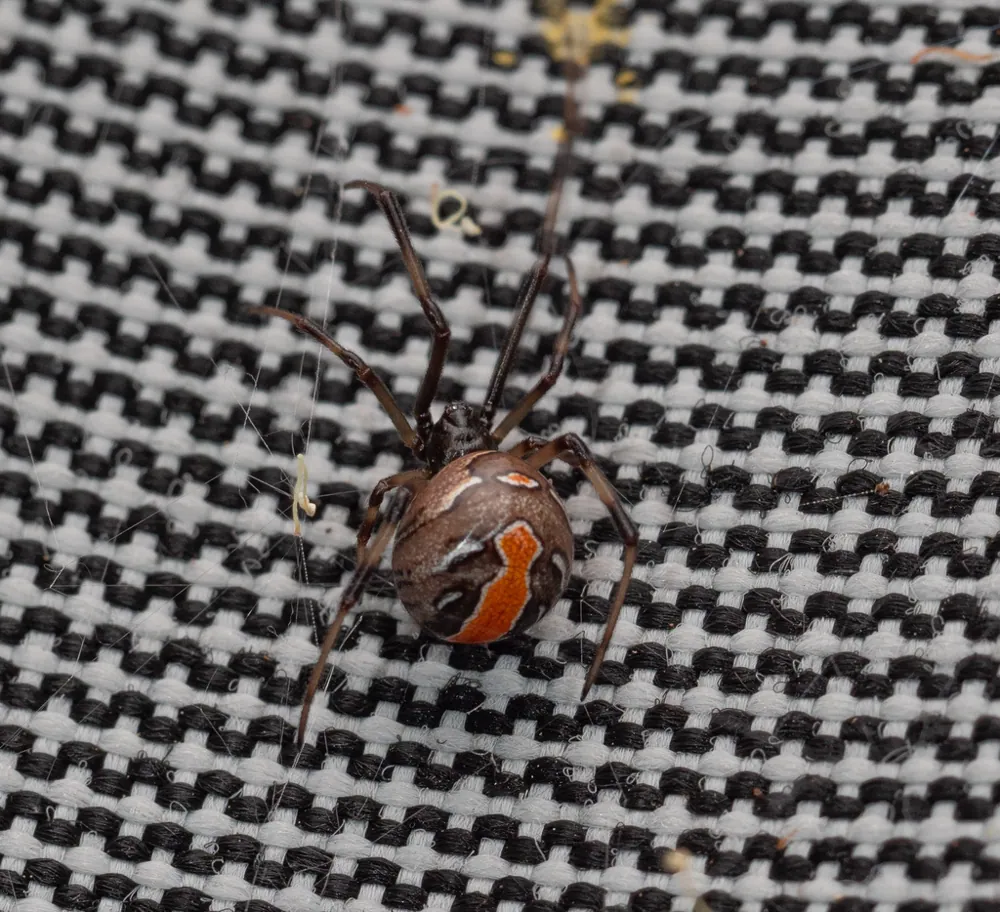
- The adult female has a round, shiny black body with a red stripe on the top of the abdomen.1
- Underneath, she has an hourglass-shaped red or orange streak.1
- The female's body is about 1 cm long, with slender legs.1
- The male is much smaller, 3 to 4 mm long, light brown with white markings on the upper abdomen and a pale hourglass marking underneath.1
- Its web is an irregular, untidy tangle of strong silk, usually in a warm, sheltered spot.1
A sábà máa ń ṣì í mọ̀ sí: The false redback spider (Steatoda capensis) has a similar build but is uniformly black or plum-coloured, and it has no red stripe on its abdomen.1
Agbára oró
Oró ń jáde láti inú eyín oró tàbí eyín rẹ̀ nígbà tí ó bá bùjẹ.
Kí ni oró rẹ̀ máa ń ṣe?
The venom is neurotoxic to vertebrates, meaning it attacks the nerves, and it causes a condition called latrodectism. Pain starts around the bite and typically becomes severe, spreading up the bitten limb and lasting for over 24 hours. Localised sweating in patches of skin is highly indicative of latrodectism, and nausea, vomiting, headache and agitation may indicate severe envenomation.1
Báwo ló ṣe léwu tó fún ènìyàn?
Ewu fún ènìyàn: Ó le gan-anÌbùjẹ nílò dókítà. Ikú kò wọ́pọ̀ rárá.The redback is one of the few spider species that can seriously harm humans. Because it often lives in buildings, it is responsible for a large number of serious spider bites in Australia.1
 Ìròyìn ayọ̀: àwọn dókítà ní oògùn (antivenom) tàbí ìtọ́jú fún èyí.1
Kí ni ó máa ń ṣe nígbà tí ẹ̀rù bá bà á?
Its bright scarlet markings may serve as a warning to potential predators.1
 Bí ó bá bùjẹ
- Fọ ibi ìbùjẹ náà kí o sì fi àpò yìnyín lé e fún ìrora. Wá ìrànlọ́wọ́ ìṣègùn bí ìrora bá le, tí ó ń tàn kálẹ̀, tàbí tí ara ẹni náà kò bá yá.
Máa kọ́kọ́ pe nọ́ńbà pàjáwìrì rẹ nígbà gbogbo (112, 000, 911). Èyí jẹ́ ìtọ́sọ́nà ìtọ́jú àkọ́kọ́ gbogbogbò, kì í ṣe ìmọ̀ràn ìṣègùn. Ìpìlẹ̀ ìtọ́jú àkọ́kọ́
 Wà láìléwu
- Má ṣe fọwọ́ kan, mú tàbí yọ ẹranko igbó lẹ́nu láéláé, kódà bí ó bá kéré, kódà bí ó bá dà bí ẹni pé ó ń sùn tàbí ó ti kú.
- Fún un ní àyè. Bí o bá pàdé ọ̀kan, farabalẹ̀, sẹ́yìn díẹ̀díẹ̀ kí o sì jẹ́ kí ó máa bá ọ̀nà rẹ̀ lọ.
- Bí ọ̀kan bá bù ọ́ jẹ: farabalẹ̀, má ṣe mira, pe nọ́ńbà pàjáwìrì rẹ (112, 000, 911) tàbí lọ sí ilé ìwòsàn kíákíá. Rántí bí ó ṣe rí, fọ́tò máa ń ṣèrànwọ́.
Kò wá ọ kiri láti ṣe ọ́ léṣe. Ó ń lo oró rẹ̀ láti mú oúnjẹ tàbí láti dáàbò bo ara rẹ̀, ó sì fẹ́ràn láti farapamọ́ jù. Sí i nípa wíwà láìléwu
Báwo ló ṣe tóbi tó?
Báwo ló ṣe gùn tó?
 ó kéré débi pé ó lè jókòó lórí èékánná rẹ
Báwo ni Redback spider ṣe tóbi tó tí a bá fi wé ÌWỌ?
Ìṣirò nìkan nínú bráwúsà rẹ. A kò fi ohunkóhun pamọ́, a kò sì fi ránṣẹ́ sí ibikíbi.
Báwo ló ṣe yára tó?


Òtítọ́
A male redback can successfully mate with a female katipō, a related New Zealand spider, producing hybrid offspring.1
Males often mate with a female who may then eat them, a behaviour called sexual cannibalism that many arachnids show while mating.1
In laboratory tests, redbacks survived an average of 100 days, and sometimes over 300 days, without food.1
After mating, a female can store sperm for up to two years and use it to fertilise several clutches of eggs.1
Spiderlings and larger females steal food from other spiders' webs, and spiderlings sometimes eat their less active siblings.1
Fún àwọn amòye oró
- Orúkọ sáyẹ́ǹsì
- Latrodectus hasselti
- Ẹgbẹ́
- Alántakùn
- Ìdílé
- Theridiidae2
- Ètò
- Araneae
- Àwọn kọ́ńtínẹ́ńtì
- Ọsirélíà àti Òṣéáníà
- Àwọn ọmọ
- Each clutch averages 250 eggs, housed in a round white silken egg sac. Spiderlings hatch after about 8 days, though cooler temperatures can greatly slow this.1
- Ọjọ́ ayé
- nǹkan bí ọdún 31
- Ewu fún ènìyàn
- 3 / 5: Ó le gan-an3
Ibi tí àwọn òtítọ́ ti wá
- Redback spider (Wikipedia (CC BY-SA 4.0))
- Latrodectus hasselti (iNaturalist): orúkọ àti ìpínsísọ̀rí.
- Venom Wiki: ìpele ewu, ìtóbi déédé àti àfojúbù ìyára jẹ́ tiwa. Wo bí a ṣe ń ṣírò wọn: Bí a ṣe ń díwọ̀n ewu.
Gbogbo òtítọ́ ojú-ìwé yìí ní nọ́ńbà tó tọ́ka sí orísun rẹ̀. Bí a bá ṣe àṣìṣe, má bínú, olólùfẹ́ ẹranko ni wá, kì í ṣe ìwé ìròyìn sáyẹ́ǹsì. Sọ fún wa ní [email protected] a ó sì tún un ṣe.
 Ebi ń pa àkekèé! Iṣẹ́ akanṣe ẹnì kan ṣoṣo ni Venom Wiki: ọ̀fẹ́ ni, kò sí ìpolówó, kò sì sí olùtọpinpin. Ẹ̀bùn kékeré ń ràn án lọ́wọ́ láti wà lórí íńtánẹ́ẹ̀tì.Bọ́ àkekèé
 Katipo
 White-tailed spider
 Peacock spider
 Badge huntsman spider
 Black house spider
 Eastern white-tailed spider
 Coastal taipan
 Common death adder
 Eastern brown snake
 Ejò taipan inú ilẹ̀
 Sydney funnel-web spider
 Ejò ẹkùn