
 Áfíríkà
 Éṣíà
Éṣíà Yúróòpù
 Gúúsù Amẹ́ríkà
 Ọsirélíà àti Òṣéáníà
 Antáktíkà
 Òkun Pàsífíìkì
 Òkun Àtìláńtíìkì
 Òkun Íńdíà
 Òkun Áktíkì
 Òkun Mẹditaréníà
 Òkun Pupa
 Òkun Káríbíànù
 Òkun Coral
 Òkun Gúúsù Ṣáínà
 Òkun Fílípínì
 Òkun Andaman
 Òkun Àríwá
 Òkun Tímọ̀ àti Òkun Àráfúrà
 Ìyawọlẹ̀ Òkun Bẹ̀ngál
 Ìyawọlẹ̀ Òkun Kalifọ́níà
Flamboyant cuttlefish
 Onímájèlé tí a bá jẹ ẹ́
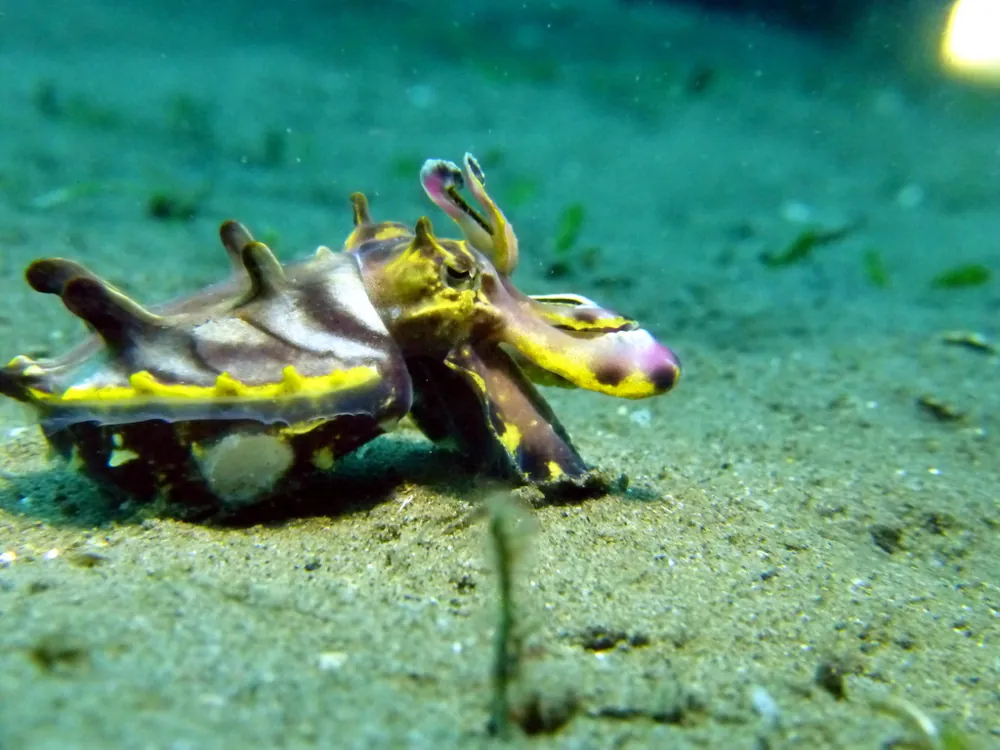
The flamboyant cuttlefish is a small sea creature that can change its colours and patterns in a flash. It lives in shallow tropical waters around northern Australia, New Guinea, the Philippines, Indonesia and Malaysia. It is special because its flesh is poisonous to eat, and it walks along the sea floor instead of swimming.1


 Bí o ṣe lè dá a mọ̀
- Has a very broad, oval body (mantle) and small, flat, fin-like flaps on the back1
- Broad, blade-like arms with four rows of suckers1
- Normal base colour is dark brown1
- When disturbed, it quickly turns black, dark brown and white, with yellow patches around the body, arms and eyes1
- Arm tips often flash bright red as a warning1
Agbára májèlé
Ó léwu kìkì bí ohun kan bá jẹ ẹ́.
Báwo ló ṣe léwu tó fún ènìyàn?
Ewu fún ènìyàn: Ó ń dunniÓ lè dunni gan-an, ṣùgbọ́n kì í fẹ́rẹ̀ẹ́ le rárá.Its muscle tissue is highly toxic, so eating it can be dangerous.1
Kí ni ó máa ń ṣe nígbà tí ẹ̀rù bá bà á?
When disturbed or attacked, it changes colour to a dark, high-contrast pattern and shows bright red arm tips to warn off predators. It also walks along the sea floor while waving the wide membranes on its arms.1
 Bí ẹnìkan bá fọwọ́ kàn án tàbí jẹ ẹ́
- Dídì pẹ̀lú ìfúnpá láìmira (pressure immobilisation): fi bándéèjì rọ́bà (elastic) tó le wé ibi ìbùjẹ náà, lẹ́yìn náà wé e sókè títí bo gbogbo apá tàbí ẹsẹ̀ náà, fi igi ìdábùú (splint) dì í, kí o sì jẹ́ kí ẹni náà wà láìmira rárá títí ìrànlọ́wọ́ yóò fi dé.
- Octopus olórùka búlúù tàbí ìgbín cone lè dá èémí ènìyàn dúró nígbà tí ó ṣì wà lójúfò: pe fún ìrànlọ́wọ́, kí o sì múra láti fún un ní èémí ìgbàlà (fífẹ́ atẹ́gùn sí ẹnu rẹ̀) títí ọkọ̀ aláìsàn yóò fi dé tí wọn yóò sì gba iṣẹ́ náà.
Máa kọ́kọ́ pe nọ́ńbà pàjáwìrì rẹ nígbà gbogbo (112, 000, 911). Èyí jẹ́ ìtọ́sọ́nà ìtọ́jú àkọ́kọ́ gbogbogbò, kì í ṣe ìmọ̀ràn ìṣègùn. Ìpìlẹ̀ ìtọ́jú àkọ́kọ́
 Wà láìléwu
- Má ṣe fọwọ́ kan, mú tàbí yọ ẹranko igbó lẹ́nu láéláé, kódà bí ó bá kéré, kódà bí ó bá dà bí ẹni pé ó ń sùn tàbí ó ti kú.
- Fún un ní àyè. Bí o bá pàdé ọ̀kan, farabalẹ̀, sẹ́yìn díẹ̀díẹ̀ kí o sì jẹ́ kí ó máa bá ọ̀nà rẹ̀ lọ.
- Bí o bá fọwọ́ kàn án tàbí jẹ ẹ́: má ṣe fọwọ́ pa ojú tàbí ẹnu rẹ, fọ ọwọ́ rẹ kí o sì wá ìrànlọ́wọ́ ìṣègùn.
Kò wá ọ kiri láti ṣe ọ́ léṣe. Májèlé rẹ̀ wà níbẹ̀ kìkì kí ohunkóhun má baà jẹ ẹ́. Sí i nípa wíwà láìléwu
Níbo ní ayé?
Báwo ló ṣe tóbi tó?
Báwo ló ṣe gùn tó?
 ó gùn tó bíríkì ìṣeré 2.5 tí a tò sí ìlà kan
 lè lúwẹ̀ẹ́ gígùn adágún ìwẹ̀ ńlá (50 m) ní ìṣẹ́jú-àáyá 12
Báwo ni Flamboyant cuttlefish ṣe tóbi tó tí a bá fi wé ÌWỌ?
Ìṣirò nìkan nínú bráwúsà rẹ. A kò fi ohunkóhun pamọ́, a kò sì fi ránṣẹ́ sí ibikíbi.
Báwo ló ṣe yára tó?

Òtítọ́
A toxicology report found its muscle tissue highly toxic, making it only the third cephalopod known to be poisonous.1
It is one of the only cuttlefish known to walk on the sea floor. This is because its cuttlebone lacks an outer cone, the part most other cuttlefish use to float.1
A female once laid about a dozen eggs inside an overturned half coconut husk, which kept them safe from fish.1
Its toxin has been compared with that of the blue-ringed octopus, but the strength of that link is disputed.1
Olùfọ́ àròsọ
Àròsọ: Its bright arm display means it is a dangerous, deadly poisonous animal.
Òtítọ́: The display is thought to warn predators that its flesh is poisonous. However, significant amounts of toxin have not yet been isolated from this species, and preliminary tests found only trace amounts of tetrodotoxin.1
Fún àwọn amòye oró
- Orúkọ sáyẹ́ǹsì
- Metasepia pfefferi
- Ẹgbẹ́
- Ìgbín cone àti octopus
- Ìdílé
- Sepiidae2
- Ètò
- Sepiida
- Àwọn kọ́ńtínẹ́ńtì
- Òkun Íńdíà, Òkun Pàsífíìkì, Òkun Coral, Òkun Fílípínì, Òkun Tímọ̀ àti Òkun Àráfúrà, Àwọn òkun ńlá
- Àwọn ọmọ
- Eggs are laid one at a time in crevices or on ledges in coral, rock or wood. Hatchlings look like adults and can copy the same camouflage patterns. They receive no care from their parents.1
- Ewu fún ènìyàn
- 2 / 5: Ó ń dunni3
Ibi tí àwọn òtítọ́ ti wá
- Ascarosepion pfefferi (Wikipedia (CC BY-SA 4.0))
- Metasepia pfefferi (iNaturalist): orúkọ àti ìpínsísọ̀rí.
- Venom Wiki: ìpele ewu, ìtóbi déédé àti àfojúbù ìyára jẹ́ tiwa. Wo bí a ṣe ń ṣírò wọn: Bí a ṣe ń díwọ̀n ewu.
Gbogbo òtítọ́ ojú-ìwé yìí ní nọ́ńbà tó tọ́ka sí orísun rẹ̀. Bí a bá ṣe àṣìṣe, má bínú, olólùfẹ́ ẹranko ni wá, kì í ṣe ìwé ìròyìn sáyẹ́ǹsì. Sọ fún wa ní [email protected] a ó sì tún un ṣe.
 Ebi ń pa àkekèé! Iṣẹ́ akanṣe ẹnì kan ṣoṣo ni Venom Wiki: ọ̀fẹ́ ni, kò sí ìpolówó, kò sì sí olùtọpinpin. Ẹ̀bùn kékeré ń ràn án lọ́wọ́ láti wà lórí íńtánẹ́ẹ̀tì.Bọ́ àkekèé
Sí i láti inú ẹgbẹ́ kan náà: Ìgbín cone àti octopus
 Geography cone
 Greater blue-ringed octopus
 Southern blue-ringed octopus
 Blue sea dragon
 Common octopus
 Giant Pacific octopus
Ó tún ń gbé ní: Òkun Íńdíà
 Australian box jellyfishJellyfish àti àwọn ẹ̀dá òkun tó ń ta niApaniMá ṣe fọwọ́ kàn án
 Hawksbill sea turtleÀwọn ẹranko onímájèlé mìírànÓ lè pani
 Irukandji jellyfishJellyfish àti àwọn ẹ̀dá òkun tó ń ta niÓ lè paniMá ṣe fọwọ́ kàn án
 Reef stonefishẸja olóróÓ lè paniMá ṣe fọwọ́ kàn án
 Crown-of-thorns starfishSea urchin, ẹja ìràwọ̀ àti kòkòrò inú òkunÓ nílò dókítàMá ṣe fọwọ́ kàn án
 Portuguese man o' warJellyfish àti àwọn ẹ̀dá òkun tó ń ta niÓ nílò dókítàMá ṣe fọwọ́ kàn án