
 Áfíríkà
 Éṣíà
Éṣíà Yúróòpù
 Gúúsù Amẹ́ríkà
 Ọsirélíà àti Òṣéáníà
 Antáktíkà
 Òkun Pàsífíìkì
 Òkun Àtìláńtíìkì
 Òkun Íńdíà
 Òkun Áktíkì
 Òkun Mẹditaréníà
 Òkun Pupa
 Òkun Káríbíànù
 Òkun Coral
 Òkun Gúúsù Ṣáínà
 Òkun Fílípínì
 Òkun Andaman
 Òkun Àríwá
 Òkun Tímọ̀ àti Òkun Àráfúrà
 Ìyawọlẹ̀ Òkun Bẹ̀ngál
 Ìyawọlẹ̀ Òkun Kalifọ́níà
Four-handed box jellyfish
 Okùn-ọwọ́ tó ń ta ni (tentacles)
The four-handed box jellyfish is a clear, cube-shaped jellyfish that lives in warm seas. It is found in the western Atlantic, the Gulf of Mexico and parts of the Pacific. Its sting is venomous and can be dangerous to people, especially children.1

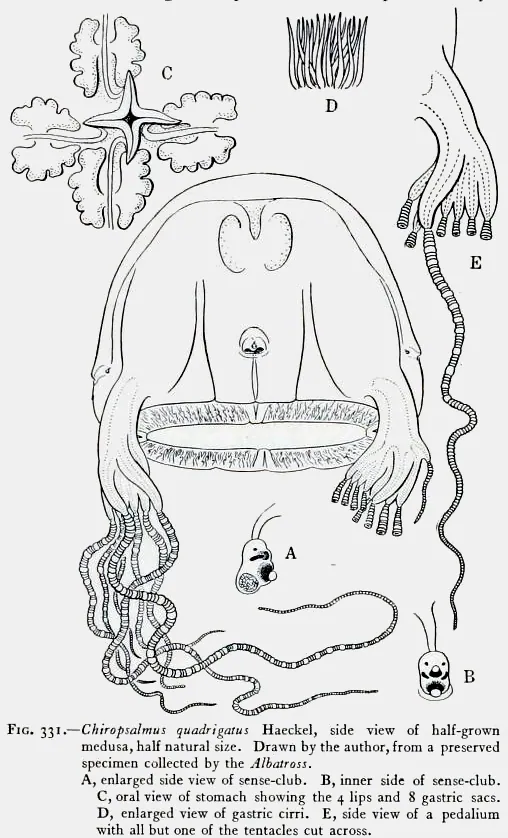
 Bí o ṣe lè dá a mọ̀
Agbára oró
Ẹgbẹẹgbẹ̀rún sẹ́ẹ̀lì ìtani kékeré máa ń ta jáde nígbà tí nǹkan bá fọwọ́ kàn wọ́n.
Kí ni oró rẹ̀ máa ń ṣe?
The stinging cells on the tentacles release venom that causes an extremely painful sting. The sting is linear, meaning it leaves a line of marks on the skin. Apart from pain, it can cause heart dysfunction and slowed breathing, which are systemic symptoms that affect the whole body. The rash can last for several months.1
Báwo ló ṣe léwu tó fún ènìyàn?
Ewu fún ènìyàn: Ó léwu gan-anÓ lè pa ènìyàn tí kò bá rí ìtọ́jú.The sting is extremely painful and can be life-threatening. A four-year-old boy in the Gulf of Mexico died within forty minutes of being stung. Off the coast of Brazil, 16 stings over five years were identified as coming from this species. Children are especially at risk.1
 Ìròyìn ayọ̀: àwọn dókítà ní oògùn (antivenom) tàbí ìtọ́jú fún èyí.1
Kí ni ó máa ń ṣe nígbà tí ẹ̀rù bá bà á?
Its long, stinging tentacles deter predators.1
 Bí ó bá ta ni
- Antivenom given within a few hours of the sting relieves the pain somewhat, reduces the severity of the rash and improves other symptoms. In extreme cases, cardiopulmonary resuscitation (CPR) can be effective if started promptly.1
- Jáde kúrò nínú omi kí o sì yọ gbogbo okùn-ọwọ́ rẹ̀ (tentacles) kúrò (pẹ̀lú ìbọ̀wọ́ tàbí aṣọ).
- Fún box jellyfish ilẹ̀ olóoru: da ọtí kíkan (vinegar) sí ibi tí ó ti ta ni fún ó kéré tán ìṣẹ́jú-àáyá 30, pe fún ìrànlọ́wọ́ kí o sì múra láti ṣe CPR (ìmúsọjí ọkàn àti èémí). Fún bluebottles àti ọ̀pọ̀ àwọn yòókù: fi omi òkun fọ̀ ọ́, lẹ́yìn náà omi gbígbóná fún ìrora náà.
Máa kọ́kọ́ pe nọ́ńbà pàjáwìrì rẹ nígbà gbogbo (112, 000, 911). Èyí jẹ́ ìtọ́sọ́nà ìtọ́jú àkọ́kọ́ gbogbogbò, kì í ṣe ìmọ̀ràn ìṣègùn. Ìpìlẹ̀ ìtọ́jú àkọ́kọ́
 Wà láìléwu
- Má ṣe fọwọ́ kan, mú tàbí yọ ẹranko igbó lẹ́nu láéláé, kódà bí ó bá kéré, kódà bí ó bá dà bí ẹni pé ó ń sùn tàbí ó ti kú.
- Fún un ní àyè. Bí o bá pàdé ọ̀kan, farabalẹ̀, sẹ́yìn díẹ̀díẹ̀ kí o sì jẹ́ kí ó máa bá ọ̀nà rẹ̀ lọ.
- Bí ọ̀kan bá ta ọ́: farabalẹ̀, má ṣe mira, pe nọ́ńbà pàjáwìrì rẹ (112, 000, 911) tàbí lọ sí ilé ìwòsàn kíákíá. Rántí bí ó ṣe rí, fọ́tò máa ń ṣèrànwọ́.
Kò wá ọ kiri láti ṣe ọ́ léṣe. Ó ń lo oró rẹ̀ láti mú oúnjẹ tàbí láti dáàbò bo ara rẹ̀, ó sì fẹ́ràn láti farapamọ́ jù. Sí i nípa wíwà láìléwu
Níbo ní ayé?
Báwo ló ṣe tóbi tó?
Báwo ló ṣe gùn tó?
 ó gùn tó bíríkì ìṣeré 4 tí a tò sí ìlà kan
 lè lúwẹ̀ẹ́ gígùn adágún ìwẹ̀ ńlá (50 m) ní ìṣẹ́jú-àáyá 36
Báwo ni Four-handed box jellyfish ṣe tóbi tó tí a bá fi wé ÌWỌ?
Ìṣirò nìkan nínú bráwúsà rẹ. A kò fi ohunkóhun pamọ́, a kò sì fi ránṣẹ́ sí ibikíbi.
Báwo ló ṣe yára tó?
Òtítọ́
Its bell is almost completely transparent, which makes it hard to spot in the water.1
Its tentacles are the longest part of its body, reaching several metres in length.1
Along the Texas Gulf coast in 1955 and 1956, large numbers appeared inshore during drought, when the water was saltier than normal.1
Scientists have done little research on this species, and studies have found that jellyfish from different regions can have different stinging cells.1
Small specimens were often caught in shrimp trawls, while the adults were seldom seen near the surface.1
Ibi tí àwọn òtítọ́ ti wá
- Chiropsalmus quadrumanus (Wikipedia (CC BY-SA 4.0))
- Chiropsalmus quadrumanus (iNaturalist): orúkọ àti ìpínsísọ̀rí.
- Venom Wiki: ìpele ewu, ìtóbi déédé àti àfojúbù ìyára jẹ́ tiwa. Wo bí a ṣe ń ṣírò wọn: Bí a ṣe ń díwọ̀n ewu.
Gbogbo òtítọ́ ojú-ìwé yìí ní nọ́ńbà tó tọ́ka sí orísun rẹ̀. Bí a bá ṣe àṣìṣe, má bínú, olólùfẹ́ ẹranko ni wá, kì í ṣe ìwé ìròyìn sáyẹ́ǹsì. Sọ fún wa ní [email protected] a ó sì tún un ṣe.
 Ebi ń pa àkekèé! Iṣẹ́ akanṣe ẹnì kan ṣoṣo ni Venom Wiki: ọ̀fẹ́ ni, kò sí ìpolówó, kò sì sí olùtọpinpin. Ẹ̀bùn kékeré ń ràn án lọ́wọ́ láti wà lórí íńtánẹ́ẹ̀tì.Bọ́ àkekèé
Sí i láti inú ẹgbẹ́ kan náà: Jellyfish àti àwọn ẹ̀dá òkun tó ń ta ni
 Australian box jellyfishJellyfish àti àwọn ẹ̀dá òkun tó ń ta niApaniMá ṣe fọwọ́ kàn án
 Irukandji jellyfishJellyfish àti àwọn ẹ̀dá òkun tó ń ta niÓ lè paniMá ṣe fọwọ́ kàn án
 Portuguese man o' warJellyfish àti àwọn ẹ̀dá òkun tó ń ta niÓ nílò dókítàMá ṣe fọwọ́ kàn án
 Lion's mane jellyfishJellyfish àti àwọn ẹ̀dá òkun tó ń ta niÓ kàn ń dunniMá ṣe fọwọ́ kàn án
 Moon jellyfishJellyfish àti àwọn ẹ̀dá òkun tó ń ta niAláìléwu
 Common kingslayerJellyfish àti àwọn ẹ̀dá òkun tó ń ta niÓ lè paniMá ṣe fọwọ́ kàn án
 Hawksbill sea turtle
 Blue sea dragon
 Greenland shark
 Common octopus
 Common stingray
 Greater weever