
 Áfíríkà
 Éṣíà
Éṣíà Yúróòpù
 Gúúsù Amẹ́ríkà
 Ọsirélíà àti Òṣéáníà
 Antáktíkà
 Òkun Pàsífíìkì
 Òkun Àtìláńtíìkì
 Òkun Íńdíà
 Òkun Áktíkì
 Òkun Mẹditaréníà
 Òkun Pupa
 Òkun Káríbíànù
 Òkun Coral
 Òkun Gúúsù Ṣáínà
 Òkun Fílípínì
 Òkun Andaman
 Òkun Àríwá
 Òkun Tímọ̀ àti Òkun Àráfúrà
 Ìyawọlẹ̀ Òkun Bẹ̀ngál
 Ìyawọlẹ̀ Òkun Kalifọ́níà
Common stingray
 Ìtani
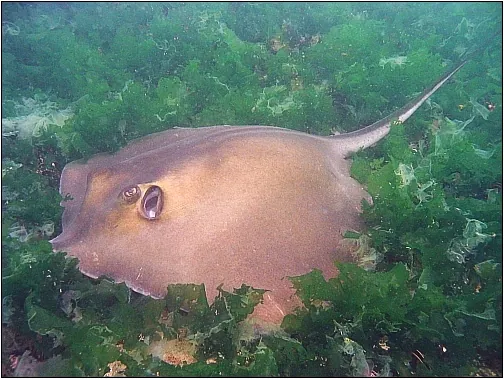
ÌtaniThe common stingray is a flat, diamond-shaped ray that lives on sandy or muddy seabeds in shallow coastal waters. It is found in the northeastern Atlantic, the Mediterranean and the Black Sea. It has a venomous spine on its tail, which can give a very painful sting.1
 Bí o ṣe lè dá a mọ̀
- Diamond-shaped pectoral fin disc that is slightly wider than it is long1
- Plain colour: solid grey, brown, reddish or olive-green above, and whitish below with dark fin edges1
- Mostly smooth skin; the largest individuals have a row of bony knobs along the middle of the back1
- Slender, whip-like tail with a serrated venomous spine about a third of the way along it1
A sábà máa ń ṣì í mọ̀ sí: The blue stingray of southern Africa was once thought to be a variant of this species, but it is a separate species. The common stingray lacks the blue markings of the blue stingray. Tortonese's stingray of the Mediterranean is similar, and the difference between the two is poorly understood.1
Agbára oró
Oró ń jáde láti inú ohun ìtani.
Kí ni oró rẹ̀ máa ń ṣe?
The venom comes from a gland at the base of a serrated tail spine. A sting causes an excruciatingly painful wound. It is rarely life-threatening.1
Báwo ló ṣe léwu tó fún ènìyàn?
Ewu fún ènìyàn: Ó le gan-anÌtani nílò dókítà. Ikú kò wọ́pọ̀ rárá.The common stingray is not aggressive, but it can inflict a very painful wound with its tail spine. The wound is rarely life-threatening.1
 Bí ó bá ta ni
- Fi ọgbẹ́ náà sínú omi gbígbóná, tó gbóná tó bí ẹni náà ṣe lè fara dà á láìjóná (fi ọwọ́ ara rẹ dán an wò), fún ìṣẹ́jú 30 sí 90. Wá ìrànlọ́wọ́ ìṣègùn, pàápàá fún ẹja òkúta àti stingray.
Máa kọ́kọ́ pe nọ́ńbà pàjáwìrì rẹ nígbà gbogbo (112, 000, 911). Èyí jẹ́ ìtọ́sọ́nà ìtọ́jú àkọ́kọ́ gbogbogbò, kì í ṣe ìmọ̀ràn ìṣègùn. Ìpìlẹ̀ ìtọ́jú àkọ́kọ́
 Wà láìléwu
- Má ṣe fọwọ́ kan, mú tàbí yọ ẹranko igbó lẹ́nu láéláé, kódà bí ó bá kéré, kódà bí ó bá dà bí ẹni pé ó ń sùn tàbí ó ti kú.
- Fún un ní àyè. Bí o bá pàdé ọ̀kan, farabalẹ̀, sẹ́yìn díẹ̀díẹ̀ kí o sì jẹ́ kí ó máa bá ọ̀nà rẹ̀ lọ.
- Bí ọ̀kan bá ta ọ́: farabalẹ̀, má ṣe mira, pe nọ́ńbà pàjáwìrì rẹ (112, 000, 911) tàbí lọ sí ilé ìwòsàn kíákíá. Rántí bí ó ṣe rí, fọ́tò máa ń ṣèrànwọ́.
Kò wá ọ kiri láti ṣe ọ́ léṣe. Ó ń lo oró rẹ̀ láti mú oúnjẹ tàbí láti dáàbò bo ara rẹ̀, ó sì fẹ́ràn láti farapamọ́ jù. Sí i nípa wíwà láìléwu
Níbo ní ayé?
Báwo ló ṣe tóbi tó?
Báwo ló ṣe gùn tó?
 ó gùn tó ajá 2.5 láti imú dé ìrù
 ó gùn tó ọ̀gẹ̀dẹ̀ 14 tí a tò tẹ̀léra
 lè lúwẹ̀ẹ́ gígùn adágún ìwẹ̀ ńlá (50 m) ní ìṣẹ́jú-àáyá 9.5
Báwo ni Common stingray ṣe tóbi tó tí a bá fi wé ÌWỌ?
Ìṣirò nìkan nínú bráwúsà rẹ. A kò fi ohunkóhun pamọ́, a kò sì fi ránṣẹ́ sí ibikíbi.
Báwo ló ṣe yára tó?

Òtítọ́
The tail spine is replaced regularly, and a second or even third spine may be growing in behind the first.1
The largest recorded specimen was found in 2016 in İzmir Province, Turkey, with fins measuring 2.21 m across.1
Welsh fishermen once used its liver oil to treat burns and other injuries, and its liver is a delicacy in French cuisine.1
The oldest known wild individual was ten years old, but the species has lived up to 21 years in captivity.1
Olùfọ́ àròsọ
Àròsọ: The stingray's spine could kill trees, pierce armour like an arrow, corrode iron and even dissolve stone, as some ancient writers claimed.
Òtítọ́: The common stingray's wound is painful but rarely life-threatening. These ancient claims about its spine were legends.1
Fún àwọn amòye oró
- Orúkọ sáyẹ́ǹsì
- Dasyatis pastinaca
- Ẹgbẹ́
- Ẹja olóró
- Ìdílé
- Dasyatidae2
- Ètò
- Myliobatiformes
- Àwọn kọ́ńtínẹ́ńtì
- Òkun Àtìláńtíìkì, Òkun Mẹditaréníà, Òkun Àríwá, Àwọn òkun ńlá
- Àwọn ọmọ
- It is aplacental viviparous, meaning it gives birth to live young. Females bear 4–9 young twice a year in shallow inshore water, after a gestation period of four months.1
- Ọjọ́ ayé
- nǹkan bí ọdún 211
- Bí ó ṣe ń ṣe nínú igbó
- Vulnerable1
- Ewu fún ènìyàn
- 3 / 5: Ó le gan-an3
Ibi tí àwọn òtítọ́ ti wá
- Common stingray (Wikipedia (CC BY-SA 4.0))
- Dasyatis pastinaca (iNaturalist): orúkọ àti ìpínsísọ̀rí.
- Venom Wiki: ìpele ewu, ìtóbi déédé àti àfojúbù ìyára jẹ́ tiwa. Wo bí a ṣe ń ṣírò wọn: Bí a ṣe ń díwọ̀n ewu.
Gbogbo òtítọ́ ojú-ìwé yìí ní nọ́ńbà tó tọ́ka sí orísun rẹ̀. Bí a bá ṣe àṣìṣe, má bínú, olólùfẹ́ ẹranko ni wá, kì í ṣe ìwé ìròyìn sáyẹ́ǹsì. Sọ fún wa ní [email protected] a ó sì tún un ṣe.
 Ebi ń pa àkekèé! Iṣẹ́ akanṣe ẹnì kan ṣoṣo ni Venom Wiki: ọ̀fẹ́ ni, kò sí ìpolówó, kò sì sí olùtọpinpin. Ẹ̀bùn kékeré ń ràn án lọ́wọ́ láti wà lórí íńtánẹ́ẹ̀tì.Bọ́ àkekèé
Sí i láti inú ẹgbẹ́ kan náà: Ẹja olóró
 Reef stonefish
 Red lionfish
 Estuarine stonefish
 Short-tail stingray
 Striped eel catfish
 Bluespotted ribbontail ray
Ó tún ń gbé ní: Òkun Àtìláńtíìkì
 Hawksbill sea turtleÀwọn ẹranko onímájèlé mìírànÓ lè pani
 Portuguese man o' warJellyfish àti àwọn ẹ̀dá òkun tó ń ta niÓ nílò dókítàMá ṣe fọwọ́ kàn án
 Blue sea dragonÌgbín cone àti octopusÓ kàn ń dunni
 Greenland sharkÀwọn ẹranko onímájèlé mìírànÓ kàn ń dunni
 Lion's mane jellyfishJellyfish àti àwọn ẹ̀dá òkun tó ń ta niÓ kàn ń dunniMá ṣe fọwọ́ kàn án
 Common octopusÌgbín cone àti octopusAláìléwu