
 Áfíríkà
 Éṣíà
Éṣíà Yúróòpù
 Gúúsù Amẹ́ríkà
 Ọsirélíà àti Òṣéáníà
 Antáktíkà
 Òkun Pàsífíìkì
 Òkun Àtìláńtíìkì
 Òkun Íńdíà
 Òkun Áktíkì
 Òkun Mẹditaréníà
 Òkun Pupa
 Òkun Káríbíànù
 Òkun Coral
 Òkun Gúúsù Ṣáínà
 Òkun Fílípínì
 Òkun Andaman
 Òkun Àríwá
 Òkun Tímọ̀ àti Òkun Àráfúrà
 Ìyawọlẹ̀ Òkun Bẹ̀ngál
 Ìyawọlẹ̀ Òkun Kalifọ́níà
Fringed ornamental tarantula
 Ìbùjẹ
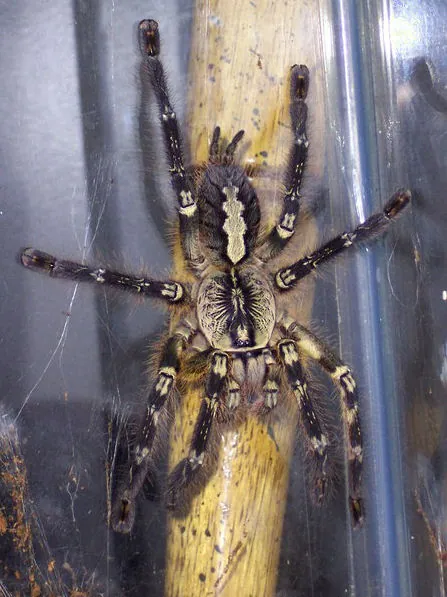
ÌbùjẹThe fringed ornamental tarantula is a large spider that lives high in trees. It is found only in Sri Lanka, and its bright, patterned body makes it one of the most striking tarantulas. Its bite is considered medically significant, so it is worth knowing about.1

 Bí o ṣe lè dá a mọ̀
- The top of the body (carapace) is greenish yellow or purplish.1
- Females have yellow undersides, and the thighs of the third and fourth pairs of legs are black with a large blue-grey spot.1
- Males are greenish brown, and their markings are less prominent.1
- Females can reach a legspan of about 25 cm.1
A sábà máa ń ṣì í mọ̀ sí: It is easily told apart from other tiger spiders by its greenish yellow or purplish top side.1
Agbára oró
Oró ń jáde láti inú eyín oró tàbí eyín rẹ̀ nígbà tí ó bá bùjẹ.
Kí ni oró rẹ̀ máa ń ṣe?
The venom may cause intense pain and extreme muscle cramping. This is judged from the experiences of keepers who have been bitten by this species, rather than from recorded cases of human harm.1
Báwo ló ṣe léwu tó fún ènìyàn?
Ewu fún ènìyàn: Ó le gan-anÌbùjẹ nílò dókítà. Ikú kò wọ́pọ̀ rárá.No death from a tarantula bite has ever been recorded. This species is still considered to have a medically significant bite because of the pain and cramping its venom may cause.1
 Bí ó bá bùjẹ
- Fọ ibi ìbùjẹ náà kí o sì tù ú. Wá ìrànlọ́wọ́ ìṣègùn bí ìrora bá le tàbí tí ara ẹni náà kò bá yá.
Máa kọ́kọ́ pe nọ́ńbà pàjáwìrì rẹ nígbà gbogbo (112, 000, 911). Èyí jẹ́ ìtọ́sọ́nà ìtọ́jú àkọ́kọ́ gbogbogbò, kì í ṣe ìmọ̀ràn ìṣègùn. Ìpìlẹ̀ ìtọ́jú àkọ́kọ́
 Wà láìléwu
- Má ṣe fọwọ́ kan, mú tàbí yọ ẹranko igbó lẹ́nu láéláé, kódà bí ó bá kéré, kódà bí ó bá dà bí ẹni pé ó ń sùn tàbí ó ti kú.
- Fún un ní àyè. Bí o bá pàdé ọ̀kan, farabalẹ̀, sẹ́yìn díẹ̀díẹ̀ kí o sì jẹ́ kí ó máa bá ọ̀nà rẹ̀ lọ.
- Bí ọ̀kan bá bù ọ́ jẹ: farabalẹ̀, má ṣe mira, pe nọ́ńbà pàjáwìrì rẹ (112, 000, 911) tàbí lọ sí ilé ìwòsàn kíákíá. Rántí bí ó ṣe rí, fọ́tò máa ń ṣèrànwọ́.
Kò wá ọ kiri láti ṣe ọ́ léṣe. Ó ń lo oró rẹ̀ láti mú oúnjẹ tàbí láti dáàbò bo ara rẹ̀, ó sì fẹ́ràn láti farapamọ́ jù. Sí i nípa wíwà láìléwu
Báwo ló ṣe tóbi tó?
Báwo ló ṣe gùn tó?
 ó gùn tó bíríkì ìṣeré 8 tí a tò sí ìlà kan
 lè sáré mítà 100 ní ìṣẹ́jú-àáyá 170 (ènìyàn tó yára jùlọ nílò 9.6)
Báwo ni Fringed ornamental tarantula ṣe tóbi tó tí a bá fi wé ÌWỌ?
Ìṣirò nìkan nínú bráwúsà rẹ. A kò fi ohunkóhun pamọ́, a kò sì fi ránṣẹ́ sí ibikíbi.
Báwo ló ṣe yára tó?


Òtítọ́
It may live in a mutually beneficial relationship with frogs such as Ramanella nagaoi, sharing tree holes that can contain eggs or juveniles from the spider, the frog, or both.1
In a related observation, a frog (Chiasmocleis ventrimaculata) and a different tarantula (Xenesthis immanis) were seen together, with the spider protecting the frog from predators and the frog guarding the spider's eggs from ants.1
When tree holes are scarce, several of these spiders may live together in the same tree.1
Its legspan is probably the second largest in its genus, behind Poecilotheria rufilata.1
Ibi tí àwọn òtítọ́ ti wá
- Poecilotheria ornata (Wikipedia (CC BY-SA 4.0))
- Poecilotheria ornata (iNaturalist): orúkọ àti ìpínsísọ̀rí.
- Venom Wiki: ìpele ewu, ìtóbi déédé àti àfojúbù ìyára jẹ́ tiwa. Wo bí a ṣe ń ṣírò wọn: Bí a ṣe ń díwọ̀n ewu.
Gbogbo òtítọ́ ojú-ìwé yìí ní nọ́ńbà tó tọ́ka sí orísun rẹ̀. Bí a bá ṣe àṣìṣe, má bínú, olólùfẹ́ ẹranko ni wá, kì í ṣe ìwé ìròyìn sáyẹ́ǹsì. Sọ fún wa ní [email protected] a ó sì tún un ṣe.
 Ebi ń pa àkekèé! Iṣẹ́ akanṣe ẹnì kan ṣoṣo ni Venom Wiki: ọ̀fẹ́ ni, kò sí ìpolówó, kò sì sí olùtọpinpin. Ẹ̀bùn kékeré ń ràn án lọ́wọ́ láti wà lórí íńtánẹ́ẹ̀tì.Bọ́ àkekèé
Sí i láti inú ẹgbẹ́ kan náà: Tarantula àti funnel-web
 Gooty sapphire tarantulaTarantula àti funnel-webÓ nílò dókítà
 Indian ornamental tarantulaTarantula àti funnel-webÓ nílò dókítà
 Cobalt blue tarantulaTarantula àti funnel-webÓ kàn ń dunni
 Chinese bird spiderTarantula àti funnel-webÓ nílò dókítà
 Chinese black earth tiger tarantulaTarantula àti funnel-webÓ nílò dókítà
 Japanese funnel-web spiderTarantula àti funnel-webÓ nílò dókítà
 Deathstalker
 Indian cobra
 Indian saw-scaled viper
 King cobra
 Puff adder
 Paramọlẹ Russell