
 Áfíríkà
 Éṣíà
Éṣíà Yúróòpù
 Gúúsù Amẹ́ríkà
 Ọsirélíà àti Òṣéáníà
 Antáktíkà
 Òkun Pàsífíìkì
 Òkun Àtìláńtíìkì
 Òkun Íńdíà
 Òkun Áktíkì
 Òkun Mẹditaréníà
 Òkun Pupa
 Òkun Káríbíànù
 Òkun Coral
 Òkun Gúúsù Ṣáínà
 Òkun Fílípínì
 Òkun Andaman
 Òkun Àríwá
 Òkun Tímọ̀ àti Òkun Àráfúrà
 Ìyawọlẹ̀ Òkun Bẹ̀ngál
 Ìyawọlẹ̀ Òkun Kalifọ́níà
Indian saw-scaled viper
 Ìbùjẹ
ÌbùjẹThe saw-scaled viper is a small, venomous snake of the Middle East, Central Asia and the Indian subcontinent. It is the smallest of the 'big four' Indian snakes that cause the most snakebite cases and deaths. It is easy to miss, which is one reason it causes so many bites.1



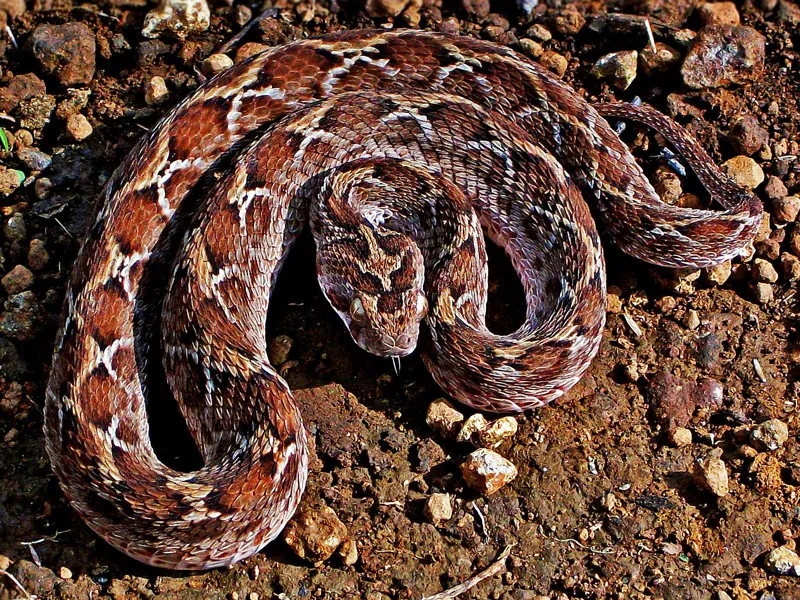
 Bí o ṣe lè dá a mọ̀
- Small, usually no more than 60 cm long in total1
- Pale buff, grey, reddish, olive or pale brown body with whitish spots edged in dark brown1
- A whitish cross or trident pattern on the top of the head1
- A faint stripe running from the eye to the angle of the jaw1
- Whitish to pinkish belly, sometimes with brown dots1
Agbára oró
Oró ń jáde láti inú eyín oró tàbí eyín rẹ̀ nígbà tí ó bá bùjẹ.
Kí ni oró rẹ̀ máa ń ṣe?
Its venom causes swelling and pain within minutes of a bite, and the swelling can spread up the whole limb within 12 to 24 hours, with blisters forming on the skin. The more dangerous effects are whole-body: bleeding and clotting problems, bleeding from the stomach, lungs, nose or urine, and possible shock. Most patients produce little or no urine within a few hours to six days after the bite.1
Báwo ló ṣe léwu tó fún ènìyàn?
Ewu fún ènìyàn: ApaniỌ̀kan lára àwọn ẹranko tó léwu jùlọ ní ayé.About 20% of its bites used to be fatal, but deaths are now quite rare because antivenom is available. It is one of the species responsible for the most snakebite cases because it is inconspicuous and extremely aggressive.1
 Ìròyìn ayọ̀: àwọn dókítà ní oògùn (antivenom) tàbí ìtọ́jú fún èyí.1
Kí ni ó máa ń ṣe nígbà tí ẹ̀rù bá bà á?
When threatened it forms a double coil in a figure of eight, with its head in the centre, so it can lash out like a released spring.1
 Bí ó bá bùjẹ
- Antivenin therapy and intravenous hydration within hours of the bite are vital for survival.1
- Jẹ́ kí ẹni náà wà láìmira kí ó sì farabalẹ̀, jẹ́ kí apá tàbí ẹsẹ̀ tí ó bù jẹ wà ní ìpele ọkàn, yọ òrùka àti àwọn nǹkan tó há, kí ẹ sì lọ sí ilé ìwòsàn kíákíá.
Máa kọ́kọ́ pe nọ́ńbà pàjáwìrì rẹ nígbà gbogbo (112, 000, 911). Èyí jẹ́ ìtọ́sọ́nà ìtọ́jú àkọ́kọ́ gbogbogbò, kì í ṣe ìmọ̀ràn ìṣègùn. Ìpìlẹ̀ ìtọ́jú àkọ́kọ́
 Wà láìléwu
- Má ṣe fọwọ́ kan, mú tàbí yọ ẹranko igbó lẹ́nu láéláé, kódà bí ó bá kéré, kódà bí ó bá dà bí ẹni pé ó ń sùn tàbí ó ti kú.
- Fún un ní àyè. Bí o bá pàdé ọ̀kan, farabalẹ̀, sẹ́yìn díẹ̀díẹ̀ kí o sì jẹ́ kí ó máa bá ọ̀nà rẹ̀ lọ.
- Bí ọ̀kan bá bù ọ́ jẹ: farabalẹ̀, má ṣe mira, pe nọ́ńbà pàjáwìrì rẹ (112, 000, 911) tàbí lọ sí ilé ìwòsàn kíákíá. Rántí bí ó ṣe rí, fọ́tò máa ń ṣèrànwọ́.
Kò wá ọ kiri láti ṣe ọ́ léṣe. Ó ń lo oró rẹ̀ láti mú oúnjẹ tàbí láti dáàbò bo ara rẹ̀, ó sì fẹ́ràn láti farapamọ́ jù. Sí i nípa wíwà láìléwu
Báwo ló ṣe tóbi tó?
Báwo ló ṣe gùn tó?
 ó gùn tó ológbò ilé 1.5 láti imú dé ìrù
 ó gùn tó ọ̀gẹ̀dẹ̀ 4 tí a tò tẹ̀léra
 lè sáré mítà 100 ní ìṣẹ́jú-àáyá 110 (ènìyàn tó yára jùlọ nílò 9.6)
Báwo ni Indian saw-scaled viper ṣe tóbi tó tí a bá fi wé ÌWỌ?
Ìṣirò nìkan nínú bráwúsà rẹ. A kò fi ohunkóhun pamọ́, a kò sì fi ránṣẹ́ sí ibikíbi.
Báwo ló ṣe yára tó?


Òtítọ́
On average it produces about 18 mg of dry venom, with a recorded maximum of 72 mg. The lethal dose for an adult is estimated at only 5 mg.1
When it rains, up to 80% of the adult population may climb into bushes and trees. Once, about 20 individuals were seen massed on one cactus or small shrub.1
It moves mainly by sidewinding, a method it is very skilled at and surprisingly quick with. Only two points of its body touch the hot ground, which may help it avoid overheating.1
Its venom is used to make several drugs, including echistatin, an anticoagulant that can be made by chemical synthesis, and ecarin, used in a clotting test.1
In the northern parts of its range, it hibernates in winter.1
Ibi tí àwọn òtítọ́ ti wá
- Echis carinatus (Wikipedia (CC BY-SA 4.0))
- Echis carinatus (iNaturalist): orúkọ àti ìpínsísọ̀rí.
- Venom Wiki: ìpele ewu, ìtóbi déédé àti àfojúbù ìyára jẹ́ tiwa. Wo bí a ṣe ń ṣírò wọn: Bí a ṣe ń díwọ̀n ewu.
Gbogbo òtítọ́ ojú-ìwé yìí ní nọ́ńbà tó tọ́ka sí orísun rẹ̀. Bí a bá ṣe àṣìṣe, má bínú, olólùfẹ́ ẹranko ni wá, kì í ṣe ìwé ìròyìn sáyẹ́ǹsì. Sọ fún wa ní [email protected] a ó sì tún un ṣe.
 Ebi ń pa àkekèé! Iṣẹ́ akanṣe ẹnì kan ṣoṣo ni Venom Wiki: ọ̀fẹ́ ni, kò sí ìpolówó, kò sì sí olùtọpinpin. Ẹ̀bùn kékeré ń ràn án lọ́wọ́ láti wà lórí íńtánẹ́ẹ̀tì.Bọ́ àkekèé
 Puff adder
 Paramọlẹ Russell
 Common European adder
 Eastern Russell's viper
 Northeast African carpet viper
 Armenian viper
 Deathstalker
 Indian cobra
 King cobra
 Asian giant hornet
 Komodo dragon
 Spanish fly
_Photographed_By_Shantanu_Kuveskar.jpg)