
 Áfíríkà
 Éṣíà
Éṣíà Yúróòpù
 Gúúsù Amẹ́ríkà
 Ọsirélíà àti Òṣéáníà
 Antáktíkà
 Òkun Pàsífíìkì
 Òkun Àtìláńtíìkì
 Òkun Íńdíà
 Òkun Áktíkì
 Òkun Mẹditaréníà
 Òkun Pupa
 Òkun Káríbíànù
 Òkun Coral
 Òkun Gúúsù Ṣáínà
 Òkun Fílípínì
 Òkun Andaman
 Òkun Àríwá
 Òkun Tímọ̀ àti Òkun Àráfúrà
 Ìyawọlẹ̀ Òkun Bẹ̀ngál
 Ìyawọlẹ̀ Òkun Kalifọ́níà
Goldie's tree cobra
 Ìbùjẹ
ÌbùjẹGoldie's tree cobra is a large, glossy black snake that lives in the trees, on the ground and in water across Central and Western Africa. It is one of the most venomous snakes in Africa, so it is important to know what it looks like and to keep well away from it.1



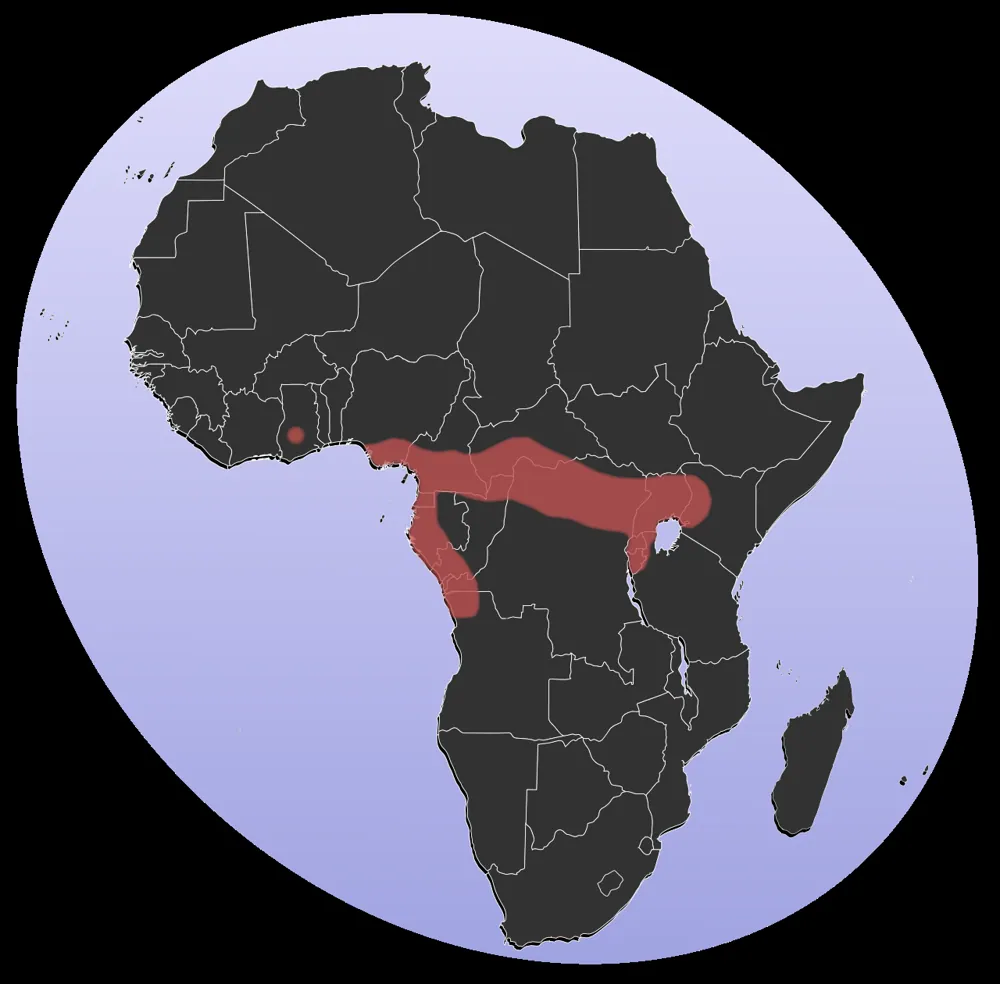
 Bí o ṣe lè dá a mọ̀
- Its dorsal (upper) body colour is glossy black.1
- It is a long, slim snake, measuring 2.2 to 2.7 m including the tail.1
- It has a small head with exceptionally large eyes.1
- It has a long, spiky tail, which helps it move through trees.1
- When threatened, it rears up and spreads a cobra-like hood, which is much narrower than that of Naja naja.1
Agbára oró
Oró ń jáde láti inú eyín oró tàbí eyín rẹ̀ nígbà tí ó bá bùjẹ.
Kí ni oró rẹ̀ máa ń ṣe?
Its venom is mainly a neurotoxin, which attacks the nerves, as in most cobras. It acts quickly and is extremely potent. Bite symptoms include swelling and stinging pain around the wound, numbness of the limbs and lips, severe difficulty breathing, heavy sweating and blurred vision. Victims may die of respiratory failure, which means the lungs stop working properly.1
Báwo ló ṣe léwu tó fún ènìyàn?
Ewu fún ènìyàn: Ó léwu gan-anÓ lè pa ènìyàn tí kò bá rí ìtọ́jú.It is one of the most toxic and deadly snakes in Africa. Its venom can easily kill a person, and a number of people are killed by this species each year.1
Kí ni ó máa ń ṣe nígbà tí ẹ̀rù bá bà á?
When threatened it rears up and spreads its narrow hood, and if provoked further it may bite; if restrained, it may also use its tail spike to defend itself.1
 Bí ó bá bùjẹ
- Jẹ́ kí ẹni náà wà láìmira kí ó sì farabalẹ̀, yọ òrùka àti àwọn nǹkan tó há, kí ẹ sì lọ sí ilé ìwòsàn kíákíá: oògùn apa-oró (antivenom) ni ìtọ́jú rẹ̀.
Máa kọ́kọ́ pe nọ́ńbà pàjáwìrì rẹ nígbà gbogbo (112, 000, 911). Èyí jẹ́ ìtọ́sọ́nà ìtọ́jú àkọ́kọ́ gbogbogbò, kì í ṣe ìmọ̀ràn ìṣègùn. Ìpìlẹ̀ ìtọ́jú àkọ́kọ́
 Wà láìléwu
- Má ṣe fọwọ́ kan, mú tàbí yọ ẹranko igbó lẹ́nu láéláé, kódà bí ó bá kéré, kódà bí ó bá dà bí ẹni pé ó ń sùn tàbí ó ti kú.
- Fún un ní àyè. Bí o bá pàdé ọ̀kan, farabalẹ̀, sẹ́yìn díẹ̀díẹ̀ kí o sì jẹ́ kí ó máa bá ọ̀nà rẹ̀ lọ.
- Bí ọ̀kan bá bù ọ́ jẹ: farabalẹ̀, má ṣe mira, pe nọ́ńbà pàjáwìrì rẹ (112, 000, 911) tàbí lọ sí ilé ìwòsàn kíákíá. Rántí bí ó ṣe rí, fọ́tò máa ń ṣèrànwọ́.
Kò wá ọ kiri láti ṣe ọ́ léṣe. Ó ń lo oró rẹ̀ láti mú oúnjẹ tàbí láti dáàbò bo ara rẹ̀, ó sì fẹ́ràn láti farapamọ́ jù. Sí i nípa wíwà láìléwu
Báwo ló ṣe tóbi tó?
Báwo ló ṣe gùn tó?
 ó gùn tó ajá 2.5 láti imú dé ìrù
 ó gùn tó ọ̀gẹ̀dẹ̀ 15 tí a tò tẹ̀léra
 lè sáré mítà 100 ní ìṣẹ́jú-àáyá 40 (ènìyàn tó yára jùlọ nílò 9.6)
Báwo ni Goldie's tree cobra ṣe tóbi tó tí a bá fi wé ÌWỌ?
Ìṣirò nìkan nínú bráwúsà rẹ. A kò fi ohunkóhun pamọ́, a kò sì fi ránṣẹ́ sí ibikíbi.
Báwo ló ṣe yára tó?


Òtítọ́
It is one of the largest venomous snakes in Africa.1
Despite its size, it is very agile and moves as easily on the ground and in water as it does in trees.1
It cannot spit its venom, but its bite is very potent.1
It is one of the few snakes considered aggressive, and it is reputed to be ill-tempered.1
Its large eyes give it excellent eyesight.1
Olùfọ́ àròsọ
Àròsọ: It is often called "Gold's tree cobra".
Òtítọ́: That spelling is an error. The species is named after George Taubman Goldie, so the correct name is Goldie's tree cobra.1
Ibi tí àwọn òtítọ́ ti wá
- Goldie's tree cobra (Wikipedia (CC BY-SA 4.0))
- Pseudohaje goldii (iNaturalist): orúkọ àti ìpínsísọ̀rí.
- Venom Wiki: ìpele ewu, ìtóbi déédé àti àfojúbù ìyára jẹ́ tiwa. Wo bí a ṣe ń ṣírò wọn: Bí a ṣe ń díwọ̀n ewu.
Gbogbo òtítọ́ ojú-ìwé yìí ní nọ́ńbà tó tọ́ka sí orísun rẹ̀. Bí a bá ṣe àṣìṣe, má bínú, olólùfẹ́ ẹranko ni wá, kì í ṣe ìwé ìròyìn sáyẹ́ǹsì. Sọ fún wa ní [email protected] a ó sì tún un ṣe.
 Ebi ń pa àkekèé! Iṣẹ́ akanṣe ẹnì kan ṣoṣo ni Venom Wiki: ọ̀fẹ́ ni, kò sí ìpolówó, kò sì sí olùtọpinpin. Ẹ̀bùn kékeré ń ràn án lọ́wọ́ láti wà lórí íńtánẹ́ẹ̀tì.Bọ́ àkekèé
 Black mamba
 Egyptian cobra
 Cape cobra
 Eastern green mamba
 Jameson's mamba
 Western green mamba
 Deathstalker
 Puff adder
 Boomslang
 Fat-tailed scorpion
 Gaboon viper
 Western honey bee