
 Áfíríkà
 Éṣíà
Éṣíà Yúróòpù
 Gúúsù Amẹ́ríkà
 Ọsirélíà àti Òṣéáníà
 Antáktíkà
 Òkun Pàsífíìkì
 Òkun Àtìláńtíìkì
 Òkun Íńdíà
 Òkun Áktíkì
 Òkun Mẹditaréníà
 Òkun Pupa
 Òkun Káríbíànù
 Òkun Coral
 Òkun Gúúsù Ṣáínà
 Òkun Fílípínì
 Òkun Andaman
 Òkun Àríwá
 Òkun Tímọ̀ àti Òkun Àráfúrà
 Ìyawọlẹ̀ Òkun Bẹ̀ngál
 Ìyawọlẹ̀ Òkun Kalifọ́níà
Golfodulcean poison frog
 Májèlé nínú awọ rẹ̀
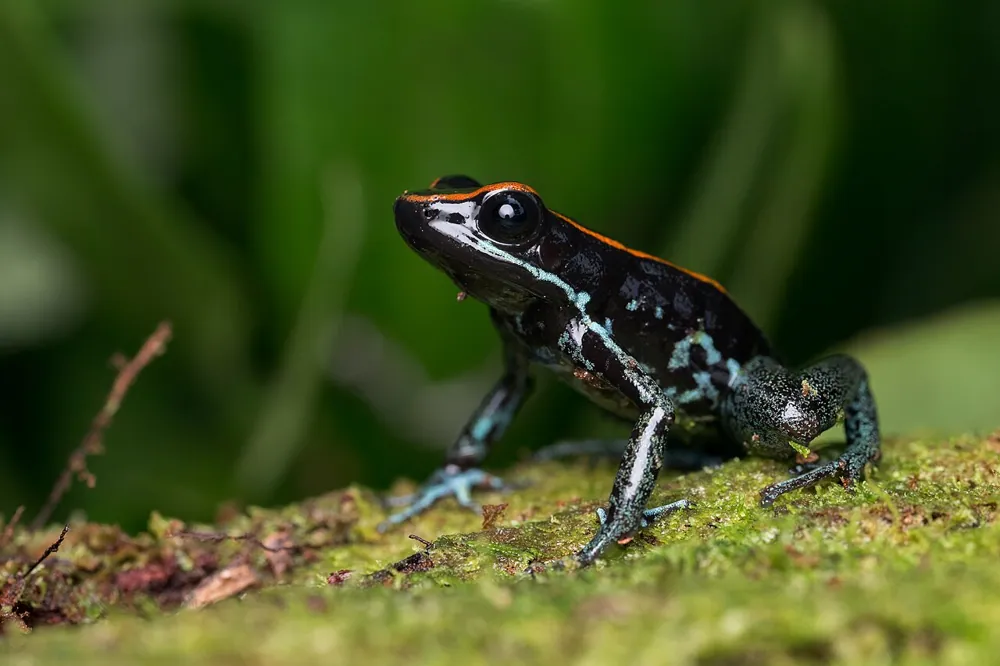
The Golfodulcean poison frog is a small, brightly marked frog that lives only in Costa Rica. Its skin contains a strong nerve poison, so it is one of the most toxic frogs in its genus, and it is a reminder that bright colours can be a warning. It lives in wet forests near streams.1

 Bí o ṣe lè dá a mọ̀
- The body is black, but it can look glittery because of pigments in the skin.1
- Two stripes run down the back from just above the vent to the tip of the nose. They are usually fire orange, but can be golden, yellow or green.1
- The legs are mottled blue, and the sides often have a blue or green marble pattern.1
- It is a fairly large poison frog for its genus, with a smooth, sloping back. Its shoulder blades are usually hidden under the skin, so it can look a little plump.1
- Females are typically larger than males. Adults reach about 3.5 cm long.1
A sábà máa ń ṣì í mọ̀ sí: The related P. bicolor and P. terribilis have visible shoulder blades under the skin, which the Golfodulcean poison frog usually lacks, so it looks smoother and rounder.1
Agbára májèlé
Awọ rẹ̀ ní májèlé. Ó léwu láti fọwọ́ kàn án, lá a tàbí jẹ ẹ́.
Kí ni májèlé rẹ̀ máa ń ṣe?
Its skin contains batrachotoxin, a neurotoxic alkaloid poison, which attacks the nerves. A large enough dose causes severe pain, then tonic-clonic seizures (violent convulsions) and paralysis.1
Báwo ló ṣe léwu tó fún ènìyàn?
Ewu fún ènìyàn: Ó ń dunniÓ lè dunni gan-an, ṣùgbọ́n kì í fẹ́rẹ̀ẹ́ le rárá.It is highly toxic, though it is only the fourth most toxic species in the genus Phyllobates. The poison is in the skin, so the risk comes from handling the frog or getting the poison from its skin into the body.1
Kí ni ó máa ń ṣe nígbà tí ẹ̀rù bá bà á?
Its bright, multi-coloured body advertises its toxin as a warning to predators.1
 Bí ẹnìkan bá fọwọ́ kàn án tàbí jẹ ẹ́
- Bí ẹnìkan bá fọwọ́ kan ọ̀kan: fọ ọwọ́ dáadáa, má sì fọwọ́ kan ojú tàbí ẹnu. Bí ọmọdé tàbí ẹran ọ̀sìn bá lá ọ̀kan tàbí jẹ ẹ́: pe ibùdó ìmọ̀ràn májèlé tàbí nọ́ńbà pàjáwìrì.
Máa kọ́kọ́ pe nọ́ńbà pàjáwìrì rẹ nígbà gbogbo (112, 000, 911). Èyí jẹ́ ìtọ́sọ́nà ìtọ́jú àkọ́kọ́ gbogbogbò, kì í ṣe ìmọ̀ràn ìṣègùn. Ìpìlẹ̀ ìtọ́jú àkọ́kọ́
 Wà láìléwu
- Má ṣe fọwọ́ kan, mú tàbí yọ ẹranko igbó lẹ́nu láéláé, kódà bí ó bá kéré, kódà bí ó bá dà bí ẹni pé ó ń sùn tàbí ó ti kú.
- Fún un ní àyè. Bí o bá pàdé ọ̀kan, farabalẹ̀, sẹ́yìn díẹ̀díẹ̀ kí o sì jẹ́ kí ó máa bá ọ̀nà rẹ̀ lọ.
- Bí o bá fọwọ́ kàn án tàbí jẹ ẹ́: má ṣe fọwọ́ pa ojú tàbí ẹnu rẹ, fọ ọwọ́ rẹ kí o sì wá ìrànlọ́wọ́ ìṣègùn.
Kò wá ọ kiri láti ṣe ọ́ léṣe. Májèlé rẹ̀ wà níbẹ̀ kìkì kí ohunkóhun má baà jẹ ẹ́. Sí i nípa wíwà láìléwu
Báwo ló ṣe tóbi tó?
Báwo ló ṣe gùn tó?
 ó gùn tó pínì ìwé (paper clip)
 lè sáré mítà 100 ní ìṣẹ́jú-àáyá 100 (ènìyàn tó yára jùlọ nílò 9.6)
Báwo ni Golfodulcean poison frog ṣe tóbi tó tí a bá fi wé ÌWỌ?
Ìṣirò nìkan nínú bráwúsà rẹ. A kò fi ohunkóhun pamọ́, a kò sì fi ránṣẹ́ sí ibikíbi.
Báwo ló ṣe yára tó?


Òtítọ́
It is one of the few frogs whose poison is named batrachotoxin, a potent nerve toxin.1
Its climbing toe pads stick to leaves in a similar way to geckos, and it can climb out of an unsealed container.1
Male frogs carry their tadpoles on their backs, often for 1 to 2 days, to puddles, pools in palm leaves, or water-filled tree holes.1
Frogs in captivity have no toxin, which shows that their poison comes from what they eat.1
Its skin holds a large amount of poison, because it is comparatively large for a poison dart frog.1
The tadpoles become frogs after about 45 days, and the young frogs become sexually mature after ten months.1
Fún àwọn amòye oró
- Orúkọ sáyẹ́ǹsì
- Phyllobates vittatus
- Ẹgbẹ́
- Àkèré onímájèlé, ọ̀pọ̀lọ́ àti newt
- Ìdílé
- Dendrobatidae2
- Ètò
- Anura
- Àwọn kọ́ńtínẹ́ńtì
- Àríwá Amẹ́ríkà
- Àwọn ọmọ
- During the breeding season, the female lays 7 to 21 eggs per clutch on leaves, about every one or two weeks, and the male guards the eggs and carries the hatched tadpoles on his back to water.1
- Ewu fún ènìyàn
- 2 / 5: Ó ń dunni3
Ibi tí àwọn òtítọ́ ti wá
- Golfodulcean poison frog (Wikipedia (CC BY-SA 4.0))
- Phyllobates vittatus (iNaturalist): orúkọ àti ìpínsísọ̀rí.
- Venom Wiki: ìpele ewu, ìtóbi déédé àti àfojúbù ìyára jẹ́ tiwa. Wo bí a ṣe ń ṣírò wọn: Bí a ṣe ń díwọ̀n ewu.
Gbogbo òtítọ́ ojú-ìwé yìí ní nọ́ńbà tó tọ́ka sí orísun rẹ̀. Bí a bá ṣe àṣìṣe, má bínú, olólùfẹ́ ẹranko ni wá, kì í ṣe ìwé ìròyìn sáyẹ́ǹsì. Sọ fún wa ní [email protected] a ó sì tún un ṣe.
 Ebi ń pa àkekèé! Iṣẹ́ akanṣe ẹnì kan ṣoṣo ni Venom Wiki: ọ̀fẹ́ ni, kò sí ìpolówó, kò sì sí olùtọpinpin. Ẹ̀bùn kékeré ń ràn án lọ́wọ́ láti wà lórí íńtánẹ́ẹ̀tì.Bọ́ àkekèé
Sí i láti inú ẹgbẹ́ kan náà: Àkèré onímájèlé, ọ̀pọ̀lọ́ àti newt
 Cane toadÀkèré onímájèlé, ọ̀pọ̀lọ́ àti newtÓ nílò dókítàMá ṣe fọwọ́ kàn án
 Strawberry poison-dart frogÀkèré onímájèlé, ọ̀pọ̀lọ́ àti newtÓ kàn ń dunniMá ṣe fọwọ́ kàn án
 California newtÀkèré onímájèlé, ọ̀pọ̀lọ́ àti newtÓ lè paniMá ṣe fọwọ́ kàn án
 Rough-skinned newtÀkèré onímájèlé, ọ̀pọ̀lọ́ àti newtÓ lè paniMá ṣe fọwọ́ kàn án
 Colorado River toadÀkèré onímájèlé, ọ̀pọ̀lọ́ àti newtÓ nílò dókítàMá ṣe fọwọ́ kàn án
 Panamanian golden frogÀkèré onímájèlé, ọ̀pọ̀lọ́ àti newtÓ nílò dókítàMá ṣe fọwọ́ kàn án
 Terciopelo
 Eastern coral snake
 Eastern diamondback rattlesnake
 Eyelash viper
 Timber rattlesnake
 Western diamondback rattlesnake