
 Áfíríkà
 Éṣíà
Éṣíà Yúróòpù
 Gúúsù Amẹ́ríkà
 Ọsirélíà àti Òṣéáníà
 Antáktíkà
 Òkun Pàsífíìkì
 Òkun Àtìláńtíìkì
 Òkun Íńdíà
 Òkun Áktíkì
 Òkun Mẹditaréníà
 Òkun Pupa
 Òkun Káríbíànù
 Òkun Coral
 Òkun Gúúsù Ṣáínà
 Òkun Fílípínì
 Òkun Andaman
 Òkun Àríwá
 Òkun Tímọ̀ àti Òkun Àráfúrà
 Ìyawọlẹ̀ Òkun Bẹ̀ngál
 Ìyawọlẹ̀ Òkun Kalifọ́níà
Green and black poison dart frog
 Májèlé nínú awọ rẹ̀
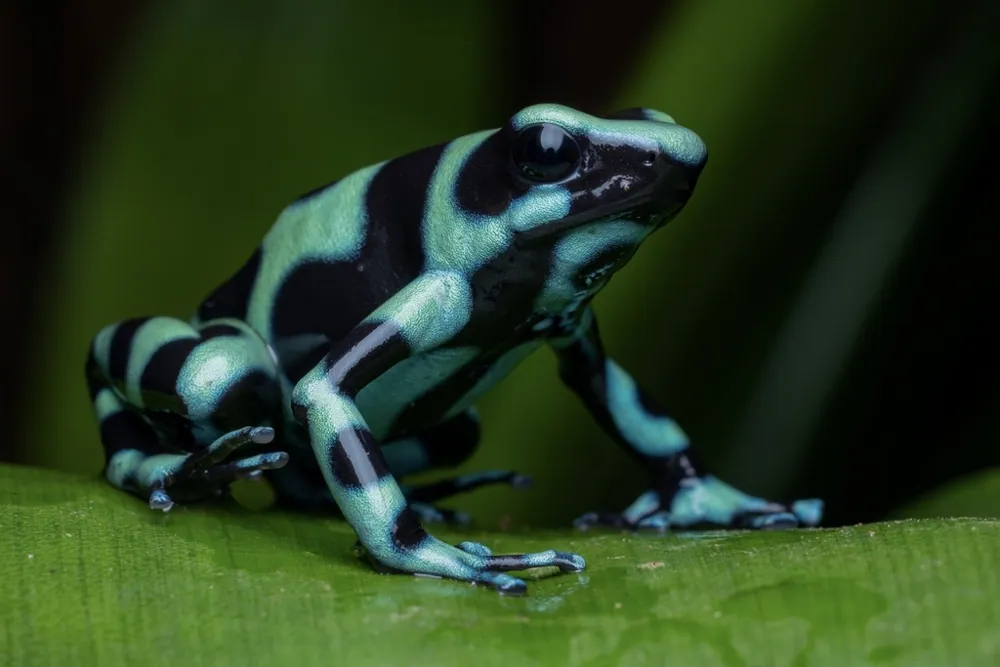
The green-and-black poison dart frog is a small, brightly coloured frog from the forests of southern Central America and north-western Colombia. It is poisonous, not venomous: it gets its toxins from the tiny insects it eats. It is also one of the most variable poison frogs in colour and pattern.1

 Bí o ṣe lè dá a mọ̀
- Usually a mint-green background with a spotted or banded pattern1
- Dark or dull splotches, most often blackish, that can look like large spots, blotches or a splashed pattern1
- Colour varies a lot: some are darker green, lime, emerald, turquoise, blue, whitish or pale yellow, and some have no green or no black1
- Some variants are entirely black, or dark with only a few small green spots or streaks1
- Small adults: males about 1.9 cm, females about 2.5 cm or longer1
Agbára májèlé
Awọ rẹ̀ ní májèlé. Ó léwu láti fọwọ́ kàn án, lá a tàbí jẹ ẹ́.
Kí ni májèlé rẹ̀ máa ń ṣe?
Its skin holds alkaloid poisons, which are not venom injected by a bite. These poisons interfere with the ion channels and nicotinic acetylcholine receptors that nerves and muscles rely on. In extreme cases, this can cause numbness, loss of muscle control, convulsions, cardiac arrest and death.1
Báwo ló ṣe léwu tó fún ènìyàn?
Ewu fún ènìyàn: Ó ń dunniÓ lè dunni gan-an, ṣùgbọ́n kì í fẹ́rẹ̀ẹ́ le rárá.Its poisons can cause serious effects, including death, in cases of extreme poisoning.1
 Bí ẹnìkan bá fọwọ́ kàn án tàbí jẹ ẹ́
- Bí ẹnìkan bá fọwọ́ kan ọ̀kan: fọ ọwọ́ dáadáa, má sì fọwọ́ kan ojú tàbí ẹnu. Bí ọmọdé tàbí ẹran ọ̀sìn bá lá ọ̀kan tàbí jẹ ẹ́: pe ibùdó ìmọ̀ràn májèlé tàbí nọ́ńbà pàjáwìrì.
Máa kọ́kọ́ pe nọ́ńbà pàjáwìrì rẹ nígbà gbogbo (112, 000, 911). Èyí jẹ́ ìtọ́sọ́nà ìtọ́jú àkọ́kọ́ gbogbogbò, kì í ṣe ìmọ̀ràn ìṣègùn. Ìpìlẹ̀ ìtọ́jú àkọ́kọ́
 Wà láìléwu
- Má ṣe fọwọ́ kan, mú tàbí yọ ẹranko igbó lẹ́nu láéláé, kódà bí ó bá kéré, kódà bí ó bá dà bí ẹni pé ó ń sùn tàbí ó ti kú.
- Fún un ní àyè. Bí o bá pàdé ọ̀kan, farabalẹ̀, sẹ́yìn díẹ̀díẹ̀ kí o sì jẹ́ kí ó máa bá ọ̀nà rẹ̀ lọ.
- Bí o bá fọwọ́ kàn án tàbí jẹ ẹ́: má ṣe fọwọ́ pa ojú tàbí ẹnu rẹ, fọ ọwọ́ rẹ kí o sì wá ìrànlọ́wọ́ ìṣègùn.
Kò wá ọ kiri láti ṣe ọ́ léṣe. Májèlé rẹ̀ wà níbẹ̀ kìkì kí ohunkóhun má baà jẹ ẹ́. Sí i nípa wíwà láìléwu
Báwo ló ṣe tóbi tó?
Báwo ló ṣe gùn tó?
 ó gùn tó pínì ìwé (paper clip)
 lè sáré mítà 100 ní ìṣẹ́jú-àáyá 97 (ènìyàn tó yára jùlọ nílò 9.6)
Báwo ni Green and black poison dart frog ṣe tóbi tó tí a bá fi wé ÌWỌ?
Ìṣirò nìkan nínú bráwúsà rẹ. A kò fi ohunkóhun pamọ́, a kò sì fi ránṣẹ́ sí ibikíbi.
Báwo ló ṣe yára tó?


Òtítọ́
Hundreds of different alkaloid poisons have been identified in this frog.1
Parents carry tadpoles into the treetops and place them in bromeliad pools, where the tadpoles sometimes eat each other because food is scarce.1
Unlike other poison frogs, it gathers in large groups before mating, and males fight over small patches of ground.1
It was intentionally introduced to Oahu, Hawaii, in 1932 to help control mosquitoes.1
Its toe pads have small sucker-like discs that give it a mildly sticky grip when climbing.1
Olùfọ́ àròsọ
Àròsọ: Poison dart frogs are poisonous in every case, because of their own nature.
Òtítọ́: They are not poisonous by nature. They become poisonous from the alkaloids in their diet of ants and mites. Captive frogs fed on crickets and fruit flies are non-toxic.1
Fún àwọn amòye oró
- Orúkọ sáyẹ́ǹsì
- Dendrobates auratus
- Ẹgbẹ́
- Àkèré onímájèlé, ọ̀pọ̀lọ́ àti newt
- Ìdílé
- Dendrobatidae2
- Ètò
- Anura
- Àwọn kọ́ńtínẹ́ńtì
- Àríwá Amẹ́ríkà, Gúúsù Amẹ́ríkà
- Àwọn ọmọ
- The female lays eggs at a site chosen by the male, and he fertilises them. The eggs hatch into tadpoles in about 14 days, and the parent, typically the male, carries them up into the canopy.1
- Bí ó ṣe ń ṣe nínú igbó
- Least Concern (IUCN)1
- Ewu fún ènìyàn
- 2 / 5: Ó ń dunni3
Ibi tí àwọn òtítọ́ ti wá
- Green and black poison dart frog (Wikipedia (CC BY-SA 4.0))
- Dendrobates auratus (iNaturalist): orúkọ àti ìpínsísọ̀rí.
- Venom Wiki: ìpele ewu, ìtóbi déédé àti àfojúbù ìyára jẹ́ tiwa. Wo bí a ṣe ń ṣírò wọn: Bí a ṣe ń díwọ̀n ewu.
Gbogbo òtítọ́ ojú-ìwé yìí ní nọ́ńbà tó tọ́ka sí orísun rẹ̀. Bí a bá ṣe àṣìṣe, má bínú, olólùfẹ́ ẹranko ni wá, kì í ṣe ìwé ìròyìn sáyẹ́ǹsì. Sọ fún wa ní [email protected] a ó sì tún un ṣe.
 Ebi ń pa àkekèé! Iṣẹ́ akanṣe ẹnì kan ṣoṣo ni Venom Wiki: ọ̀fẹ́ ni, kò sí ìpolówó, kò sì sí olùtọpinpin. Ẹ̀bùn kékeré ń ràn án lọ́wọ́ láti wà lórí íńtánẹ́ẹ̀tì.Bọ́ àkekèé
Sí i láti inú ẹgbẹ́ kan náà: Àkèré onímájèlé, ọ̀pọ̀lọ́ àti newt
 Golden poison frogÀkèré onímájèlé, ọ̀pọ̀lọ́ àti newtApaniMá ṣe fọwọ́ kàn án
 Cane toadÀkèré onímájèlé, ọ̀pọ̀lọ́ àti newtÓ nílò dókítàMá ṣe fọwọ́ kàn án
 Dyeing poison dart frogÀkèré onímájèlé, ọ̀pọ̀lọ́ àti newtÓ kàn ń dunniMá ṣe fọwọ́ kàn án
 Strawberry poison-dart frogÀkèré onímájèlé, ọ̀pọ̀lọ́ àti newtÓ kàn ń dunniMá ṣe fọwọ́ kàn án
 Black-legged poison frogÀkèré onímájèlé, ọ̀pọ̀lọ́ àti newtÓ lè paniMá ṣe fọwọ́ kàn án
 California newtÀkèré onímájèlé, ọ̀pọ̀lọ́ àti newtÓ lè paniMá ṣe fọwọ́ kàn án
 Terciopelo
 Eastern coral snake
 Eastern diamondback rattlesnake
 Eyelash viper
 Timber rattlesnake
 Western diamondback rattlesnake