
 Áfíríkà
 Éṣíà
Éṣíà Yúróòpù
 Gúúsù Amẹ́ríkà
 Ọsirélíà àti Òṣéáníà
 Antáktíkà
 Òkun Pàsífíìkì
 Òkun Àtìláńtíìkì
 Òkun Íńdíà
 Òkun Áktíkì
 Òkun Mẹditaréníà
 Òkun Pupa
 Òkun Káríbíànù
 Òkun Coral
 Òkun Gúúsù Ṣáínà
 Òkun Fílípínì
 Òkun Andaman
 Òkun Àríwá
 Òkun Tímọ̀ àti Òkun Àráfúrà
 Ìyawọlẹ̀ Òkun Bẹ̀ngál
 Ìyawọlẹ̀ Òkun Kalifọ́níà
Mottled cup moth
 Irun tó ń ta ni
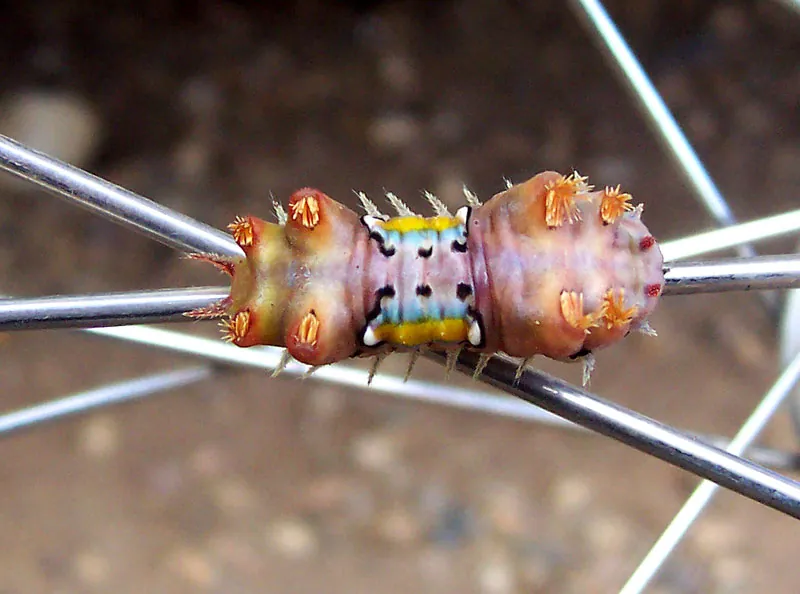
The mottled cup moth is a small Australian moth. Its caterpillar is the part to know about, because it has yellow stinging spines that release painful toxins when touched. The caterpillar's bright bands warn that it is dangerous.1

 Bí o ṣe lè dá a mọ̀
- The adult moth has a rust-coloured body and a white area around its antennae.1
- Its two pairs of legs have white bands on the front pair.1
- The forewings are shiny rust-coloured with silvery edges, and the hindwings are dull white.1
- The caterpillar is only about 2 cm long, grey with many dark spots and streaks.1
- Each side of the caterpillar has a clear yellow band lined with green, and it has spiny projections at both ends.1
Agbára oró
Irun kékeré tàbí irun líle máa ń kán sínú awọ ara, wọ́n sì ń ta ni.
Kí ni oró rẹ̀ máa ń ṣe?
The caterpillar's yellow needle-like spines contain a mixture of at least 151 toxins, which are proteins or protein-like substances. The spines cause pain and can induce severely inflamed swellings. The toxins are released when the spine tips break on contact.1
Báwo ló ṣe léwu tó fún ènìyàn?
Ewu fún ènìyàn: Ó ń dunniÓ lè dunni gan-an, ṣùgbọ́n kì í fẹ́rẹ̀ẹ́ le rárá.Contact with the spines causes painful, severely inflamed swellings.1
Kí ni ó máa ń ṣe nígbà tí ẹ̀rù bá bà á?
The caterpillar raises up to eight projections, each with about a hundred stinging spines, but only when it is disturbed or agitated. Its banded colours warn predators that it is dangerous.1
 Bí o bá fọwọ́ kan irun rẹ̀
- Fún irun ìdin labalábá tó ń ta ni: fi téèpù aláléẹ̀mọ́ gbé wọn kúrò, lẹ́yìn náà fọ awọ ara. Má ṣe fọwọ́ pa á.
- Fún ìbùjẹ: fọ̀ ọ́, kí o sì tù ú. Wá ìrànlọ́wọ́ ìṣègùn bí ara ẹni náà kò bá yá tàbí tí ẹ̀jẹ̀ bá ń tètè ṣàn lára rẹ̀.
Máa kọ́kọ́ pe nọ́ńbà pàjáwìrì rẹ nígbà gbogbo (112, 000, 911). Èyí jẹ́ ìtọ́sọ́nà ìtọ́jú àkọ́kọ́ gbogbogbò, kì í ṣe ìmọ̀ràn ìṣègùn. Ìpìlẹ̀ ìtọ́jú àkọ́kọ́
 Wà láìléwu
- Má ṣe fọwọ́ kan, mú tàbí yọ ẹranko igbó lẹ́nu láéláé, kódà bí ó bá kéré, kódà bí ó bá dà bí ẹni pé ó ń sùn tàbí ó ti kú.
- Fún un ní àyè. Bí o bá pàdé ọ̀kan, farabalẹ̀, sẹ́yìn díẹ̀díẹ̀ kí o sì jẹ́ kí ó máa bá ọ̀nà rẹ̀ lọ.
- Bí o bá fọwọ́ kan irun rẹ̀: farabalẹ̀, má ṣe mira, pe nọ́ńbà pàjáwìrì rẹ (112, 000, 911) tàbí lọ sí ilé ìwòsàn kíákíá. Rántí bí ó ṣe rí, fọ́tò máa ń ṣèrànwọ́.
Kò wá ọ kiri láti ṣe ọ́ léṣe. Ó ń lo oró rẹ̀ láti mú oúnjẹ tàbí láti dáàbò bo ara rẹ̀, ó sì fẹ́ràn láti farapamọ́ jù. Sí i nípa wíwà láìléwu
Báwo ló ṣe tóbi tó?
Báwo ló ṣe gùn tó?
 ó kúrú ju ọmọdínrín ìka rẹ lọ
 ó lọ́ra ju ìgbín inú ọgbà lọ
Báwo ni Mottled cup moth ṣe tóbi tó tí a bá fi wé ÌWỌ?
Ìṣirò nìkan nínú bráwúsà rẹ. A kò fi ohunkóhun pamọ́, a kò sì fi ránṣẹ́ sí ibikíbi.
Báwo ló ṣe yára tó?

Òtítọ́
Researchers at the University of Queensland reported in 2021 that the caterpillar's venom contains at least 151 different toxins.1
The toxin cecropin causes the pain and also breaks down the cell membranes of bacteria and worms.1
A protein called DV33 can kill Haemonchus contortus, a roundworm that affects sheep.1
Some of the toxins have medicinal properties, such as the ability to kill harmful bacteria and parasitic worms.1
Some of the nervous-system proteins in the venom may have beneficial effects, such as in epilepsy.1
Ibi tí àwọn òtítọ́ ti wá
- Doratifera vulnerans (Wikipedia (CC BY-SA 4.0))
- Doratifera vulnerans (iNaturalist): orúkọ àti ìpínsísọ̀rí.
- Venom Wiki: ìpele ewu, ìtóbi déédé àti àfojúbù ìyára jẹ́ tiwa. Wo bí a ṣe ń ṣírò wọn: Bí a ṣe ń díwọ̀n ewu.
Gbogbo òtítọ́ ojú-ìwé yìí ní nọ́ńbà tó tọ́ka sí orísun rẹ̀. Bí a bá ṣe àṣìṣe, má bínú, olólùfẹ́ ẹranko ni wá, kì í ṣe ìwé ìròyìn sáyẹ́ǹsì. Sọ fún wa ní [email protected] a ó sì tún un ṣe.
 Ebi ń pa àkekèé! Iṣẹ́ akanṣe ẹnì kan ṣoṣo ni Venom Wiki: ọ̀fẹ́ ni, kò sí ìpolówó, kò sì sí olùtọpinpin. Ẹ̀bùn kékeré ń ràn án lọ́wọ́ láti wà lórí íńtánẹ́ẹ̀tì.Bọ́ àkekèé
Sí i láti inú ẹgbẹ́ kan náà: Ìdin labalábá àti kòkòrò
 Bag-shelter mothÌdin labalábá àti kòkòròÓ kàn ń dunniMá ṣe fọwọ́ kàn án
 Common Australian assassin bugÌdin labalábá àti kòkòròAláìléwu
 Giant silkworm moth caterpillarÌdin labalábá àti kòkòròÓ lè paniMá ṣe fọwọ́ kàn án
 Vinchuca kissing bugÌdin labalábá àti kòkòròÓ nílò dókítà
 Giant water bugÌdin labalábá àti kòkòròÓ kàn ń dunni
 Oak processionaryÌdin labalábá àti kòkòròÓ kàn ń dunniMá ṣe fọwọ́ kàn án
 Coastal taipan
 Common death adder
 Eastern brown snake
 Ejò taipan inú ilẹ̀
 Sydney funnel-web spider
 Ejò ẹkùn