
 Áfíríkà
 Éṣíà
Éṣíà Yúróòpù
 Gúúsù Amẹ́ríkà
 Ọsirélíà àti Òṣéáníà
 Antáktíkà
 Òkun Pàsífíìkì
 Òkun Àtìláńtíìkì
 Òkun Íńdíà
 Òkun Áktíkì
 Òkun Mẹditaréníà
 Òkun Pupa
 Òkun Káríbíànù
 Òkun Coral
 Òkun Gúúsù Ṣáínà
 Òkun Fílípínì
 Òkun Andaman
 Òkun Àríwá
 Òkun Tímọ̀ àti Òkun Àráfúrà
 Ìyawọlẹ̀ Òkun Bẹ̀ngál
 Ìyawọlẹ̀ Òkun Kalifọ́níà
Namaqua dwarf adder
 Ìbùjẹ
ÌbùjẹThe Namaqua dwarf adder is a small venomous snake that lives on the coastal sand dunes where Namibia and South Africa meet. It is one of the smallest vipers in the world, and possibly the smallest.1
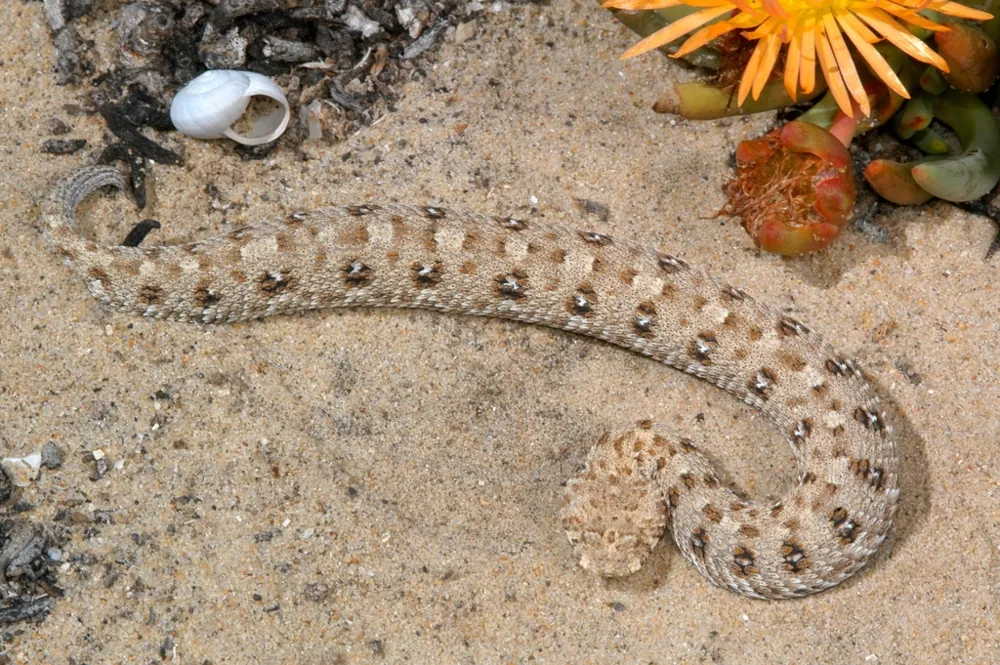
 Bí o ṣe lè dá a mọ̀
Agbára oró
Oró ń jáde láti inú eyín oró tàbí eyín rẹ̀ nígbà tí ó bá bùjẹ.
Kí ni oró rẹ̀ máa ń ṣe?
The venom is injected by bite. In one documented bite, the victim had intense pain, pronounced swelling, discolouration and oozing of fluid from the puncture marks. A 5 mm haematoma (a swelling of blood under the skin) formed after 24 hours. Symptoms eased over three to four days, and healing was complete after two weeks, with no loss of function. Minimal local tissue damage and no whole-body effects were reported.1
Báwo ló ṣe léwu tó fún ènìyàn?
Ewu fún ènìyàn: Ó ń dunniÓ lè dunni gan-an, ṣùgbọ́n kì í fẹ́rẹ̀ẹ́ le rárá.One bite is documented, recorded by a researcher. It caused pain and swelling but healed fully in about two weeks.1
 Bí ó bá bùjẹ
- Jẹ́ kí ẹni náà wà láìmira kí ó sì farabalẹ̀, jẹ́ kí apá tàbí ẹsẹ̀ tí ó bù jẹ wà ní ìpele ọkàn, yọ òrùka àti àwọn nǹkan tó há, kí ẹ sì lọ sí ilé ìwòsàn kíákíá.
Máa kọ́kọ́ pe nọ́ńbà pàjáwìrì rẹ nígbà gbogbo (112, 000, 911). Èyí jẹ́ ìtọ́sọ́nà ìtọ́jú àkọ́kọ́ gbogbogbò, kì í ṣe ìmọ̀ràn ìṣègùn. Ìpìlẹ̀ ìtọ́jú àkọ́kọ́
 Wà láìléwu
- Má ṣe fọwọ́ kan, mú tàbí yọ ẹranko igbó lẹ́nu láéláé, kódà bí ó bá kéré, kódà bí ó bá dà bí ẹni pé ó ń sùn tàbí ó ti kú.
- Fún un ní àyè. Bí o bá pàdé ọ̀kan, farabalẹ̀, sẹ́yìn díẹ̀díẹ̀ kí o sì jẹ́ kí ó máa bá ọ̀nà rẹ̀ lọ.
- Bí ọ̀kan bá bù ọ́ jẹ: farabalẹ̀, má ṣe mira, pe nọ́ńbà pàjáwìrì rẹ (112, 000, 911) tàbí lọ sí ilé ìwòsàn kíákíá. Rántí bí ó ṣe rí, fọ́tò máa ń ṣèrànwọ́.
Kò wá ọ kiri láti ṣe ọ́ léṣe. Ó ń lo oró rẹ̀ láti mú oúnjẹ tàbí láti dáàbò bo ara rẹ̀, ó sì fẹ́ràn láti farapamọ́ jù. Sí i nípa wíwà láìléwu
Báwo ló ṣe tóbi tó?
Báwo ló ṣe gùn tó?
 ó gùn tó bíríkì ìṣeré 9 tí a tò sí ìlà kan
 lè sáré mítà 100 ní ìṣẹ́jú-àáyá 120 (ènìyàn tó yára jùlọ nílò 9.6)
Báwo ni Namaqua dwarf adder ṣe tóbi tó tí a bá fi wé ÌWỌ?
Ìṣirò nìkan nínú bráwúsà rẹ. A kò fi ohunkóhun pamọ́, a kò sì fi ránṣẹ́ sí ibikíbi.
Báwo ló ṣe yára tó?


Òtítọ́
It is possibly the smallest viper in the world.1
Its population faces unusually high annual mortality, between 39% and 56%, because of its small size and the many predators in its environment.1
To cope with this losses, it is thought to breed once every year. Most vipers breed every other year or less often.1
It lives in a comparatively narrow strip of coastal dunes, where temperatures change little between seasons.1
Ibi tí àwọn òtítọ́ ti wá
- Bitis schneideri (Wikipedia (CC BY-SA 4.0))
- Bitis schneideri (iNaturalist): orúkọ àti ìpínsísọ̀rí.
- Venom Wiki: ìpele ewu, ìtóbi déédé àti àfojúbù ìyára jẹ́ tiwa. Wo bí a ṣe ń ṣírò wọn: Bí a ṣe ń díwọ̀n ewu.
Gbogbo òtítọ́ ojú-ìwé yìí ní nọ́ńbà tó tọ́ka sí orísun rẹ̀. Bí a bá ṣe àṣìṣe, má bínú, olólùfẹ́ ẹranko ni wá, kì í ṣe ìwé ìròyìn sáyẹ́ǹsì. Sọ fún wa ní [email protected] a ó sì tún un ṣe.
 Ebi ń pa àkekèé! Iṣẹ́ akanṣe ẹnì kan ṣoṣo ni Venom Wiki: ọ̀fẹ́ ni, kò sí ìpolówó, kò sì sí olùtọpinpin. Ẹ̀bùn kékeré ń ràn án lọ́wọ́ láti wà lórí íńtánẹ́ẹ̀tì.Bọ́ àkekèé
 Puff adder
 Gaboon viper
 Northeast African carpet viper
 West African carpet viper
 Rhinoceros viper
 West African Gaboon viper
 Black mamba
 Deathstalker
 Egyptian cobra
 Boomslang
 Fat-tailed scorpion
 Western honey bee