
 Áfíríkà
 Éṣíà
Éṣíà Yúróòpù
 Gúúsù Amẹ́ríkà
 Ọsirélíà àti Òṣéáníà
 Antáktíkà
 Òkun Pàsífíìkì
 Òkun Àtìláńtíìkì
 Òkun Íńdíà
 Òkun Áktíkì
 Òkun Mẹditaréníà
 Òkun Pupa
 Òkun Káríbíànù
 Òkun Coral
 Òkun Gúúsù Ṣáínà
 Òkun Fílípínì
 Òkun Andaman
 Òkun Àríwá
 Òkun Tímọ̀ àti Òkun Àráfúrà
 Ìyawọlẹ̀ Òkun Bẹ̀ngál
 Ìyawọlẹ̀ Òkun Kalifọ́níà
Orange baboon tarantula
 Ìbùjẹ
ÌbùjẹThe orange baboon tarantula is a large, nocturnal spider, so it is most active at night. It lives in parts of Africa, including Angola, central and southern Africa and the island of Zanzibar. Its bite is not known to be deadly, but it is very painful, so it should be left alone.1



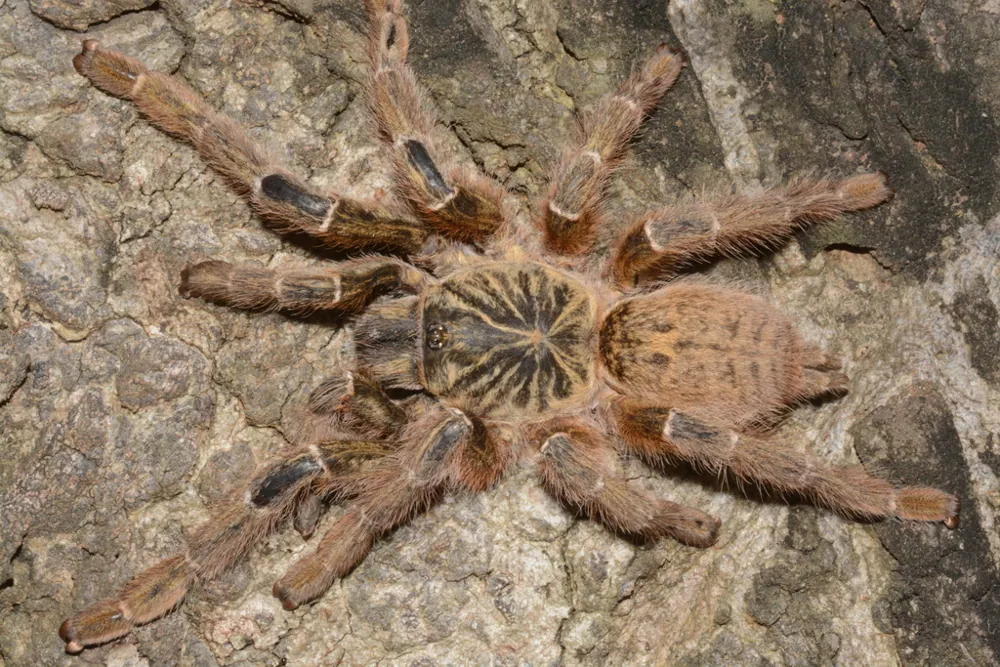
 Bí o ṣe lè dá a mọ̀
Agbára oró
Oró ń jáde láti inú eyín oró tàbí eyín rẹ̀ nígbà tí ó bá bùjẹ.
Kí ni oró rẹ̀ máa ń ṣe?
The venom is not known to be lethal to humans, but the bite is considered medically significant. The bite is extremely painful.1
Báwo ló ṣe léwu tó fún ènìyàn?
Ewu fún ènìyàn: Ó ń dunniÓ lè dunni gan-an, ṣùgbọ́n kì í fẹ́rẹ̀ẹ́ le rárá.The bite is not thought to be serious, but it is extremely painful. It is considered medically significant, so handling this species is advised against.1
Kí ni ó máa ń ṣe nígbà tí ẹ̀rù bá bà á?
It is very defensive and will bite if provoked, often without first showing its typical threat display.1
 Bí ó bá bùjẹ
- Fọ ibi ìbùjẹ náà kí o sì tù ú. Wá ìrànlọ́wọ́ ìṣègùn bí ìrora bá le tàbí tí ara ẹni náà kò bá yá.
Máa kọ́kọ́ pe nọ́ńbà pàjáwìrì rẹ nígbà gbogbo (112, 000, 911). Èyí jẹ́ ìtọ́sọ́nà ìtọ́jú àkọ́kọ́ gbogbogbò, kì í ṣe ìmọ̀ràn ìṣègùn. Ìpìlẹ̀ ìtọ́jú àkọ́kọ́
 Wà láìléwu
- Má ṣe fọwọ́ kan, mú tàbí yọ ẹranko igbó lẹ́nu láéláé, kódà bí ó bá kéré, kódà bí ó bá dà bí ẹni pé ó ń sùn tàbí ó ti kú.
- Fún un ní àyè. Bí o bá pàdé ọ̀kan, farabalẹ̀, sẹ́yìn díẹ̀díẹ̀ kí o sì jẹ́ kí ó máa bá ọ̀nà rẹ̀ lọ.
- Bí ọ̀kan bá bù ọ́ jẹ: farabalẹ̀, má ṣe mira, pe nọ́ńbà pàjáwìrì rẹ (112, 000, 911) tàbí lọ sí ilé ìwòsàn kíákíá. Rántí bí ó ṣe rí, fọ́tò máa ń ṣèrànwọ́.
Kò wá ọ kiri láti ṣe ọ́ léṣe. Ó ń lo oró rẹ̀ láti mú oúnjẹ tàbí láti dáàbò bo ara rẹ̀, ó sì fẹ́ràn láti farapamọ́ jù. Sí i nípa wíwà láìléwu
Báwo ló ṣe tóbi tó?
Báwo ló ṣe gùn tó?
 ó gùn tó bíríkì ìṣeré 5 tí a tò sí ìlà kan
 lè sáré mítà 100 ní ìṣẹ́jú-àáyá 200 (ènìyàn tó yára jùlọ nílò 9.6)
Báwo ni Orange baboon tarantula ṣe tóbi tó tí a bá fi wé ÌWỌ?
Ìṣirò nìkan nínú bráwúsà rẹ. A kò fi ohunkóhun pamọ́, a kò sì fi ránṣẹ́ sí ibikíbi.
Báwo ló ṣe yára tó?


Òtítọ́
Hobbyists nickname it OBT, short for orange baboon tarantula or orange bitey thing, and call it the pterror, a pun on its genus name.1
It can be found in five known colour forms, and the colour is thought to be linked to the type of soil where each form lives.1
Unlike some New World tarantulas, it has no urticating hairs to irritate the skin.1
It builds a tunnel-shaped web.1
It is a nocturnal spider, so it is most active at night.1
Ibi tí àwọn òtítọ́ ti wá
- Pterinochilus murinus (Wikipedia (CC BY-SA 4.0))
- Pterinochilus murinus (iNaturalist): orúkọ àti ìpínsísọ̀rí.
- Venom Wiki: ìpele ewu, ìtóbi déédé àti àfojúbù ìyára jẹ́ tiwa. Wo bí a ṣe ń ṣírò wọn: Bí a ṣe ń díwọ̀n ewu.
Gbogbo òtítọ́ ojú-ìwé yìí ní nọ́ńbà tó tọ́ka sí orísun rẹ̀. Bí a bá ṣe àṣìṣe, má bínú, olólùfẹ́ ẹranko ni wá, kì í ṣe ìwé ìròyìn sáyẹ́ǹsì. Sọ fún wa ní [email protected] a ó sì tún un ṣe.
 Ebi ń pa àkekèé! Iṣẹ́ akanṣe ẹnì kan ṣoṣo ni Venom Wiki: ọ̀fẹ́ ni, kò sí ìpolówó, kò sì sí olùtọpinpin. Ẹ̀bùn kékeré ń ràn án lọ́wọ́ láti wà lórí íńtánẹ́ẹ̀tì.Bọ́ àkekèé
Sí i láti inú ẹgbẹ́ kan náà: Tarantula àti funnel-web
 King baboon spiderTarantula àti funnel-webÓ kàn ń dunni
 Featherleg baboon spiderTarantula àti funnel-webÓ nílò dókítà
 Togo starburst tarantulaTarantula àti funnel-webÓ nílò dókítà
 Cameroon red baboon spiderTarantula àti funnel-webÓ kàn ń dunni
 Golden blue-leg baboon spiderTarantula àti funnel-webÓ kàn ń dunni
 Horned baboon spiderTarantula àti funnel-webÓ kàn ń dunni
 Black mamba
 Deathstalker
 Egyptian cobra
 Puff adder
 Boomslang
 Fat-tailed scorpion