
 Áfíríkà
 Éṣíà
Éṣíà Yúróòpù
 Gúúsù Amẹ́ríkà
 Ọsirélíà àti Òṣéáníà
 Antáktíkà
 Òkun Pàsífíìkì
 Òkun Àtìláńtíìkì
 Òkun Íńdíà
 Òkun Áktíkì
 Òkun Mẹditaréníà
 Òkun Pupa
 Òkun Káríbíànù
 Òkun Coral
 Òkun Gúúsù Ṣáínà
 Òkun Fílípínì
 Òkun Andaman
 Òkun Àríwá
 Òkun Tímọ̀ àti Òkun Àráfúrà
 Ìyawọlẹ̀ Òkun Bẹ̀ngál
 Ìyawọlẹ̀ Òkun Kalifọ́níà
Perentie
 Ìbùjẹ
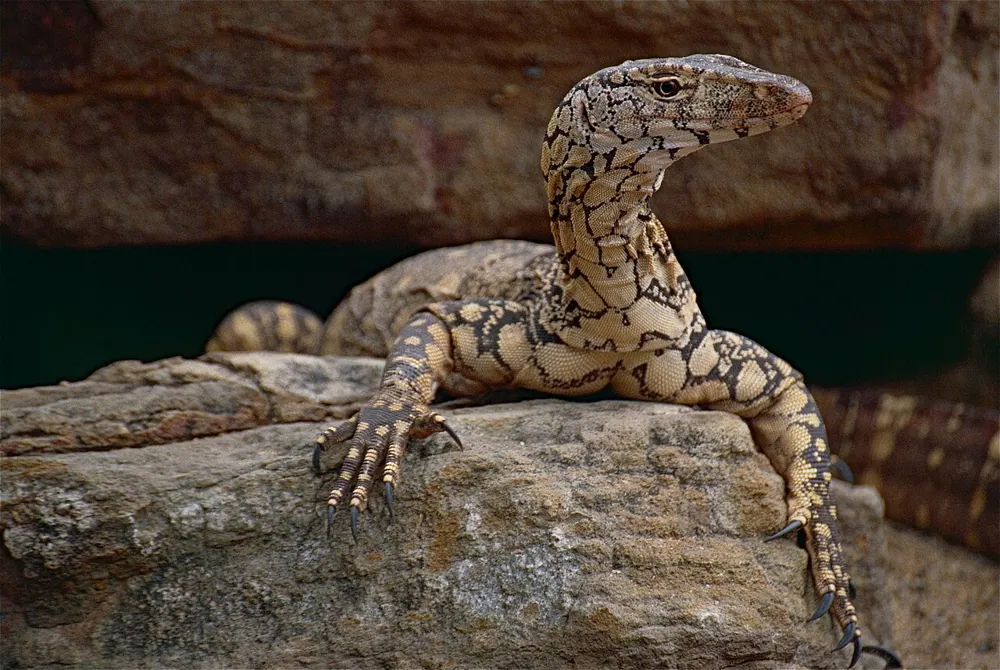
ÌbùjẹThe perentie is one of the largest lizards alive, and the largest in Australia. It lives in the dry deserts of the west, centre and north of the country, where it is rarely seen. It is a powerful hunter that eats a wide range of animals, and it is important in many Aboriginal cultures.1



 Bí o ṣe lè dá a mọ̀
- Head and neck are creamy-white with a net-like (reticulated) pattern of black lines and flecks.1
- Body is yellow or cream, with brown rosette markings on the back.1
- Limbs are dark with white spots.1
- Very lean for a large monitor, so much less bulky than a rock monitor of similar length.1
A sábà máa ń ṣì í mọ̀ sí: Rock monitors can reach a similar length, but they are much bulkier. Perenties are very lean for their size.1
Agbára oró
Oró ń jáde láti inú eyín oró tàbí eyín rẹ̀ nígbà tí ó bá bùjẹ.
Kí ni oró rẹ̀ máa ń ṣe?
Researchers at the University of Melbourne found in 2005 that monitors may be somewhat venomous, which means they inject mild venom with a bite. A perentie bite can cause swelling within minutes, localised disruption of blood clotting (the blood's ability to clot is affected in the area), and shooting pain up to the elbow that can last several hours.1
Báwo ló ṣe léwu tó fún ènìyàn?
Ewu fún ènìyàn: Ó ń dunniÓ lè dunni gan-an, ṣùgbọ́n kì í fẹ́rẹ̀ẹ́ le rárá.The bite can do much damage, not only from the teeth but also from the oral secretions.1
Kí ni ó máa ń ṣe nígbà tí ẹ̀rù bá bà á?
If threatened, a perentie will usually freeze flat on the ground or run away. If cornered, it stands its ground, inflates its throat, hisses, strikes with its tail, and may lunge with its mouth open.1
 Bí ó bá bùjẹ
- Fọ ọgbẹ́ náà, jẹ́ kí ẹni náà farabalẹ̀, kí o sì wá ìrànlọ́wọ́ ìṣègùn.
Máa kọ́kọ́ pe nọ́ńbà pàjáwìrì rẹ nígbà gbogbo (112, 000, 911). Èyí jẹ́ ìtọ́sọ́nà ìtọ́jú àkọ́kọ́ gbogbogbò, kì í ṣe ìmọ̀ràn ìṣègùn. Ìpìlẹ̀ ìtọ́jú àkọ́kọ́
 Wà láìléwu
- Má ṣe fọwọ́ kan, mú tàbí yọ ẹranko igbó lẹ́nu láéláé, kódà bí ó bá kéré, kódà bí ó bá dà bí ẹni pé ó ń sùn tàbí ó ti kú.
- Fún un ní àyè. Bí o bá pàdé ọ̀kan, farabalẹ̀, sẹ́yìn díẹ̀díẹ̀ kí o sì jẹ́ kí ó máa bá ọ̀nà rẹ̀ lọ.
- Bí ọ̀kan bá bù ọ́ jẹ: farabalẹ̀, má ṣe mira, pe nọ́ńbà pàjáwìrì rẹ (112, 000, 911) tàbí lọ sí ilé ìwòsàn kíákíá. Rántí bí ó ṣe rí, fọ́tò máa ń ṣèrànwọ́.
Kò wá ọ kiri láti ṣe ọ́ léṣe. Ó ń lo oró rẹ̀ láti mú oúnjẹ tàbí láti dáàbò bo ara rẹ̀, ó sì fẹ́ràn láti farapamọ́ jù. Sí i nípa wíwà láìléwu
Báwo ló ṣe tóbi tó?
Báwo ló ṣe gùn tó?
Báwo ló ṣe wúwo tó?

 ó gùn tó ajá 2.5 láti imú dé ìrù
 ó gùn tó ọ̀gẹ̀dẹ̀ 14 tí a tò tẹ̀léra
 lè sáré mítà 100 ní ìṣẹ́jú-àáyá 20 (ènìyàn tó yára jùlọ nílò 9.6)
Báwo ni Perentie ṣe tóbi tó tí a bá fi wé ÌWỌ?
Ìṣirò nìkan nínú bráwúsà rẹ. A kò fi ohunkóhun pamọ́, a kò sì fi ránṣẹ́ sí ibikíbi.
Báwo ló ṣe yára tó?

Òtítọ́
Perenties eat other monitor lizards, including a 2 m perentie that was seen killing and eating a 1.5 m one.1
They often stand on their back legs and tail to get a better view, a behaviour called "tripoding".1
Perenties are among the largest living lizards, after the Komodo dragon, Asian water monitor and crocodile monitor.1
Perenties can dig a burrow for shelter in only minutes.1
The species was first named the "gigantic water lizard", even though it lives in dry desert country.1
The perentie has long been important to desert Aboriginal peoples, who ate it as food and used its fat for medicinal and ceremonial purposes.1
Olùfọ́ àròsọ
Àròsọ: Monitor lizard bites were thought to cause problems only because of infection from bacteria in the animal's mouth.
Òtítọ́: Researchers showed that the immediate effects of monitor bites, including swelling and pain, are caused by mild envenomation.1
Ibi tí àwọn òtítọ́ ti wá
- Perentie (Wikipedia (CC BY-SA 4.0))
- Varanus giganteus (iNaturalist): orúkọ àti ìpínsísọ̀rí.
- Venom Wiki: ìpele ewu, ìtóbi déédé àti àfojúbù ìyára jẹ́ tiwa. Wo bí a ṣe ń ṣírò wọn: Bí a ṣe ń díwọ̀n ewu.
Gbogbo òtítọ́ ojú-ìwé yìí ní nọ́ńbà tó tọ́ka sí orísun rẹ̀. Bí a bá ṣe àṣìṣe, má bínú, olólùfẹ́ ẹranko ni wá, kì í ṣe ìwé ìròyìn sáyẹ́ǹsì. Sọ fún wa ní [email protected] a ó sì tún un ṣe.
 Ebi ń pa àkekèé! Iṣẹ́ akanṣe ẹnì kan ṣoṣo ni Venom Wiki: ọ̀fẹ́ ni, kò sí ìpolówó, kò sì sí olùtọpinpin. Ẹ̀bùn kékeré ń ràn án lọ́wọ́ láti wà lórí íńtánẹ́ẹ̀tì.Bọ́ àkekèé
 Lace monitor
 Spiny-tailed monitor
 Yellow-spotted monitor
 Mitchell's water monitor
 Komodo dragon
 Gila monster
 Coastal taipan
 Common death adder
 Eastern brown snake
 Ejò taipan inú ilẹ̀
 Sydney funnel-web spider
 Ejò ẹkùn
_(10244734736).jpg)