
 Áfíríkà
 Éṣíà
Éṣíà Yúróòpù
 Gúúsù Amẹ́ríkà
 Ọsirélíà àti Òṣéáníà
 Antáktíkà
 Òkun Pàsífíìkì
 Òkun Àtìláńtíìkì
 Òkun Íńdíà
 Òkun Áktíkì
 Òkun Mẹditaréníà
 Òkun Pupa
 Òkun Káríbíànù
 Òkun Coral
 Òkun Gúúsù Ṣáínà
 Òkun Fílípínì
 Òkun Andaman
 Òkun Àríwá
 Òkun Tímọ̀ àti Òkun Àráfúrà
 Ìyawọlẹ̀ Òkun Bẹ̀ngál
 Ìyawọlẹ̀ Òkun Kalifọ́níà
Phantasmal poison frog
 Májèlé nínú awọ rẹ̀
The phantasmal poison frog is a small, brightly coloured frog that lives only in a few places in central Ecuador. Its skin produces one of the most powerful natural poisons known, which scientists are studying for medicine. It is a rare animal, and its numbers are falling.1



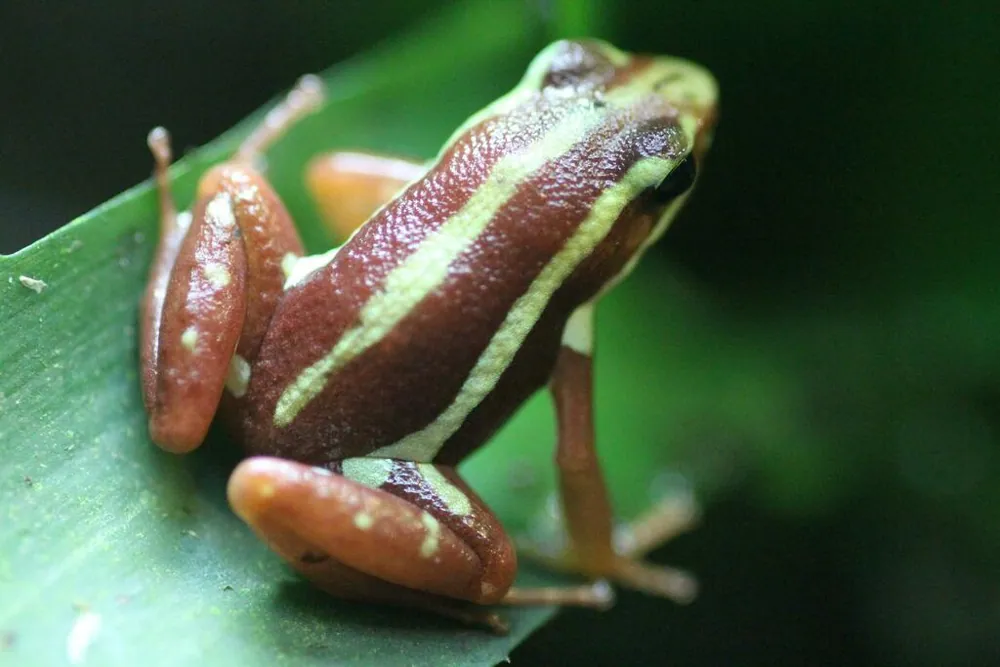
 Bí o ṣe lè dá a mọ̀
- Body colour ranges from dark brown to dark red or black.1
- Has two or three bright orange, bright yellow or light green stripes running along the back, from the head to the rear. The stripes can be straight or flame-shaped.1
- Blotches or spots on the limbs and parts of the back match the colour of the stripes.1
- Has distinct red or orange markings on the hind areas.1
- Small, at about 2.3 cm from snout to vent (the base of the body).1
A sábà máa ń ṣì í mọ̀ sí: It is often confused with Epipedobates anthonyi, which has similar colours and calls. The first finger of E. anthonyi is longer than its second finger, while this frog's is not. E. anthonyi is also brick red to bright red, with cream or light-yellow stripes running from the head to the hips.1
Agbára májèlé
Awọ rẹ̀ ní májèlé. Ó léwu láti fọwọ́ kàn án, lá a tàbí jẹ ẹ́.
Kí ni májèlé rẹ̀ máa ń ṣe?
This frog is poisonous rather than venomous, so it does not inject venom. It makes epibatidine, a toxin that its skin glands release as a defence against predators. Epibatidine is studied for its medical value as a painkiller and opioid blocker. Scientists have found it to be hundreds of times stronger than morphine.1
Báwo ló ṣe léwu tó fún ènìyàn?
Ewu fún ènìyàn: Ó ń dunniÓ lè dunni gan-an, ṣùgbọ́n kì í fẹ́rẹ̀ẹ́ le rárá.It is one of the most poisonous animals on the planet. One of the substances in its skin is a painkiller hundreds of times stronger than morphine. Its poison is in its skin, so it is harmful to touch or eat.1
Kí ni ó máa ń ṣe nígbà tí ẹ̀rù bá bà á?
Its bright colours warn predators that it is highly toxic, and it releases poison from its skin glands.1
 Bí ẹnìkan bá fọwọ́ kàn án tàbí jẹ ẹ́
- Bí ẹnìkan bá fọwọ́ kan ọ̀kan: fọ ọwọ́ dáadáa, má sì fọwọ́ kan ojú tàbí ẹnu. Bí ọmọdé tàbí ẹran ọ̀sìn bá lá ọ̀kan tàbí jẹ ẹ́: pe ibùdó ìmọ̀ràn májèlé tàbí nọ́ńbà pàjáwìrì.
Máa kọ́kọ́ pe nọ́ńbà pàjáwìrì rẹ nígbà gbogbo (112, 000, 911). Èyí jẹ́ ìtọ́sọ́nà ìtọ́jú àkọ́kọ́ gbogbogbò, kì í ṣe ìmọ̀ràn ìṣègùn. Ìpìlẹ̀ ìtọ́jú àkọ́kọ́
 Wà láìléwu
- Má ṣe fọwọ́ kan, mú tàbí yọ ẹranko igbó lẹ́nu láéláé, kódà bí ó bá kéré, kódà bí ó bá dà bí ẹni pé ó ń sùn tàbí ó ti kú.
- Fún un ní àyè. Bí o bá pàdé ọ̀kan, farabalẹ̀, sẹ́yìn díẹ̀díẹ̀ kí o sì jẹ́ kí ó máa bá ọ̀nà rẹ̀ lọ.
- Bí o bá fọwọ́ kàn án tàbí jẹ ẹ́: má ṣe fọwọ́ pa ojú tàbí ẹnu rẹ, fọ ọwọ́ rẹ kí o sì wá ìrànlọ́wọ́ ìṣègùn.
Kò wá ọ kiri láti ṣe ọ́ léṣe. Májèlé rẹ̀ wà níbẹ̀ kìkì kí ohunkóhun má baà jẹ ẹ́. Sí i nípa wíwà láìléwu
Báwo ló ṣe tóbi tó?
Báwo ló ṣe gùn tó?
 ó gùn tó pínì ìwé (paper clip)
 lè sáré mítà 100 ní ìṣẹ́jú-àáyá 110 (ènìyàn tó yára jùlọ nílò 9.6)
Báwo ni Phantasmal poison frog ṣe tóbi tó tí a bá fi wé ÌWỌ?
Ìṣirò nìkan nínú bráwúsà rẹ. A kò fi ohunkóhun pamọ́, a kò sì fi ránṣẹ́ sí ibikíbi.
Báwo ló ṣe yára tó?


Òtítọ́
Its poison, epibatidine, is over two hundred times as powerful as morphine, according to one study.1
Males are very territorial. They first call to warn off intruders, and if that fails they chase and fight them.1
Males compete for the best perch, forming a hierarchy of dominance.1
The frog is active during the day, though males call most often in the morning.1
Olùfọ́ àròsọ
Àròsọ: That it is the same species as Epipedobates anthonyi.
Òtítọ́: It is a separate species. The two were only formally distinguished in a 2004 study, though they look and sound alike.1
Fún àwọn amòye oró
- Orúkọ sáyẹ́ǹsì
- Epipedobates tricolor
- Ẹgbẹ́
- Àkèré onímájèlé, ọ̀pọ̀lọ́ àti newt
- Ìdílé
- Dendrobatidae2
- Ètò
- Anura
- Àwọn kọ́ńtínẹ́ńtì
- Gúúsù Amẹ́ríkà
- Àwọn ọmọ
- Eggs are laid in leaf litter, with clutches of around 10 eggs. The males guard the eggs and later carry the tadpoles on their backs to water, where they can develop safely.1
- Bí ó ṣe ń ṣe nínú igbó
- Vulnerable1
- Ewu fún ènìyàn
- 2 / 5: Ó ń dunni3
Ibi tí àwọn òtítọ́ ti wá
- Phantasmal poison frog (Wikipedia (CC BY-SA 4.0))
- Epipedobates tricolor (iNaturalist): orúkọ àti ìpínsísọ̀rí.
- Venom Wiki: ìpele ewu, ìtóbi déédé àti àfojúbù ìyára jẹ́ tiwa. Wo bí a ṣe ń ṣírò wọn: Bí a ṣe ń díwọ̀n ewu.
Gbogbo òtítọ́ ojú-ìwé yìí ní nọ́ńbà tó tọ́ka sí orísun rẹ̀. Bí a bá ṣe àṣìṣe, má bínú, olólùfẹ́ ẹranko ni wá, kì í ṣe ìwé ìròyìn sáyẹ́ǹsì. Sọ fún wa ní [email protected] a ó sì tún un ṣe.
 Ebi ń pa àkekèé! Iṣẹ́ akanṣe ẹnì kan ṣoṣo ni Venom Wiki: ọ̀fẹ́ ni, kò sí ìpolówó, kò sì sí olùtọpinpin. Ẹ̀bùn kékeré ń ràn án lọ́wọ́ láti wà lórí íńtánẹ́ẹ̀tì.Bọ́ àkekèé
Sí i láti inú ẹgbẹ́ kan náà: Àkèré onímájèlé, ọ̀pọ̀lọ́ àti newt
 Golden poison frogÀkèré onímájèlé, ọ̀pọ̀lọ́ àti newtApaniMá ṣe fọwọ́ kàn án
 Cane toadÀkèré onímájèlé, ọ̀pọ̀lọ́ àti newtÓ nílò dókítàMá ṣe fọwọ́ kàn án
 Dyeing poison dart frogÀkèré onímájèlé, ọ̀pọ̀lọ́ àti newtÓ kàn ń dunniMá ṣe fọwọ́ kàn án
 Black-legged poison frogÀkèré onímájèlé, ọ̀pọ̀lọ́ àti newtÓ lè paniMá ṣe fọwọ́ kàn án
 Bruno's casque-headed frogÀkèré onímájèlé, ọ̀pọ̀lọ́ àti newtÓ nílò dókítàMá ṣe fọwọ́ kàn án
 Harlequin poison frogÀkèré onímájèlé, ọ̀pọ̀lọ́ àti newtÓ nílò dókítàMá ṣe fọwọ́ kàn án
 Terciopelo
 Brazilian wandering spider
 Eyelash viper
 Golden lancehead
 South American bushmaster
 Peruvian giant centipede