
 Áfíríkà
 Éṣíà
Éṣíà Yúróòpù
 Gúúsù Amẹ́ríkà
 Ọsirélíà àti Òṣéáníà
 Antáktíkà
 Òkun Pàsífíìkì
 Òkun Àtìláńtíìkì
 Òkun Íńdíà
 Òkun Áktíkì
 Òkun Mẹditaréníà
 Òkun Pupa
 Òkun Káríbíànù
 Òkun Coral
 Òkun Gúúsù Ṣáínà
 Òkun Fílípínì
 Òkun Andaman
 Òkun Àríwá
 Òkun Tímọ̀ àti Òkun Àráfúrà
 Ìyawọlẹ̀ Òkun Bẹ̀ngál
 Ìyawọlẹ̀ Òkun Kalifọ́níà
Prairie rattlesnake
 Ìbùjẹ
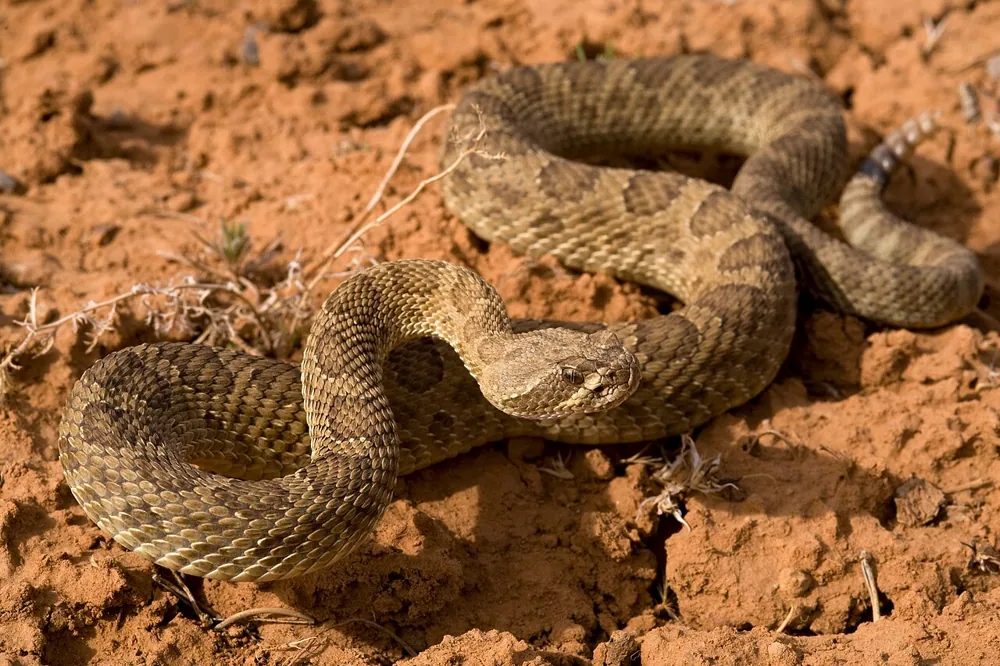
ÌbùjẹThe prairie rattlesnake is a venomous pit viper that lives across the Great Plains and the foothills of the Rocky Mountains. It is found in the western United States, southwestern Canada and northern Mexico. It shakes its tail to give a rattling warning when it feels threatened.1



 Bí o ṣe lè dá a mọ̀
- Usually lightly coloured in shades of brown, with patches of dark brown along the back1
- A colour band may be seen at the back of the eye1
- A triangle-shaped head with pit sensory organs on either side1
- Usually four internasal scales on the snout, with three or more in total1
- Commonly grows to more than 100 cm long1
A sábà máa ń ṣì í mọ̀ sí: Other rattlesnakes can look similar. A key difference is that two internasal scales touch the rostral scale, at the tip of the snout, in the prairie rattlesnake.1
Agbára oró
Oró ń jáde láti inú eyín oró tàbí eyín rẹ̀ nígbà tí ó bá bùjẹ.
Kí ni oró rẹ̀ máa ń ṣe?
The venom is a complex mixture of proteins, including enzymes such as proteases and peptidases. It is hemotoxic, meaning it damages blood and destroys tissue. It also has neurotoxic properties, meaning it attacks the nerves.1
Báwo ló ṣe léwu tó fún ènìyàn?
Ewu fún ènìyàn: Ó le gan-anÌbùjẹ nílò dókítà. Ikú kò wọ́pọ̀ rárá.The species has powerful venom and uses about 20 to 55% of its venom in one bite. It will defend itself if it is threatened or injured.1
Kí ni ó máa ń ṣe nígbà tí ẹ̀rù bá bà á?
It rapidly vibrates its tail to make a rasping rattle that warns intruders, and it will defend itself if threatened or injured.1
 Bí ó bá bùjẹ
- Jẹ́ kí ẹni náà wà láìmira kí ó sì farabalẹ̀, jẹ́ kí apá tàbí ẹsẹ̀ tí ó bù jẹ wà ní ìpele ọkàn, yọ òrùka àti àwọn nǹkan tó há, kí ẹ sì lọ sí ilé ìwòsàn kíákíá.
Máa kọ́kọ́ pe nọ́ńbà pàjáwìrì rẹ nígbà gbogbo (112, 000, 911). Èyí jẹ́ ìtọ́sọ́nà ìtọ́jú àkọ́kọ́ gbogbogbò, kì í ṣe ìmọ̀ràn ìṣègùn. Ìpìlẹ̀ ìtọ́jú àkọ́kọ́
 Wà láìléwu
- Má ṣe fọwọ́ kan, mú tàbí yọ ẹranko igbó lẹ́nu láéláé, kódà bí ó bá kéré, kódà bí ó bá dà bí ẹni pé ó ń sùn tàbí ó ti kú.
- Fún un ní àyè. Bí o bá pàdé ọ̀kan, farabalẹ̀, sẹ́yìn díẹ̀díẹ̀ kí o sì jẹ́ kí ó máa bá ọ̀nà rẹ̀ lọ.
- Bí ọ̀kan bá bù ọ́ jẹ: farabalẹ̀, má ṣe mira, pe nọ́ńbà pàjáwìrì rẹ (112, 000, 911) tàbí lọ sí ilé ìwòsàn kíákíá. Rántí bí ó ṣe rí, fọ́tò máa ń ṣèrànwọ́.
Kò wá ọ kiri láti ṣe ọ́ léṣe. Ó ń lo oró rẹ̀ láti mú oúnjẹ tàbí láti dáàbò bo ara rẹ̀, ó sì fẹ́ràn láti farapamọ́ jù. Sí i nípa wíwà láìléwu
Báwo ló ṣe tóbi tó?
Báwo ló ṣe gùn tó?
 ó gùn tó ológbò ilé 3 láti imú dé ìrù
 ó gùn tó ọ̀gẹ̀dẹ̀ 8 tí a tò tẹ̀léra
 lè sáré mítà 100 ní ìṣẹ́jú-àáyá 97 (ènìyàn tó yára jùlọ nílò 9.6)
Báwo ni Prairie rattlesnake ṣe tóbi tó tí a bá fi wé ÌWỌ?
Ìṣirò nìkan nínú bráwúsà rẹ. A kò fi ohunkóhun pamọ́, a kò sì fi ránṣẹ́ sí ibikíbi.
Báwo ló ṣe yára tó?


Òtítọ́
Females often gather in communal dens to give birth and care for their young. Some females even look after unrelated young while the mothers take a break.1
Newborn snakelets measure 22 to 28 cm and are venomous from the moment they are born.1
Prairie rattlesnakes prefer a straight migration path, even in areas dominated by humans, because it gives them a better chance of survival.1
In Montana, the species reaches its largest size, with specimens sometimes exceeding 120 cm.1
In Canada, the species is listed as a species of special concern because its numbers have steadily declined since the 1930s.1
Fún àwọn amòye oró
- Orúkọ sáyẹ́ǹsì
- Crotalus viridis
- Ẹgbẹ́
- Rattlesnake
- Ìdílé
- Viperidae2
- Ètò
- Squamata
- Àwọn kọ́ńtínẹ́ńtì
- Àríwá Amẹ́ríkà
- Àwọn ọmọ
- It gives birth to one to 25 live young per litter, typically four to 12, in late summer or early fall.1
- Bí ó ṣe ń ṣe nínú igbó
- Least concern on the IUCN Red List. It is listed as endangered in Iowa and as a species of special concern in Canada.1
- Ewu fún ènìyàn
- 3 / 5: Ó le gan-an3
Ibi tí àwọn òtítọ́ ti wá
- Crotalus viridis (Wikipedia (CC BY-SA 4.0))
- Crotalus viridis (iNaturalist): orúkọ àti ìpínsísọ̀rí.
- Venom Wiki: ìpele ewu, ìtóbi déédé àti àfojúbù ìyára jẹ́ tiwa. Wo bí a ṣe ń ṣírò wọn: Bí a ṣe ń díwọ̀n ewu.
Gbogbo òtítọ́ ojú-ìwé yìí ní nọ́ńbà tó tọ́ka sí orísun rẹ̀. Bí a bá ṣe àṣìṣe, má bínú, olólùfẹ́ ẹranko ni wá, kì í ṣe ìwé ìròyìn sáyẹ́ǹsì. Sọ fún wa ní [email protected] a ó sì tún un ṣe.
 Ebi ń pa àkekèé! Iṣẹ́ akanṣe ẹnì kan ṣoṣo ni Venom Wiki: ọ̀fẹ́ ni, kò sí ìpolówó, kò sì sí olùtọpinpin. Ẹ̀bùn kékeré ń ràn án lọ́wọ́ láti wà lórí íńtánẹ́ẹ̀tì.Bọ́ àkekèé
 Eastern diamondback rattlesnake
 Timber rattlesnake
 Western diamondback rattlesnake
 Sidewinder
 Mojave rattlesnake
 Aruba rattlesnake
 Terciopelo
 Eastern coral snake
 Eyelash viper
 Arizona bark scorpion
 Brown recluse
 Cane toad
.jpg)