
 Áfíríkà
 Éṣíà
Éṣíà Yúróòpù
 Gúúsù Amẹ́ríkà
 Ọsirélíà àti Òṣéáníà
 Antáktíkà
 Òkun Pàsífíìkì
 Òkun Àtìláńtíìkì
 Òkun Íńdíà
 Òkun Áktíkì
 Òkun Mẹditaréníà
 Òkun Pupa
 Òkun Káríbíànù
 Òkun Coral
 Òkun Gúúsù Ṣáínà
 Òkun Fílípínì
 Òkun Andaman
 Òkun Àríwá
 Òkun Tímọ̀ àti Òkun Àráfúrà
 Ìyawọlẹ̀ Òkun Bẹ̀ngál
 Ìyawọlẹ̀ Òkun Kalifọ́níà
Red-bellied newt
 Májèlé nínú awọ rẹ̀
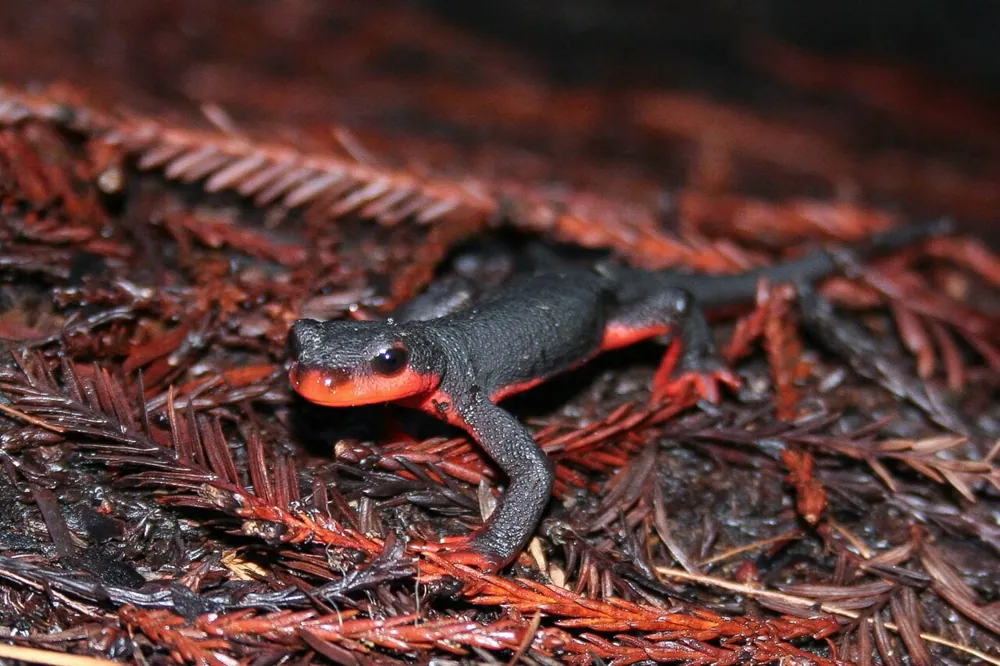
The red-bellied newt is a small amphibian with a brownish-black back and a bright red belly. It lives in coastal woodlands in northern California, mostly on land. Its skin is poisonous, so it is important to leave it alone.1
 Bí o ṣe lè dá a mọ̀
- Brownish-black upper body with grainy skin1
- Tomato-red underbelly1
- Length of about 7 to 9 cm from nose to vent, and 14 to 19 cm including the tail1
- Males often have a dark, broad patch across the vent; females do not1
- Breeding males have smooth skin and a flattened tail1
A sábà máa ń ṣì í mọ̀ sí: Other coastal newts are similar in shape. The red-bellied newt can be told apart by its red belly and by the lack of yellow in its eyes.1
Agbára májèlé
Awọ rẹ̀ ní májèlé. Ó léwu láti fọwọ́ kàn án, lá a tàbí jẹ ẹ́.
Kí ni májèlé rẹ̀ máa ń ṣe?
The red-bellied newt is poisonous rather than venomous, so it does not bite or sting. Its skin, eggs and embryos contain tetrodotoxin, a neurotoxin, which is a poison that attacks the nerves. There is enough of it to potentially kill an adult human.1
Báwo ló ṣe léwu tó fún ènìyàn?
Ewu fún ènìyàn: Ó le gan-anBí ẹnìkan bá fọwọ́ kàn án tàbí jẹ ẹ́, lọ rí dókítà. Ikú kò wọ́pọ̀ rárá.The newt's skin is poisonous to touch and to eat. Its toxin is strong enough to potentially kill an adult human. It is also nearly inedible, and few animals eat it.1
Kí ni ó máa ń ṣe nígbà tí ẹ̀rù bá bà á?
When disturbed, it pulls its head and tail back to show its bright-red underside, which warns predators that it is poisonous.1
 Bí ẹnìkan bá fọwọ́ kàn án tàbí jẹ ẹ́
- Bí ẹnìkan bá fọwọ́ kan ọ̀kan: fọ ọwọ́ dáadáa, má sì fọwọ́ kan ojú tàbí ẹnu. Bí ọmọdé tàbí ẹran ọ̀sìn bá lá ọ̀kan tàbí jẹ ẹ́: pe ibùdó ìmọ̀ràn májèlé tàbí nọ́ńbà pàjáwìrì.
Máa kọ́kọ́ pe nọ́ńbà pàjáwìrì rẹ nígbà gbogbo (112, 000, 911). Èyí jẹ́ ìtọ́sọ́nà ìtọ́jú àkọ́kọ́ gbogbogbò, kì í ṣe ìmọ̀ràn ìṣègùn. Ìpìlẹ̀ ìtọ́jú àkọ́kọ́
 Wà láìléwu
- Má ṣe fọwọ́ kan, mú tàbí yọ ẹranko igbó lẹ́nu láéláé, kódà bí ó bá kéré, kódà bí ó bá dà bí ẹni pé ó ń sùn tàbí ó ti kú.
- Fún un ní àyè. Bí o bá pàdé ọ̀kan, farabalẹ̀, sẹ́yìn díẹ̀díẹ̀ kí o sì jẹ́ kí ó máa bá ọ̀nà rẹ̀ lọ.
- Bí o bá fọwọ́ kàn án tàbí jẹ ẹ́: má ṣe fọwọ́ pa ojú tàbí ẹnu rẹ, fọ ọwọ́ rẹ kí o sì wá ìrànlọ́wọ́ ìṣègùn.
Kò wá ọ kiri láti ṣe ọ́ léṣe. Májèlé rẹ̀ wà níbẹ̀ kìkì kí ohunkóhun má baà jẹ ẹ́. Sí i nípa wíwà láìléwu
Báwo ló ṣe tóbi tó?
Báwo ló ṣe gùn tó?
 ó gùn tó bíríkì ìṣeré 6 tí a tò sí ìlà kan
Báwo ni Red-bellied newt ṣe tóbi tó tí a bá fi wé ÌWỌ?
Ìṣirò nìkan nínú bráwúsà rẹ. A kò fi ohunkóhun pamọ́, a kò sì fi ránṣẹ́ sí ibikíbi.
Báwo ló ṣe yára tó?


Òtítọ́
Like other newts, they can regrow several body parts, including their limbs, eyes, hearts, intestines, jaws and damaged spinal cords.1
They can find their way back to the same spot in a stream over several miles of rugged terrain, probably by using their sense of smell.1
Red-bellied newts can live for 20 to 30 years.1
Adults leave the water and live underground until they are ready to breed, which usually happens after four to six years.1
Females do not breed every year, unlike the males.1
Fún àwọn amòye oró
- Orúkọ sáyẹ́ǹsì
- Taricha rivularis
- Ẹgbẹ́
- Àkèré onímájèlé, ọ̀pọ̀lọ́ àti newt
- Ìdílé
- Salamandridae2
- Ètò
- Caudata
- Àwọn kọ́ńtínẹ́ńtì
- Àríwá Amẹ́ríkà
- Àwọn ọmọ
- Newts start life as aquatic larvae, similar to tadpoles, with external gills. Females lay their eggs in about 12 clusters, with six to 16 eggs in each cluster.1
- Ọjọ́ ayé
- nǹkan bí ọdún 301
- Ewu fún ènìyàn
- 3 / 5: Ó le gan-an3
Ibi tí àwọn òtítọ́ ti wá
- Red-bellied newt (Wikipedia (CC BY-SA 4.0))
- Taricha rivularis (iNaturalist): orúkọ àti ìpínsísọ̀rí.
- Venom Wiki: ìpele ewu, ìtóbi déédé àti àfojúbù ìyára jẹ́ tiwa. Wo bí a ṣe ń ṣírò wọn: Bí a ṣe ń díwọ̀n ewu.
Gbogbo òtítọ́ ojú-ìwé yìí ní nọ́ńbà tó tọ́ka sí orísun rẹ̀. Bí a bá ṣe àṣìṣe, má bínú, olólùfẹ́ ẹranko ni wá, kì í ṣe ìwé ìròyìn sáyẹ́ǹsì. Sọ fún wa ní [email protected] a ó sì tún un ṣe.
 Ebi ń pa àkekèé! Iṣẹ́ akanṣe ẹnì kan ṣoṣo ni Venom Wiki: ọ̀fẹ́ ni, kò sí ìpolówó, kò sì sí olùtọpinpin. Ẹ̀bùn kékeré ń ràn án lọ́wọ́ láti wà lórí íńtánẹ́ẹ̀tì.Bọ́ àkekèé
Sí i láti inú ẹgbẹ́ kan náà: Àkèré onímájèlé, ọ̀pọ̀lọ́ àti newt
 Cane toadÀkèré onímájèlé, ọ̀pọ̀lọ́ àti newtÓ nílò dókítàMá ṣe fọwọ́ kàn án
 Strawberry poison-dart frogÀkèré onímájèlé, ọ̀pọ̀lọ́ àti newtÓ kàn ń dunniMá ṣe fọwọ́ kàn án
 California newtÀkèré onímájèlé, ọ̀pọ̀lọ́ àti newtÓ lè paniMá ṣe fọwọ́ kàn án
 Rough-skinned newtÀkèré onímájèlé, ọ̀pọ̀lọ́ àti newtÓ lè paniMá ṣe fọwọ́ kàn án
 Colorado River toadÀkèré onímájèlé, ọ̀pọ̀lọ́ àti newtÓ nílò dókítàMá ṣe fọwọ́ kàn án
 Panamanian golden frogÀkèré onímájèlé, ọ̀pọ̀lọ́ àti newtÓ nílò dókítàMá ṣe fọwọ́ kàn án
 Terciopelo
 Eastern coral snake
 Eastern diamondback rattlesnake
 Eyelash viper
 Timber rattlesnake
 Western diamondback rattlesnake
.jpg)