
 Áfíríkà
 Éṣíà
Éṣíà Yúróòpù
 Gúúsù Amẹ́ríkà
 Ọsirélíà àti Òṣéáníà
 Antáktíkà
 Òkun Pàsífíìkì
 Òkun Àtìláńtíìkì
 Òkun Íńdíà
 Òkun Áktíkì
 Òkun Mẹditaréníà
 Òkun Pupa
 Òkun Káríbíànù
 Òkun Coral
 Òkun Gúúsù Ṣáínà
 Òkun Fílípínì
 Òkun Andaman
 Òkun Àríwá
 Òkun Tímọ̀ àti Òkun Àráfúrà
 Ìyawọlẹ̀ Òkun Bẹ̀ngál
 Ìyawọlẹ̀ Òkun Kalifọ́níà
Round stingray
 Ìtani
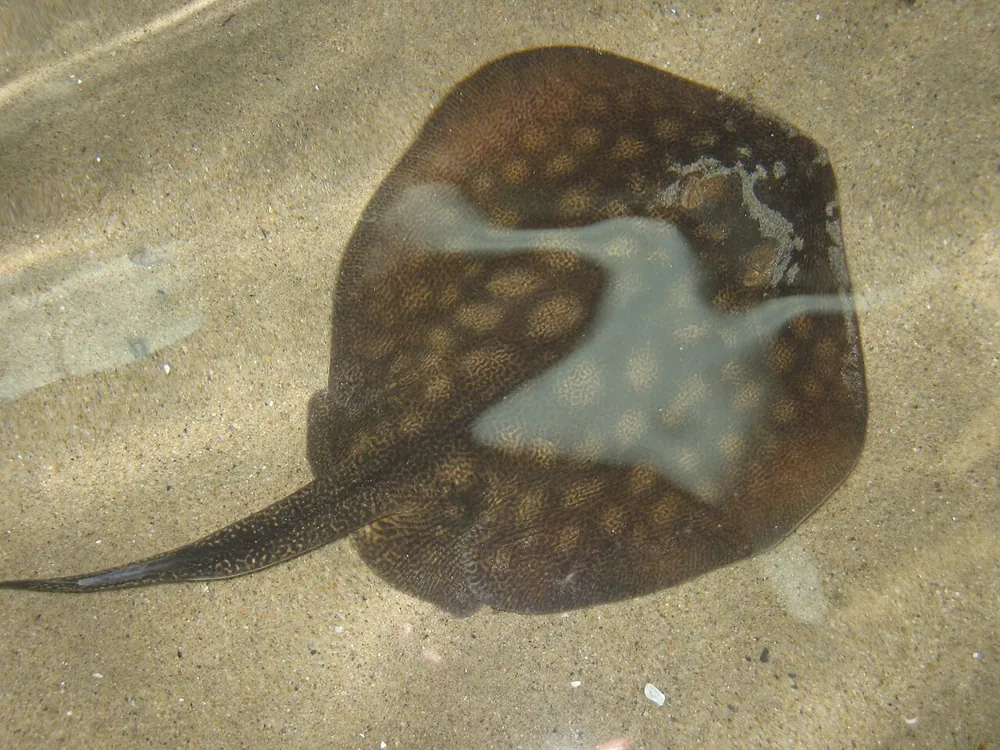
ÌtaniThe round stingray is a small, common ray that lives close to shore along the Pacific coast of the Americas. It is best known on the beaches of southern California, where people are sometimes stung when they accidentally step on one. Its sting is painful but not fatal.1
 Bí o ṣe lè dá a mọ̀
- Nearly round pectoral fin disc, usually brown or grey-brown above with pale yellow spots or reticulations (a net-like pattern)1
- Some individuals are plain or black1
- Underside is white to yellowish1
- Short, stout tail with a long, thick, serrated stinging spine1
A sábà máa ń ṣì í mọ̀ sí: The Cortez round stingray (Urobatis maculatus) looks very similar and is sometimes sold under the same aquarium names. The round stingray can be told apart because it lacks the black spots on either side of its disc that the Cortez round stingray has.1
Agbára oró
Oró ń jáde láti inú ohun ìtani.
Kí ni oró rẹ̀ máa ń ṣe?
The venomous spine on its tail delivers a sting that is quite painful. The sting is not fatal.1
Báwo ló ṣe léwu tó fún ènìyàn?
Ewu fún ènìyàn: Ó ń dunniÓ lè dunni gan-an, ṣùgbọ́n kì í fẹ́rẹ̀ẹ́ le rárá.Every year, hundreds of beachgoers along the coast of southern California are accidentally stung by round stingrays. The stings are painful but non-fatal. The injuries usually happen when people step on the ray.1
 Bí ó bá ta ni
- Fi ọgbẹ́ náà sínú omi gbígbóná, tó gbóná tó bí ẹni náà ṣe lè fara dà á láìjóná (fi ọwọ́ ara rẹ dán an wò), fún ìṣẹ́jú 30 sí 90. Wá ìrànlọ́wọ́ ìṣègùn, pàápàá fún ẹja òkúta àti stingray.
Máa kọ́kọ́ pe nọ́ńbà pàjáwìrì rẹ nígbà gbogbo (112, 000, 911). Èyí jẹ́ ìtọ́sọ́nà ìtọ́jú àkọ́kọ́ gbogbogbò, kì í ṣe ìmọ̀ràn ìṣègùn. Ìpìlẹ̀ ìtọ́jú àkọ́kọ́
 Wà láìléwu
- Má ṣe fọwọ́ kan, mú tàbí yọ ẹranko igbó lẹ́nu láéláé, kódà bí ó bá kéré, kódà bí ó bá dà bí ẹni pé ó ń sùn tàbí ó ti kú.
- Fún un ní àyè. Bí o bá pàdé ọ̀kan, farabalẹ̀, sẹ́yìn díẹ̀díẹ̀ kí o sì jẹ́ kí ó máa bá ọ̀nà rẹ̀ lọ.
- Bí ọ̀kan bá ta ọ́: farabalẹ̀, má ṣe mira, pe nọ́ńbà pàjáwìrì rẹ (112, 000, 911) tàbí lọ sí ilé ìwòsàn kíákíá. Rántí bí ó ṣe rí, fọ́tò máa ń ṣèrànwọ́.
Kò wá ọ kiri láti ṣe ọ́ léṣe. Ó ń lo oró rẹ̀ láti mú oúnjẹ tàbí láti dáàbò bo ara rẹ̀, ó sì fẹ́ràn láti farapamọ́ jù. Sí i nípa wíwà láìléwu
Níbo ní ayé?
Báwo ló ṣe tóbi tó?
Báwo ló ṣe gùn tó?
 ó gùn tó bíríkì ìṣeré 10 tí a tò sí ìlà kan
 lè lúwẹ̀ẹ́ gígùn adágún ìwẹ̀ ńlá (50 m) ní ìṣẹ́jú-àáyá 14
Báwo ni Round stingray ṣe tóbi tó tí a bá fi wé ÌWỌ?
Ìṣirò nìkan nínú bráwúsà rẹ. A kò fi ohunkóhun pamọ́, a kò sì fi ránṣẹ́ sí ibikíbi.
Báwo ló ṣe yára tó?

Òtítọ́
The tail spine is shed and replaced regularly. For most of the year the ray has only one spine, but small secondary spines begin to appear in early July, and the replacement is complete by December.1
The species name honours a boy who was stung while wading in San Diego Bay.1
Females give off a weak electric field from near the spiracles behind each eye, which attracts males.1
Females can store sperm all year round.1
Their digging uncovers buried prey for smaller fish, which gives them an important role in the ecosystem.1
Fún àwọn amòye oró
- Orúkọ sáyẹ́ǹsì
- Urobatis halleri
- Ẹgbẹ́
- Ẹja olóró
- Ìdílé
- Urotrygonidae2
- Ètò
- Myliobatiformes
- Àwọn kọ́ńtínẹ́ńtì
- Òkun Pàsífíìkì, Ìyawọlẹ̀ Òkun Kalifọ́níà, Àwọn òkun ńlá
- Àwọn ọmọ
- Round stingrays give birth to live young, in litters of 1 to 6 (average 2 to 3). The young measure 6 to 8 cm across at birth, after a gestation of about three months.1
- Bí ó ṣe ń ṣe nínú igbó
- Least Concern (IUCN Red List)1
- Ewu fún ènìyàn
- 2 / 5: Ó ń dunni3
Ibi tí àwọn òtítọ́ ti wá
- Round stingray (Wikipedia (CC BY-SA 4.0))
- Urobatis halleri (iNaturalist): orúkọ àti ìpínsísọ̀rí.
- Venom Wiki: ìpele ewu, ìtóbi déédé àti àfojúbù ìyára jẹ́ tiwa. Wo bí a ṣe ń ṣírò wọn: Bí a ṣe ń díwọ̀n ewu.
Gbogbo òtítọ́ ojú-ìwé yìí ní nọ́ńbà tó tọ́ka sí orísun rẹ̀. Bí a bá ṣe àṣìṣe, má bínú, olólùfẹ́ ẹranko ni wá, kì í ṣe ìwé ìròyìn sáyẹ́ǹsì. Sọ fún wa ní [email protected] a ó sì tún un ṣe.
 Ebi ń pa àkekèé! Iṣẹ́ akanṣe ẹnì kan ṣoṣo ni Venom Wiki: ọ̀fẹ́ ni, kò sí ìpolówó, kò sì sí olùtọpinpin. Ẹ̀bùn kékeré ń ràn án lọ́wọ́ láti wà lórí íńtánẹ́ẹ̀tì.Bọ́ àkekèé
Sí i láti inú ẹgbẹ́ kan náà: Ẹja olóró
 Reef stonefish
 Red lionfish
 Estuarine stonefish
 Short-tail stingray
 Striped eel catfish
 Bluespotted ribbontail ray
Ó tún ń gbé ní: Òkun Pàsífíìkì
 Australian box jellyfishJellyfish àti àwọn ẹ̀dá òkun tó ń ta niApaniMá ṣe fọwọ́ kàn án
 Geography coneÌgbín cone àti octopusApani
 Greater blue-ringed octopusÌgbín cone àti octopusApani
 Japanese pufferfishÀwọn ẹranko onímájèlé mìírànApani
 Southern blue-ringed octopusÌgbín cone àti octopusApani
 Hawksbill sea turtleÀwọn ẹranko onímájèlé mìírànÓ lè pani