
 Áfíríkà
 Éṣíà
Éṣíà Yúróòpù
 Gúúsù Amẹ́ríkà
 Ọsirélíà àti Òṣéáníà
 Antáktíkà
 Òkun Pàsífíìkì
 Òkun Àtìláńtíìkì
 Òkun Íńdíà
 Òkun Áktíkì
 Òkun Mẹditaréníà
 Òkun Pupa
 Òkun Káríbíànù
 Òkun Coral
 Òkun Gúúsù Ṣáínà
 Òkun Fílípínì
 Òkun Andaman
 Òkun Àríwá
 Òkun Tímọ̀ àti Òkun Àráfúrà
 Ìyawọlẹ̀ Òkun Bẹ̀ngál
 Ìyawọlẹ̀ Òkun Kalifọ́níà
Red lionfish
 Ẹ̀gún olóró
The red lionfish is a venomous coral reef fish with long, frilled fins that look like a mane. It is native to the Indo-Pacific, but it has spread into the Caribbean, the east coast of the United States and other areas, where it is an invasive species. Its spreading is a serious problem for local reef life.1



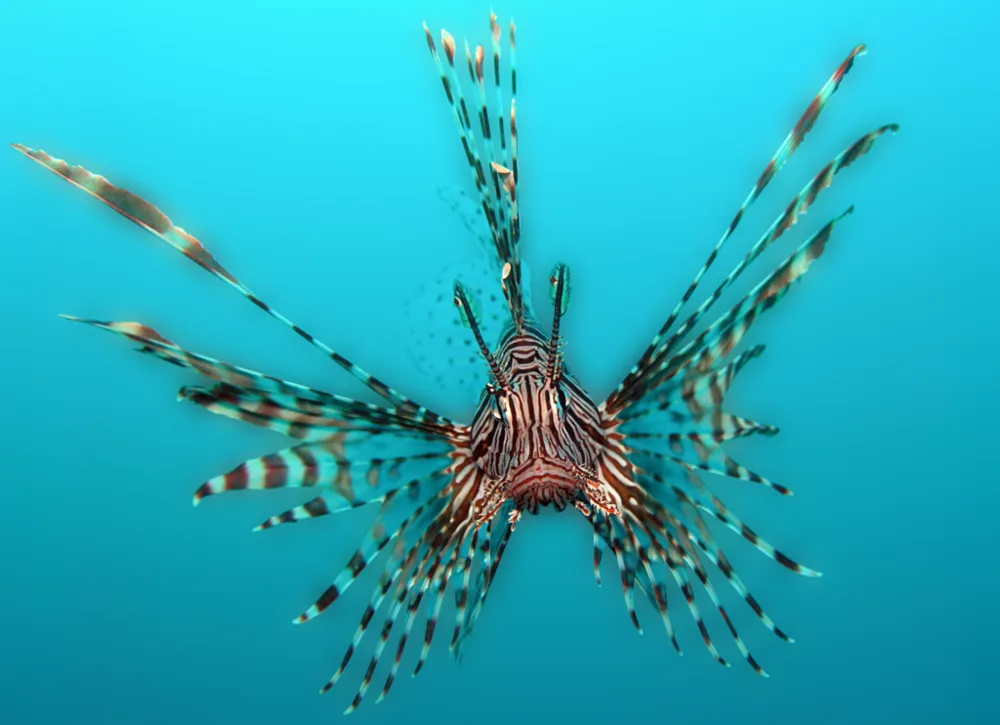
 Bí o ṣe lè dá a mọ̀
- White stripes alternate with red, maroon or brown stripes.1
- Large venomous spines run along the back (dorsal) fin, with more on the pelvic and anal fins.1
- Long, non-venomous fins create a mane-like outline.1
- Adults can grow up to 47 cm long.1
A sábà máa ń ṣì í mọ̀ sí: Pterois miles is a similar relative, and both species are invasive in the same areas.1
Agbára oró
Ẹ̀gún mímú ló ń gbé oró náà. Títẹ̀ ẹ́ mọ́lẹ̀ tàbí dídì í mú máa ń dunni.
Kí ni oró rẹ̀ máa ń ṣe?
Its venomous spines are used purely for defence. A sting can cause extreme pain, and possibly headaches, vomiting and breathing difficulties.1
Báwo ló ṣe léwu tó fún ènìyàn?
Ewu fún ènìyàn: Ó le gan-anBí ẹ̀gún rẹ̀ bá gún ọ, lọ rí dókítà. Ikú kò wọ́pọ̀ rárá.Its sting is usually not fatal to humans. Some people are more sensitive to the venom than others, so the effects can be more serious for them.1
Kí ni ó máa ń ṣe nígbà tí ẹ̀rù bá bà á?
When threatened, it turns its venomous dorsal spines towards the attacker, even if it has to swim upside down.1
 Bí ẹ̀gún rẹ̀ bá gún ọ
- A common treatment is soaking the affected area in hot water, as very few hospitals carry specific treatments. Immediate emergency medical attention is strongly recommended, because some people react more strongly than others.1
- Fi ọgbẹ́ náà sínú omi gbígbóná, tó gbóná tó bí ẹni náà ṣe lè fara dà á láìjóná (fi ọwọ́ ara rẹ dán an wò), fún ìṣẹ́jú 30 sí 90. Wá ìrànlọ́wọ́ ìṣègùn, pàápàá fún ẹja òkúta àti stingray.
Máa kọ́kọ́ pe nọ́ńbà pàjáwìrì rẹ nígbà gbogbo (112, 000, 911). Èyí jẹ́ ìtọ́sọ́nà ìtọ́jú àkọ́kọ́ gbogbogbò, kì í ṣe ìmọ̀ràn ìṣègùn. Ìpìlẹ̀ ìtọ́jú àkọ́kọ́
 Wà láìléwu
- Má ṣe fọwọ́ kan, mú tàbí yọ ẹranko igbó lẹ́nu láéláé, kódà bí ó bá kéré, kódà bí ó bá dà bí ẹni pé ó ń sùn tàbí ó ti kú.
- Fún un ní àyè. Bí o bá pàdé ọ̀kan, farabalẹ̀, sẹ́yìn díẹ̀díẹ̀ kí o sì jẹ́ kí ó máa bá ọ̀nà rẹ̀ lọ.
- Bí ẹ̀gún rẹ̀ bá gún ọ: farabalẹ̀, má ṣe mira, pe nọ́ńbà pàjáwìrì rẹ (112, 000, 911) tàbí lọ sí ilé ìwòsàn kíákíá. Rántí bí ó ṣe rí, fọ́tò máa ń ṣèrànwọ́.
Kò wá ọ kiri láti ṣe ọ́ léṣe. Ó ń lo oró rẹ̀ láti mú oúnjẹ tàbí láti dáàbò bo ara rẹ̀, ó sì fẹ́ràn láti farapamọ́ jù. Sí i nípa wíwà láìléwu
Níbo ní ayé?
Báwo ló ṣe tóbi tó?
Báwo ló ṣe gùn tó?
 ó gùn tó ọ̀gẹ̀dẹ̀ 2.5 tí a tò tẹ̀léra
 ó gùn tó bíríkì ìṣeré 15 tí a tò sí ìlà kan
 lè lúwẹ̀ẹ́ gígùn adágún ìwẹ̀ ńlá (50 m) ní ìṣẹ́jú-àáyá 29
Báwo ni Red lionfish ṣe tóbi tó tí a bá fi wé ÌWỌ?
Ìṣirò nìkan nínú bráwúsà rẹ. A kò fi ohunkóhun pamọ́, a kò sì fi ránṣẹ́ sí ibikíbi.
Báwo ló ṣe yára tó?
Òtítọ́
About 93% of the invasive lionfish population is the red lionfish.1
It strikes at prey that comes within 9 cm of its mouth, drawing the prey in with a sudden rush of water.1
Lionfish reproduce monthly, which helps their numbers grow quickly in new areas.1
Lionfish larvae hatch 36 hours after fertilisation.1
The larval stage is the shortest part of its life, lasting about one month.1
Fún àwọn amòye oró
- Orúkọ sáyẹ́ǹsì
- Pterois volitans
- Ẹgbẹ́
- Ẹja olóró
- Ìdílé
- Scorpaenidae2
- Ètò
- Perciformes
- Àwọn kọ́ńtínẹ́ńtì
- Òkun Íńdíà, Òkun Pàsífíìkì, Òkun Pupa, Òkun Coral, Òkun Fílípínì, Òkun Gúúsù Ṣáínà, Òkun Andaman, Òkun Arébíà àti Ìyawọlẹ̀ Òkun Páṣíà, Òkun Tímọ̀ àti Òkun Àráfúrà, Àwọn òkun ńlá
- Àwọn ọmọ
- After courtship, the female releases two egg masses, and one mating session can produce up to 30,000 eggs.1
- Ọjọ́ ayé
- nǹkan bí ọdún 101
- Ewu fún ènìyàn
- 3 / 5: Ó le gan-an3
Ibi tí àwọn òtítọ́ ti wá
- Red lionfish (Wikipedia (CC BY-SA 4.0))
- Pterois volitans (iNaturalist): orúkọ àti ìpínsísọ̀rí.
- Venom Wiki: ìpele ewu, ìtóbi déédé àti àfojúbù ìyára jẹ́ tiwa. Wo bí a ṣe ń ṣírò wọn: Bí a ṣe ń díwọ̀n ewu.
Gbogbo òtítọ́ ojú-ìwé yìí ní nọ́ńbà tó tọ́ka sí orísun rẹ̀. Bí a bá ṣe àṣìṣe, má bínú, olólùfẹ́ ẹranko ni wá, kì í ṣe ìwé ìròyìn sáyẹ́ǹsì. Sọ fún wa ní [email protected] a ó sì tún un ṣe.
 Ebi ń pa àkekèé! Iṣẹ́ akanṣe ẹnì kan ṣoṣo ni Venom Wiki: ọ̀fẹ́ ni, kò sí ìpolówó, kò sì sí olùtọpinpin. Ẹ̀bùn kékeré ń ràn án lọ́wọ́ láti wà lórí íńtánẹ́ẹ̀tì.Bọ́ àkekèé
Sí i láti inú ẹgbẹ́ kan náà: Ẹja olóró
 Reef stonefish
 Estuarine stonefish
 Short-tail stingray
 Striped eel catfish
 Bluespotted ribbontail ray
 Common stingray
Ó tún ń gbé ní: Òkun Íńdíà
 Australian box jellyfishJellyfish àti àwọn ẹ̀dá òkun tó ń ta niApaniMá ṣe fọwọ́ kàn án
 Geography coneÌgbín cone àti octopusApani
 Greater blue-ringed octopusÌgbín cone àti octopusApani
 Southern blue-ringed octopusÌgbín cone àti octopusApani
 Hawksbill sea turtleÀwọn ẹranko onímájèlé mìírànÓ lè pani
 Irukandji jellyfishJellyfish àti àwọn ẹ̀dá òkun tó ń ta niÓ lè paniMá ṣe fọwọ́ kàn án