
 Áfíríkà
 Éṣíà
Éṣíà Yúróòpù
 Gúúsù Amẹ́ríkà
 Ọsirélíà àti Òṣéáníà
 Antáktíkà
 Òkun Pàsífíìkì
 Òkun Àtìláńtíìkì
 Òkun Íńdíà
 Òkun Áktíkì
 Òkun Mẹditaréníà
 Òkun Pupa
 Òkun Káríbíànù
 Òkun Coral
 Òkun Gúúsù Ṣáínà
 Òkun Fílípínì
 Òkun Andaman
 Òkun Àríwá
 Òkun Tímọ̀ àti Òkun Àráfúrà
 Ìyawọlẹ̀ Òkun Bẹ̀ngál
 Ìyawọlẹ̀ Òkun Kalifọ́níà
Estuarine stonefish
 Ẹ̀gún olóró
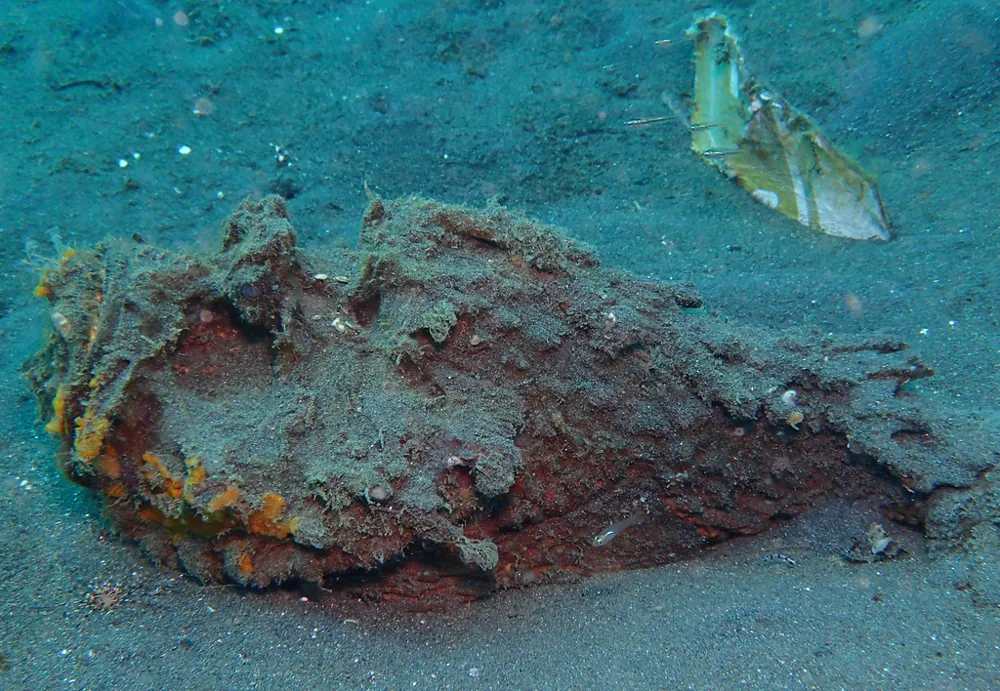
The estuarine stonefish is a fish that looks like a stone lying on the seabed. It lives in shallow reefs and estuaries across the Indo-Pacific, including northern Australia. It is considered one of the most dangerous venomous fish in the world, so it is important to know what it looks like.1



 Bí o ṣe lè dá a mọ̀
- Drab brownish-grey, reddish or greenish-brown colour1
- Skin has no scales and is covered in warts, often with filamentous algae growing on it1
- Head is flattened, with small eyes set high and pointing upwards, and a deep pit behind and under each eye1
- Large, almost vertical mouth with fringing cirri on the lips1
- Camouflaged to look like a stone resting on the bottom; it has no bright warning colours1
- Grows to a maximum of 60 cm1
Agbára oró
Ẹ̀gún mímú ló ń gbé oró náà. Títẹ̀ ẹ́ mọ́lẹ̀ tàbí dídì í mú máa ń dunni.
Kí ni oró rẹ̀ máa ń ṣe?
Each fin spine has two venom-producing glands. The venom affects the cardiovascular and neuromuscular systems. The sting is extremely painful and has been known to be lethal.1
Báwo ló ṣe léwu tó fún ènìyàn?
Ewu fún ènìyàn: Ó léwu gan-anÓ lè pa ènìyàn tí kò bá rí ìtọ́jú.It is considered one of the most dangerous venomous fishes. Stings are extremely painful and have been known to be fatal. Since European settlement, there have been no recorded deaths in Australia from stonefish venom, but deaths have been recorded elsewhere in its range.1
 Ìròyìn ayọ̀: àwọn dókítà ní oògùn (antivenom) tàbí ìtọ́jú fún èyí.1
Kí ni ó máa ń ṣe nígbà tí ẹ̀rù bá bà á?
When disturbed, it erects its venomous spines, which inject venom if the fish is stepped on.1
 Bí ẹ̀gún rẹ̀ bá gún ọ
- Antivenom can be given after envenomation. Immersing the sting wound in hot water can be used to denature the venom.1
- Fi ọgbẹ́ náà sínú omi gbígbóná, tó gbóná tó bí ẹni náà ṣe lè fara dà á láìjóná (fi ọwọ́ ara rẹ dán an wò), fún ìṣẹ́jú 30 sí 90. Wá ìrànlọ́wọ́ ìṣègùn, pàápàá fún ẹja òkúta àti stingray.
Máa kọ́kọ́ pe nọ́ńbà pàjáwìrì rẹ nígbà gbogbo (112, 000, 911). Èyí jẹ́ ìtọ́sọ́nà ìtọ́jú àkọ́kọ́ gbogbogbò, kì í ṣe ìmọ̀ràn ìṣègùn. Ìpìlẹ̀ ìtọ́jú àkọ́kọ́
 Wà láìléwu
- Má ṣe fọwọ́ kan, mú tàbí yọ ẹranko igbó lẹ́nu láéláé, kódà bí ó bá kéré, kódà bí ó bá dà bí ẹni pé ó ń sùn tàbí ó ti kú.
- Fún un ní àyè. Bí o bá pàdé ọ̀kan, farabalẹ̀, sẹ́yìn díẹ̀díẹ̀ kí o sì jẹ́ kí ó máa bá ọ̀nà rẹ̀ lọ.
- Bí ẹ̀gún rẹ̀ bá gún ọ: farabalẹ̀, má ṣe mira, pe nọ́ńbà pàjáwìrì rẹ (112, 000, 911) tàbí lọ sí ilé ìwòsàn kíákíá. Rántí bí ó ṣe rí, fọ́tò máa ń ṣèrànwọ́.
Kò wá ọ kiri láti ṣe ọ́ léṣe. Ó ń lo oró rẹ̀ láti mú oúnjẹ tàbí láti dáàbò bo ara rẹ̀, ó sì fẹ́ràn láti farapamọ́ jù. Sí i nípa wíwà láìléwu
Níbo ní ayé?
Báwo ló ṣe tóbi tó?
Báwo ló ṣe gùn tó?
 ó gùn tó ọ̀gẹ̀dẹ̀ 3 tí a tò tẹ̀léra
 lè lúwẹ̀ẹ́ gígùn adágún ìwẹ̀ ńlá (50 m) ní ìṣẹ́jú-àáyá 90
Báwo ni Estuarine stonefish ṣe tóbi tó tí a bá fi wé ÌWỌ?
Ìṣirò nìkan nínú bráwúsà rẹ. A kò fi ohunkóhun pamọ́, a kò sì fi ránṣẹ́ sí ibikíbi.
Báwo ló ṣe yára tó?

Òtítọ́
It can tolerate being out of the water for up to 24 hours.1
It scoops out a shallow hollow in the seabed with its large pectoral fins and curls its tail around its body to hide.1
It is camouflaged to look like a stone, unlike many venomous animals that use bright warning colours.1
Females are larger than males.1
Olùfọ́ àròsọ
Àròsọ: The species name horrida refers to its dangerous spines.
Òtítọ́: The name means "dreadful" or "frightful" and alludes to its appearance, not its venomous spines.1
Ibi tí àwọn òtítọ́ ti wá
- Synanceia horrida (Wikipedia (CC BY-SA 4.0))
- Synanceia horrida (iNaturalist): orúkọ àti ìpínsísọ̀rí.
- Venom Wiki: ìpele ewu, ìtóbi déédé àti àfojúbù ìyára jẹ́ tiwa. Wo bí a ṣe ń ṣírò wọn: Bí a ṣe ń díwọ̀n ewu.
Gbogbo òtítọ́ ojú-ìwé yìí ní nọ́ńbà tó tọ́ka sí orísun rẹ̀. Bí a bá ṣe àṣìṣe, má bínú, olólùfẹ́ ẹranko ni wá, kì í ṣe ìwé ìròyìn sáyẹ́ǹsì. Sọ fún wa ní [email protected] a ó sì tún un ṣe.
 Ebi ń pa àkekèé! Iṣẹ́ akanṣe ẹnì kan ṣoṣo ni Venom Wiki: ọ̀fẹ́ ni, kò sí ìpolówó, kò sì sí olùtọpinpin. Ẹ̀bùn kékeré ń ràn án lọ́wọ́ láti wà lórí íńtánẹ́ẹ̀tì.Bọ́ àkekèé
Sí i láti inú ẹgbẹ́ kan náà: Ẹja olóró
 Reef stonefish
 Red lionfish
 Short-tail stingray
 Striped eel catfish
 Bluespotted ribbontail ray
 Common stingray
Ó tún ń gbé ní: Òkun Íńdíà
 Australian box jellyfishJellyfish àti àwọn ẹ̀dá òkun tó ń ta niApaniMá ṣe fọwọ́ kàn án
 Geography coneÌgbín cone àti octopusApani
 Greater blue-ringed octopusÌgbín cone àti octopusApani
 Southern blue-ringed octopusÌgbín cone àti octopusApani
 Hawksbill sea turtleÀwọn ẹranko onímájèlé mìírànÓ lè pani
 Irukandji jellyfishJellyfish àti àwọn ẹ̀dá òkun tó ń ta niÓ lè paniMá ṣe fọwọ́ kàn án