
 Áfíríkà
 Éṣíà
Éṣíà Yúróòpù
 Gúúsù Amẹ́ríkà
 Ọsirélíà àti Òṣéáníà
 Antáktíkà
 Òkun Pàsífíìkì
 Òkun Àtìláńtíìkì
 Òkun Íńdíà
 Òkun Áktíkì
 Òkun Mẹditaréníà
 Òkun Pupa
 Òkun Káríbíànù
 Òkun Coral
 Òkun Gúúsù Ṣáínà
 Òkun Fílípínì
 Òkun Andaman
 Òkun Àríwá
 Òkun Tímọ̀ àti Òkun Àráfúrà
 Ìyawọlẹ̀ Òkun Bẹ̀ngál
 Ìyawọlẹ̀ Òkun Kalifọ́níà
Short-tail stingray
 Ìtani
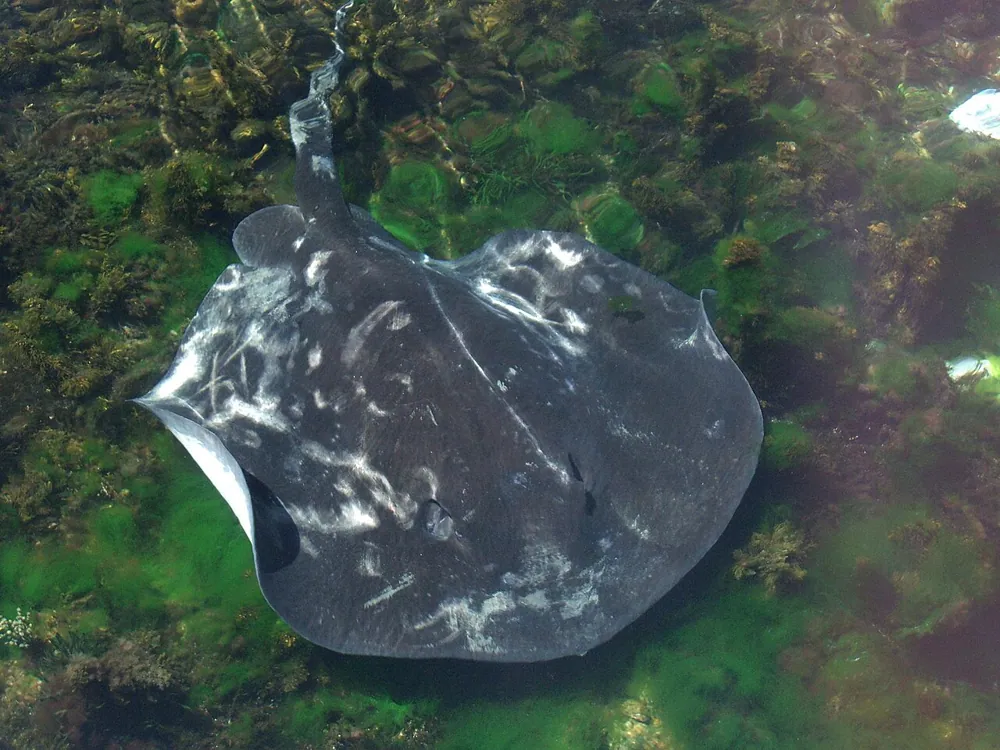
ÌtaniThe short-tail stingray is one of the largest stingrays in the world. It lives in temperate seas off southern Africa, southern Australia and New Zealand, mostly on or near the sea floor. It is not aggressive, but its long venomous sting can cause a serious wound if the ray is startled.1



 Bí o ṣe lè dá a mọ̀
- Diamond-shaped, heavy disc that is smooth, with no scales (dermal denticles) on the disc even in adults1
- Plain grey-brown back, darkening towards the tail and above the eyes, with a line of white pores on either side of the head1
- Whitish underside, darkening towards the edges of the fins1
- Tail usually shorter than the disc, thick at the base, with one or two serrated stinging spines about halfway along it1
- Adults have a row of large, spear-like thorns in front of the sting1
A sábà máa ń ṣì í mọ̀ sí: The pitted stingray (Dasyatis matsubarai) of the northwestern Pacific looks similar but is smaller. Records of this species from northern Australia and Thailand are thought to be other rays that were misidentified.1
Agbára oró
Oró ń jáde láti inú ohun ìtani.
Kí ni oró rẹ̀ máa ń ṣe?
Its sting is venomous. The mucous sheath covering the sting contains a toxin that causes necrosis, which means the death of body tissue. The most dangerous injuries involve damage to a vital organ, heavy blood loss, or secondary infection (sepsis) or tetanus.1
Báwo ló ṣe léwu tó fún ènìyàn?
Ewu fún ènìyàn: Ó léwu gan-anÓ lè pa ènìyàn tí kò bá rí ìtọ́jú.The short-tail stingray is not aggressive, but if startled or harassed it can inflict a serious and even fatal wound. Its sting can be over 30 cm long and can penetrate most footwear, including kevlar bootees. It is responsible for most stingray injuries off New Zealand, including the death of Australian naturalist Steve Irwin, who was pierced in the chest by its barbed tail.1
Kí ni ó máa ń ṣe nígbà tí ẹ̀rù bá bà á?
When threatened, it raises its tail over its back like a scorpion, and a startled ray can leap through the water and strike with its tail.1
 Bí ó bá ta ni
- Fi ọgbẹ́ náà sínú omi gbígbóná, tó gbóná tó bí ẹni náà ṣe lè fara dà á láìjóná (fi ọwọ́ ara rẹ dán an wò), fún ìṣẹ́jú 30 sí 90. Wá ìrànlọ́wọ́ ìṣègùn, pàápàá fún ẹja òkúta àti stingray.
Máa kọ́kọ́ pe nọ́ńbà pàjáwìrì rẹ nígbà gbogbo (112, 000, 911). Èyí jẹ́ ìtọ́sọ́nà ìtọ́jú àkọ́kọ́ gbogbogbò, kì í ṣe ìmọ̀ràn ìṣègùn. Ìpìlẹ̀ ìtọ́jú àkọ́kọ́
 Wà láìléwu
- Má ṣe fọwọ́ kan, mú tàbí yọ ẹranko igbó lẹ́nu láéláé, kódà bí ó bá kéré, kódà bí ó bá dà bí ẹni pé ó ń sùn tàbí ó ti kú.
- Fún un ní àyè. Bí o bá pàdé ọ̀kan, farabalẹ̀, sẹ́yìn díẹ̀díẹ̀ kí o sì jẹ́ kí ó máa bá ọ̀nà rẹ̀ lọ.
- Bí ọ̀kan bá ta ọ́: farabalẹ̀, má ṣe mira, pe nọ́ńbà pàjáwìrì rẹ (112, 000, 911) tàbí lọ sí ilé ìwòsàn kíákíá. Rántí bí ó ṣe rí, fọ́tò máa ń ṣèrànwọ́.
Kò wá ọ kiri láti ṣe ọ́ léṣe. Ó ń lo oró rẹ̀ láti mú oúnjẹ tàbí láti dáàbò bo ara rẹ̀, ó sì fẹ́ràn láti farapamọ́ jù. Sí i nípa wíwà láìléwu
Níbo ní ayé?
Báwo ló ṣe tóbi tó?
Báwo ló ṣe gùn tó?
Báwo ló ṣe wúwo tó?
 ó gùn tó ajá 4 láti imú dé ìrù
 ó gùn tó ọ̀gẹ̀dẹ̀ 24 tí a tò tẹ̀léra
 lè lúwẹ̀ẹ́ gígùn adágún ìwẹ̀ ńlá (50 m) ní ìṣẹ́jú-àáyá 6
Báwo ni Short-tail stingray ṣe tóbi tó tí a bá fi wé ÌWỌ?
Ìṣirò nìkan nínú bráwúsà rẹ. A kò fi ohunkóhun pamọ́, a kò sì fi ránṣẹ́ sí ibikíbi.
Báwo ló ṣe yára tó?

Òtítọ́
It can flap its pectoral fins with enough force to make a loud audible 'bang' in the water, although it is usually slow-moving.1
It is one of the largest stingrays in the world, and reliable observers off New Zealand have reported individuals almost 3 m across.1
Captive experiments suggest it can detect magnetic fields, which may help it navigate.1
Every summer, large groups gather under the rocky archways of the Poor Knights Islands off New Zealand, where both mating and birthing have been seen.1
Captive females have been observed mating with up to three different males in succession.1
Fún àwọn amòye oró
- Orúkọ sáyẹ́ǹsì
- Bathytoshia brevicaudata
- Ẹgbẹ́
- Ẹja olóró
- Ìdílé
- Dasyatidae2
- Ètò
- Myliobatiformes
- Àwọn kọ́ńtínẹ́ńtì
- Òkun Íńdíà, Òkun Pàsífíìkì, Òkun Coral, Àwọn òkun ńlá
- Àwọn ọmọ
- It gives birth to live young. Females usually have litters of 6 to 10 pups in summer, and newborns measure 32 to 36 cm across.1
- Bí ó ṣe ń ṣe nínú igbó
- Least Concern (IUCN)1
- Ewu fún ènìyàn
- 4 / 5: Ó léwu gan-an3
Ibi tí àwọn òtítọ́ ti wá
- Short-tail stingray (Wikipedia (CC BY-SA 4.0))
- Bathytoshia brevicaudata (iNaturalist): orúkọ àti ìpínsísọ̀rí.
- Venom Wiki: ìpele ewu, ìtóbi déédé àti àfojúbù ìyára jẹ́ tiwa. Wo bí a ṣe ń ṣírò wọn: Bí a ṣe ń díwọ̀n ewu.
Gbogbo òtítọ́ ojú-ìwé yìí ní nọ́ńbà tó tọ́ka sí orísun rẹ̀. Bí a bá ṣe àṣìṣe, má bínú, olólùfẹ́ ẹranko ni wá, kì í ṣe ìwé ìròyìn sáyẹ́ǹsì. Sọ fún wa ní [email protected] a ó sì tún un ṣe.
 Ebi ń pa àkekèé! Iṣẹ́ akanṣe ẹnì kan ṣoṣo ni Venom Wiki: ọ̀fẹ́ ni, kò sí ìpolówó, kò sì sí olùtọpinpin. Ẹ̀bùn kékeré ń ràn án lọ́wọ́ láti wà lórí íńtánẹ́ẹ̀tì.Bọ́ àkekèé
Sí i láti inú ẹgbẹ́ kan náà: Ẹja olóró
 Reef stonefish
 Red lionfish
 Estuarine stonefish
 Striped eel catfish
 Bluespotted ribbontail ray
 Common stingray
Ó tún ń gbé ní: Òkun Íńdíà
 Australian box jellyfishJellyfish àti àwọn ẹ̀dá òkun tó ń ta niApaniMá ṣe fọwọ́ kàn án
 Geography coneÌgbín cone àti octopusApani
 Greater blue-ringed octopusÌgbín cone àti octopusApani
 Southern blue-ringed octopusÌgbín cone àti octopusApani
 Hawksbill sea turtleÀwọn ẹranko onímájèlé mìírànÓ lè pani
 Irukandji jellyfishJellyfish àti àwọn ẹ̀dá òkun tó ń ta niÓ lè paniMá ṣe fọwọ́ kàn án