
 Áfíríkà
 Éṣíà
Éṣíà Yúróòpù
 Gúúsù Amẹ́ríkà
 Ọsirélíà àti Òṣéáníà
 Antáktíkà
 Òkun Pàsífíìkì
 Òkun Àtìláńtíìkì
 Òkun Íńdíà
 Òkun Áktíkì
 Òkun Mẹditaréníà
 Òkun Pupa
 Òkun Káríbíànù
 Òkun Coral
 Òkun Gúúsù Ṣáínà
 Òkun Fílípínì
 Òkun Andaman
 Òkun Àríwá
 Òkun Tímọ̀ àti Òkun Àráfúrà
 Ìyawọlẹ̀ Òkun Bẹ̀ngál
 Ìyawọlẹ̀ Òkun Kalifọ́níà
Southern tree-dwelling funnel-web spider
 Ìbùjẹ
ÌbùjẹThis is a funnel-web spider that spends most of its life in trees. It lives in eastern Australia, and its venom is strong enough that its bites are treated as serious medical emergencies. It is one of only two Australian funnel-web species that mostly live in trees.1
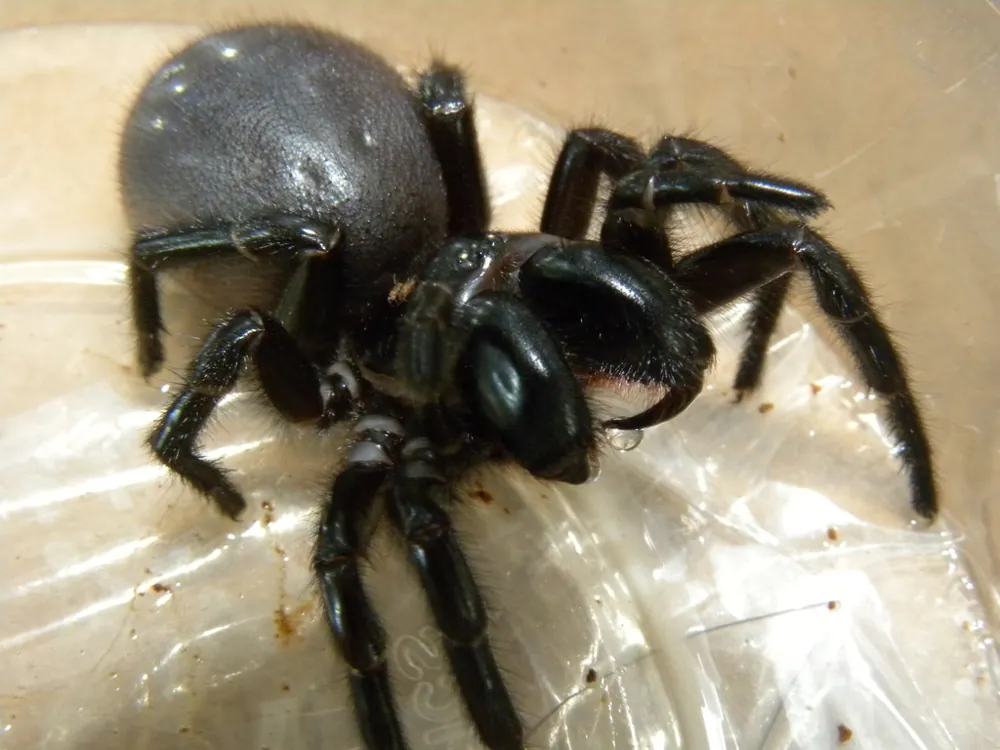
 Bí o ṣe lè dá a mọ̀
Agbára oró
Oró ń jáde láti inú eyín oró tàbí eyín rẹ̀ nígbà tí ó bá bùjẹ.
Kí ni oró rẹ̀ máa ń ṣe?
Its venom contains a peptide called Hc3a, a small protein molecule. It does not contain atraxotoxin or atraxin, which are found in the Sydney funnel-web, yet its symptoms are very similar. Symptoms can begin within 15 to 20 minutes and include heavy sweating, high blood pressure, a fast heart rate, nausea, vomiting and pain at the bite site. Fluid can build up in the lungs early on (pulmonary oedema).1
Báwo ló ṣe léwu tó fún ènìyàn?
Ewu fún ènìyàn: Ó léwu gan-anÓ lè pa ènìyàn tí kò bá rí ìtọ́jú.Three out of four recorded bites caused severe symptoms. This is a higher proportion than the Sydney funnel-web spider.1
 Ìròyìn ayọ̀: àwọn dókítà ní oògùn (antivenom) tàbí ìtọ́jú fún èyí.1
 Bí ó bá bùjẹ
- Applying pressure and a tourniquet can significantly delay the onset of symptoms and is a critical part of managing a bite from an Australian funnel-web spider. The venom can be successfully treated with antivenom made for the Sydney funnel-web spider.1
- Fọ ibi ìbùjẹ náà kí o sì tù ú. Wá ìrànlọ́wọ́ ìṣègùn bí ìrora bá le tàbí tí ara ẹni náà kò bá yá.
- Ní Ọsirélíà, ka ìbùjẹ alántakùn dúdú ńlá èyíkéyìí sí ìbùjẹ funnel-web: Dídì pẹ̀lú ìfúnpá láìmira (pressure immobilisation): fi bándéèjì rọ́bà (elastic) tó le wé ibi ìbùjẹ náà, lẹ́yìn náà wé e sókè títí bo gbogbo apá tàbí ẹsẹ̀ náà, fi igi ìdábùú (splint) dì í, kí o sì jẹ́ kí ẹni náà wà láìmira rárá títí ìrànlọ́wọ́ yóò fi dé.
Máa kọ́kọ́ pe nọ́ńbà pàjáwìrì rẹ nígbà gbogbo (112, 000, 911). Èyí jẹ́ ìtọ́sọ́nà ìtọ́jú àkọ́kọ́ gbogbogbò, kì í ṣe ìmọ̀ràn ìṣègùn. Ìpìlẹ̀ ìtọ́jú àkọ́kọ́
 Wà láìléwu
- Má ṣe fọwọ́ kan, mú tàbí yọ ẹranko igbó lẹ́nu láéláé, kódà bí ó bá kéré, kódà bí ó bá dà bí ẹni pé ó ń sùn tàbí ó ti kú.
- Fún un ní àyè. Bí o bá pàdé ọ̀kan, farabalẹ̀, sẹ́yìn díẹ̀díẹ̀ kí o sì jẹ́ kí ó máa bá ọ̀nà rẹ̀ lọ.
- Bí ọ̀kan bá bù ọ́ jẹ: farabalẹ̀, má ṣe mira, pe nọ́ńbà pàjáwìrì rẹ (112, 000, 911) tàbí lọ sí ilé ìwòsàn kíákíá. Rántí bí ó ṣe rí, fọ́tò máa ń ṣèrànwọ́.
Kò wá ọ kiri láti ṣe ọ́ léṣe. Ó ń lo oró rẹ̀ láti mú oúnjẹ tàbí láti dáàbò bo ara rẹ̀, ó sì fẹ́ràn láti farapamọ́ jù. Sí i nípa wíwà láìléwu
Báwo ló ṣe tóbi tó?
Báwo ló ṣe gùn tó?
 ó gùn tó bíríkì ìṣeré 2 tí a tò sí ìlà kan
 lè sáré mítà 100 ní ìṣẹ́jú-àáyá 260 (ènìyàn tó yára jùlọ nílò 9.6)
Báwo ni Southern tree-dwelling funnel-web spider ṣe tóbi tó tí a bá fi wé ÌWỌ?
Ìṣirò nìkan nínú bráwúsà rẹ. A kò fi ohunkóhun pamọ́, a kò sì fi ránṣẹ́ sí ibikíbi.
Báwo ló ṣe yára tó?


Òtítọ́
Three out of four recorded bites from this spider caused severe symptoms, a higher share than the Sydney funnel-web spider.1
Symptoms can start within 15 to 20 minutes of a bite.1
Its venom does not contain atraxotoxin or atraxin, yet its symptoms are very similar to those of the Sydney funnel-web.1
It is one of only two Australian funnel-web species that live mainly in trees, the other being the northern tree-dwelling funnel-web (Hadronyche formidabilis).1
Genetic analysis shows that this spider has spread through parts of southeastern New South Wales quite recently and rapidly.1
The type specimen, a female collected in Sydney, was destroyed in World War II bombing, so a neotype was chosen in 2010 and is kept at the Australian Museum in Sydney.1
Ibi tí àwọn òtítọ́ ti wá
- Hadronyche cerberea (Wikipedia (CC BY-SA 4.0))
- Hadronyche cerberea (iNaturalist): orúkọ àti ìpínsísọ̀rí.
- Venom Wiki: ìpele ewu, ìtóbi déédé àti àfojúbù ìyára jẹ́ tiwa. Wo bí a ṣe ń ṣírò wọn: Bí a ṣe ń díwọ̀n ewu.
Gbogbo òtítọ́ ojú-ìwé yìí ní nọ́ńbà tó tọ́ka sí orísun rẹ̀. Bí a bá ṣe àṣìṣe, má bínú, olólùfẹ́ ẹranko ni wá, kì í ṣe ìwé ìròyìn sáyẹ́ǹsì. Sọ fún wa ní [email protected] a ó sì tún un ṣe.
 Ebi ń pa àkekèé! Iṣẹ́ akanṣe ẹnì kan ṣoṣo ni Venom Wiki: ọ̀fẹ́ ni, kò sí ìpolówó, kò sì sí olùtọpinpin. Ẹ̀bùn kékeré ń ràn án lọ́wọ́ láti wà lórí íńtánẹ́ẹ̀tì.Bọ́ àkekèé
Sí i láti inú ẹgbẹ́ kan náà: Tarantula àti funnel-web
 Sydney funnel-web spiderTarantula àti funnel-webApani
 Northern tree-dwelling funnel-web spiderTarantula àti funnel-webApani
 Red-headed mouse spiderTarantula àti funnel-webÓ nílò dókítà
 Queensland whistling tarantulaTarantula àti funnel-webÓ kàn ń dunni
 Blue Mountains funnel-web spiderTarantula àti funnel-webÓ lè pani
 Darling Downs funnel-web spiderTarantula àti funnel-webÓ lè pani
 Coastal taipan
 Common death adder
 Eastern brown snake
 Ejò taipan inú ilẹ̀
 Ejò ẹkùn
 Redback spider