
 Áfíríkà
 Éṣíà
Éṣíà Yúróòpù
 Gúúsù Amẹ́ríkà
 Ọsirélíà àti Òṣéáníà
 Antáktíkà
 Òkun Pàsífíìkì
 Òkun Àtìláńtíìkì
 Òkun Íńdíà
 Òkun Áktíkì
 Òkun Mẹditaréníà
 Òkun Pupa
 Òkun Káríbíànù
 Òkun Coral
 Òkun Gúúsù Ṣáínà
 Òkun Fílípínì
 Òkun Andaman
 Òkun Àríwá
 Òkun Tímọ̀ àti Òkun Àráfúrà
 Ìyawọlẹ̀ Òkun Bẹ̀ngál
 Ìyawọlẹ̀ Òkun Kalifọ́níà
Turkish deathstalker
 Ìtani
ÌtaniThe Turkish deathstalker is a scorpion from the family Buthidae. Its venom is highly toxic to humans, but scientists also use scorpion venom in medical research. It lives in dry, rocky places and usually keeps away from people.1


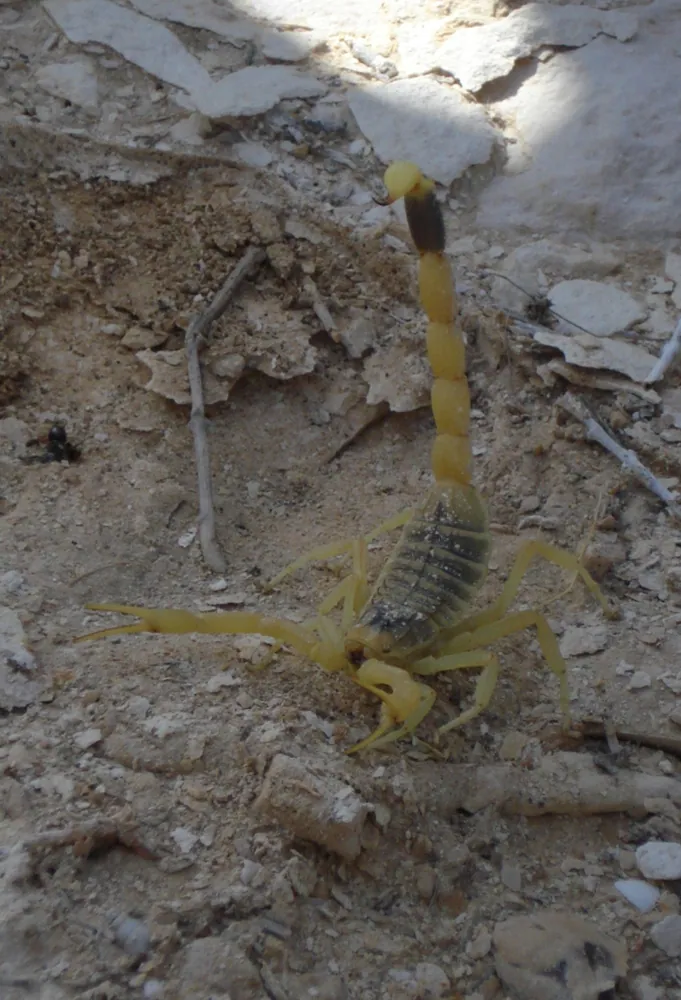
 Bí o ṣe lè dá a mọ̀
- Brown front body section (cephalothorax), with a yellow head, legs and tail.1
- The very last segment of the tail is brown instead of yellow.1
- Its pincers and other body parts are yellowish, against a mostly black background on the front body and tail.1
A sábà máa ń ṣì í mọ̀ sí: It was once considered the same species as the deathstalker (L. quinquestriatus), but was reclassified as a separate species in 2009 based on mitochondrial DNA analysis. Its tail segments are shorter than those of the deathstalker.1
Agbára oró
Oró ń jáde láti inú ohun ìtani.
Kí ni oró rẹ̀ máa ń ṣe?
Its venom comes from two venom glands and is mainly made of proteins. It stimulates voltage-gated sodium and potassium channels, which control the electrical signals in nerves and muscles. Symptoms can be severe: after a sting, pain can come in waves with seizures, and blisters can form at the site of the sting.1
Báwo ló ṣe léwu tó fún ènìyàn?
Ewu fún ènìyàn: Ó léwu gan-anÓ lè pa ènìyàn tí kò bá rí ìtọ́jú.Only a small portion of scorpions are harmful to humans, but this species' venom is very toxic and can cause severe symptoms from a single sting. The sting is much worse in children, and it may pose a serious health threat to infants because of their small body weight.1
Kí ni ó máa ń ṣe nígbà tí ẹ̀rù bá bà á?
Its venom is used for self-defence as well as for hunting.1
 Bí ó bá ta ni
- Anyone who has been stung should have an early echocardiogram, which is a heart ultrasound, because the venom can affect the heart. In the case described, the patient was given sodium chloride (saline) and a local painkiller at hospital.1
- Fi àpò yìnyín tu ibi tí ó ti ta ni lára, kí o sì jẹ́ kí ẹni náà wà láìmira. Wá ìrànlọ́wọ́ ìṣègùn kíákíá, pàápàá fún àwọn ọmọdé: àwọn àkekèé kan lè pa ọmọdé.
Máa kọ́kọ́ pe nọ́ńbà pàjáwìrì rẹ nígbà gbogbo (112, 000, 911). Èyí jẹ́ ìtọ́sọ́nà ìtọ́jú àkọ́kọ́ gbogbogbò, kì í ṣe ìmọ̀ràn ìṣègùn. Ìpìlẹ̀ ìtọ́jú àkọ́kọ́
 Wà láìléwu
- Má ṣe fọwọ́ kan, mú tàbí yọ ẹranko igbó lẹ́nu láéláé, kódà bí ó bá kéré, kódà bí ó bá dà bí ẹni pé ó ń sùn tàbí ó ti kú.
- Fún un ní àyè. Bí o bá pàdé ọ̀kan, farabalẹ̀, sẹ́yìn díẹ̀díẹ̀ kí o sì jẹ́ kí ó máa bá ọ̀nà rẹ̀ lọ.
- Bí ọ̀kan bá ta ọ́: farabalẹ̀, má ṣe mira, pe nọ́ńbà pàjáwìrì rẹ (112, 000, 911) tàbí lọ sí ilé ìwòsàn kíákíá. Rántí bí ó ṣe rí, fọ́tò máa ń ṣèrànwọ́.
Kò wá ọ kiri láti ṣe ọ́ léṣe. Ó ń lo oró rẹ̀ láti mú oúnjẹ tàbí láti dáàbò bo ara rẹ̀, ó sì fẹ́ràn láti farapamọ́ jù. Sí i nípa wíwà láìléwu
Báwo ló ṣe tóbi tó?
Báwo ló ṣe gùn tó?
 ó gùn tó bíríkì ìṣeré 3 tí a tò sí ìlà kan
 lè sáré mítà 100 ní ìṣẹ́jú-àáyá 200 (ènìyàn tó yára jùlọ nílò 9.6)
Báwo ni Turkish deathstalker ṣe tóbi tó tí a bá fi wé ÌWỌ?
Ìṣirò nìkan nínú bráwúsà rẹ. A kò fi ohunkóhun pamọ́, a kò sì fi ránṣẹ́ sí ibikíbi.
Báwo ló ṣe yára tó?


Òtítọ́
In one recorded case, a sting on the thumb of a 30-year-old man caused pain, reddening, seizures and blisters, and he was unable to move his arm up for a time.1
When a male wants to mate, he injects a small dose of venom into the female to calm her before they move together in a dance-like pattern.1
In tests on rats, the venom of this species had a greater effect than the venom of the Arabian fat-tailed scorpion (Androctonus crassicauda).1
Its venom is studied for treating nervous, immune, infection, cardiovascular and cancer (neoplastic) diseases.1
Birds, bats and mice prey on scorpions, which is why they are more active on moonless nights.1
Ibi tí àwọn òtítọ́ ti wá
- Leiurus abdullahbayrami (Wikipedia (CC BY-SA 4.0))
- Leiurus abdullahbayrami (iNaturalist): orúkọ àti ìpínsísọ̀rí.
- Venom Wiki: ìpele ewu, ìtóbi déédé àti àfojúbù ìyára jẹ́ tiwa. Wo bí a ṣe ń ṣírò wọn: Bí a ṣe ń díwọ̀n ewu.
Gbogbo òtítọ́ ojú-ìwé yìí ní nọ́ńbà tó tọ́ka sí orísun rẹ̀. Bí a bá ṣe àṣìṣe, má bínú, olólùfẹ́ ẹranko ni wá, kì í ṣe ìwé ìròyìn sáyẹ́ǹsì. Sọ fún wa ní [email protected] a ó sì tún un ṣe.
 Ebi ń pa àkekèé! Iṣẹ́ akanṣe ẹnì kan ṣoṣo ni Venom Wiki: ọ̀fẹ́ ni, kò sí ìpolówó, kò sì sí olùtọpinpin. Ẹ̀bùn kékeré ń ràn án lọ́wọ́ láti wà lórí íńtánẹ́ẹ̀tì.Bọ́ àkekèé
 Deathstalker
 Indian red scorpion
 Arabian fat-tailed scorpion
 Chinese scorpion
 Asian forest scorpion
 Giant forest scorpion
 Indian cobra
 Indian saw-scaled viper
 King cobra
 Puff adder
 Paramọlẹ Russell
 Asian giant hornet