
 Áfíríkà
 Éṣíà
Éṣíà Yúróòpù
 Gúúsù Amẹ́ríkà
 Ọsirélíà àti Òṣéáníà
 Antáktíkà
 Òkun Pàsífíìkì
 Òkun Àtìláńtíìkì
 Òkun Íńdíà
 Òkun Áktíkì
 Òkun Mẹditaréníà
 Òkun Pupa
 Òkun Káríbíànù
 Òkun Coral
 Òkun Gúúsù Ṣáínà
 Òkun Fílípínì
 Òkun Andaman
 Òkun Àríwá
 Òkun Tímọ̀ àti Òkun Àráfúrà
 Ìyawọlẹ̀ Òkun Bẹ̀ngál
 Ìyawọlẹ̀ Òkun Kalifọ́níà
Yellow-banded poison dart frog
 Májèlé nínú awọ rẹ̀
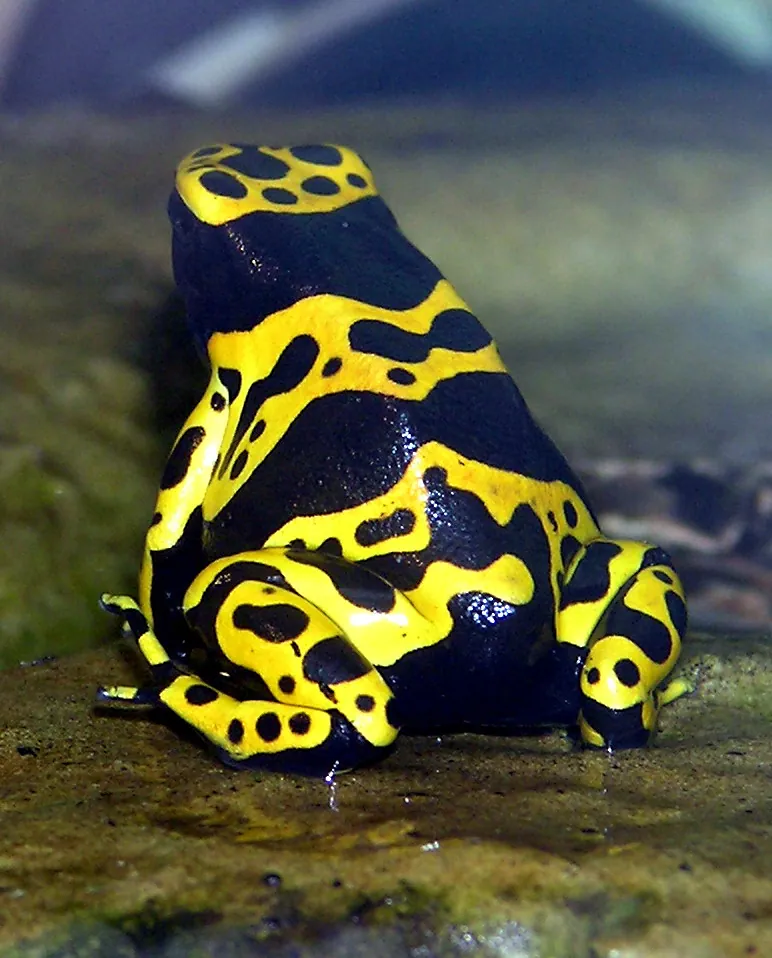
The yellow-banded poison dart frog is a small, brightly coloured frog from the northern part of South America. It lives in wet tropical rainforests, close to fresh water. Its bright warning colours show that its skin is toxic to eat or touch.1

 Bí o ṣe lè dá a mọ̀
- Predominantly bright yellow, with varying numbers of broad black stripes or spots over the whole body1
- Some individuals are orange instead of yellow1
- Markings range from fine spots to thick, unbroken bands1
- Small, with an average adult length rarely above 4 cm1
- Active during the day and lives in small groups1
Agbára májèlé
Awọ rẹ̀ ní májèlé. Ó léwu láti fọwọ́ kàn án, lá a tàbí jẹ ẹ́.
Kí ni májèlé rẹ̀ máa ń ṣe?
This frog is poisonous rather than venomous, so it does not inject venom. Its skin secretes alkaloid toxins. Some of these are extremely potent neurotoxins, which attack the nerves, and they interfere with nerve impulses. This can lead to heart failure or fibrillation, which is an irregular heartbeat.1
Báwo ló ṣe léwu tó fún ènìyàn?
Ewu fún ènìyàn: Ó ń dunniÓ lè dunni gan-an, ṣùgbọ́n kì í fẹ́rẹ̀ẹ́ le rárá.Kí ni ó máa ń ṣe nígbà tí ẹ̀rù bá bà á?
Its bright yellow and black colouring is aposematic, a warning to predators that it is unpalatable or toxic to eat.1
 Bí ẹnìkan bá fọwọ́ kàn án tàbí jẹ ẹ́
- Bí ẹnìkan bá fọwọ́ kan ọ̀kan: fọ ọwọ́ dáadáa, má sì fọwọ́ kan ojú tàbí ẹnu. Bí ọmọdé tàbí ẹran ọ̀sìn bá lá ọ̀kan tàbí jẹ ẹ́: pe ibùdó ìmọ̀ràn májèlé tàbí nọ́ńbà pàjáwìrì.
Máa kọ́kọ́ pe nọ́ńbà pàjáwìrì rẹ nígbà gbogbo (112, 000, 911). Èyí jẹ́ ìtọ́sọ́nà ìtọ́jú àkọ́kọ́ gbogbogbò, kì í ṣe ìmọ̀ràn ìṣègùn. Ìpìlẹ̀ ìtọ́jú àkọ́kọ́
 Wà láìléwu
- Má ṣe fọwọ́ kan, mú tàbí yọ ẹranko igbó lẹ́nu láéláé, kódà bí ó bá kéré, kódà bí ó bá dà bí ẹni pé ó ń sùn tàbí ó ti kú.
- Fún un ní àyè. Bí o bá pàdé ọ̀kan, farabalẹ̀, sẹ́yìn díẹ̀díẹ̀ kí o sì jẹ́ kí ó máa bá ọ̀nà rẹ̀ lọ.
- Bí o bá fọwọ́ kàn án tàbí jẹ ẹ́: má ṣe fọwọ́ pa ojú tàbí ẹnu rẹ, fọ ọwọ́ rẹ kí o sì wá ìrànlọ́wọ́ ìṣègùn.
Kò wá ọ kiri láti ṣe ọ́ léṣe. Májèlé rẹ̀ wà níbẹ̀ kìkì kí ohunkóhun má baà jẹ ẹ́. Sí i nípa wíwà láìléwu
Báwo ló ṣe tóbi tó?
Báwo ló ṣe gùn tó?
 ó kúrú ju ọmọdínrín ìka rẹ lọ
 lè sáré mítà 100 ní ìṣẹ́jú-àáyá 97 (ènìyàn tó yára jùlọ nílò 9.6)
Báwo ni Yellow-banded poison dart frog ṣe tóbi tó tí a bá fi wé ÌWỌ?
Ìṣirò nìkan nínú bráwúsà rẹ. A kò fi ohunkóhun pamọ́, a kò sì fi ránṣẹ́ sí ibikíbi.
Báwo ló ṣe yára tó?


Òtítọ́
It is the only poison dart frog known to estivate, which means going into a dormant state, during dry spells.1
Its toxins come from the arthropods it eats, so the frog's poison depends on its diet.1
It can cope with lower humidity better than other species in its genus, although it still prefers humid conditions.1
It is easy to breed in captivity, which has helped lower prices in the pet trade.1
It is one of the largest species in its genus, Dendrobates.1
Ibi tí àwọn òtítọ́ ti wá
- Yellow-banded poison dart frog (Wikipedia (CC BY-SA 4.0))
- Dendrobates leucomelas (iNaturalist): orúkọ àti ìpínsísọ̀rí.
- Venom Wiki: ìpele ewu, ìtóbi déédé àti àfojúbù ìyára jẹ́ tiwa. Wo bí a ṣe ń ṣírò wọn: Bí a ṣe ń díwọ̀n ewu.
Gbogbo òtítọ́ ojú-ìwé yìí ní nọ́ńbà tó tọ́ka sí orísun rẹ̀. Bí a bá ṣe àṣìṣe, má bínú, olólùfẹ́ ẹranko ni wá, kì í ṣe ìwé ìròyìn sáyẹ́ǹsì. Sọ fún wa ní [email protected] a ó sì tún un ṣe.
 Ebi ń pa àkekèé! Iṣẹ́ akanṣe ẹnì kan ṣoṣo ni Venom Wiki: ọ̀fẹ́ ni, kò sí ìpolówó, kò sì sí olùtọpinpin. Ẹ̀bùn kékeré ń ràn án lọ́wọ́ láti wà lórí íńtánẹ́ẹ̀tì.Bọ́ àkekèé
Sí i láti inú ẹgbẹ́ kan náà: Àkèré onímájèlé, ọ̀pọ̀lọ́ àti newt
 Golden poison frogÀkèré onímájèlé, ọ̀pọ̀lọ́ àti newtApaniMá ṣe fọwọ́ kàn án
 Cane toadÀkèré onímájèlé, ọ̀pọ̀lọ́ àti newtÓ nílò dókítàMá ṣe fọwọ́ kàn án
 Dyeing poison dart frogÀkèré onímájèlé, ọ̀pọ̀lọ́ àti newtÓ kàn ń dunniMá ṣe fọwọ́ kàn án
 Black-legged poison frogÀkèré onímájèlé, ọ̀pọ̀lọ́ àti newtÓ lè paniMá ṣe fọwọ́ kàn án
 Bruno's casque-headed frogÀkèré onímájèlé, ọ̀pọ̀lọ́ àti newtÓ nílò dókítàMá ṣe fọwọ́ kàn án
 Harlequin poison frogÀkèré onímájèlé, ọ̀pọ̀lọ́ àti newtÓ nílò dókítàMá ṣe fọwọ́ kàn án
 Terciopelo
 Brazilian wandering spider
 Eyelash viper
 Golden lancehead
 South American bushmaster
 Peruvian giant centipede