
 I-Afrika
 I-Asia
 I-Yurophu
 INingizimu Melika
 I-Australia ne-Oceania
 I-Antarctica
 ULwandlekazi iPacific
 ULwandlekazi i-Atlantic
 ULwandlekazi i-India
 ULwandlekazi i-Arctic
 Ulwandle iMediterranean
 Ulwandle Olubomvu
 Ulwandle iCaribbean
 Ulwandle iCoral
 Ulwandle lwaseNingizimu China
 Ulwandle lwasePhilippines
 Ulwandle i-Andaman
 Ulwandle i-North Sea
 Ulwandle lwaseTimor ne-Arafura
 Ichweba laseBengal
 Ichweba laseCalifornia
Garden tiger moth
 Izinwele ezihlabayo
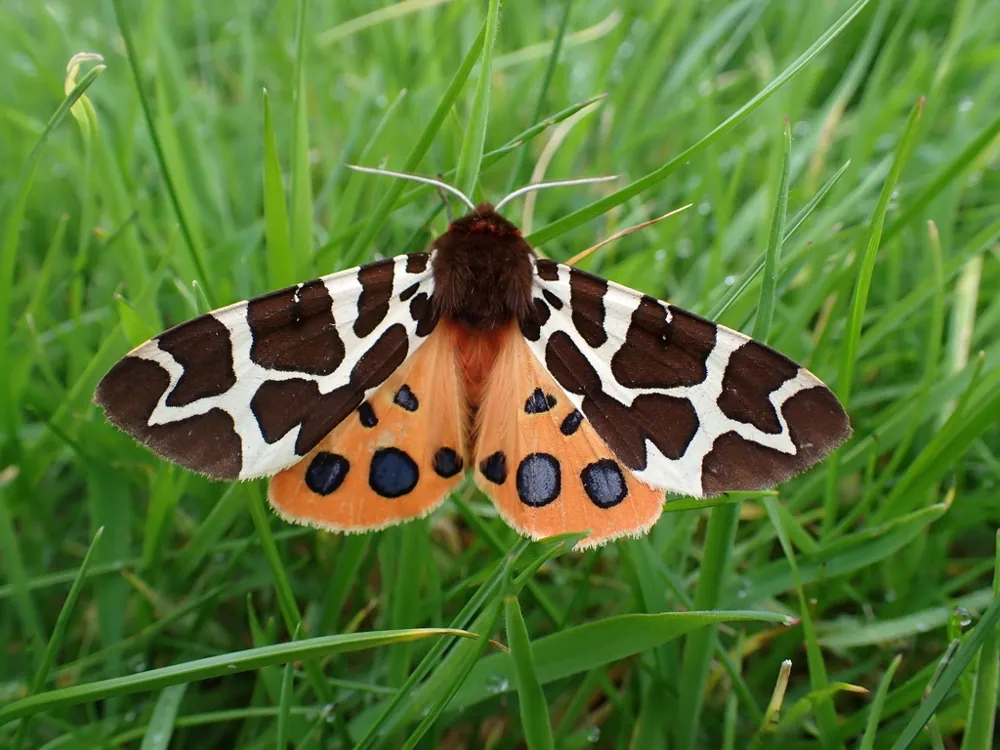
The garden tiger moth is a moth with bold patterned wings that warn predators it is unsafe to eat. It lives in cool, temperate parts of the northern United States, Canada, Europe and Asia. Its caterpillars are known as 'woolly bears' because of their fuzzy look.1

 Indlela yokusibona
- Adults have a wingspan of 4.5 to 6.5 cm.1
- The front wings are brown with a white pattern, which is sometimes missing.1
- The back wings are orange with dark blue dots that have black outlines.1
- The moth often hides its orange hindwings under its brown forewings when resting.1
- Caterpillars are fuzzy and can grow up to 6 cm long.1
Amandla obuthi
Izinwele ezincane noma amaboya aphukela esikhumbeni bese ehlaba.
Ubuthi baso benzani?
This moth does not inject venom. Its body fluids are poisonous and contain neurotoxic choline esters, which are nerve-affecting chemicals that interfere with the acetylcholine receptor. The full effects of these toxins are not yet known. Caterpillars have hollow hairs that often contain irritating compounds.1
Siyingozi kangakanani ebantwini?
Ingozi ebantwini: KuncaneNjengokuhlatshwa yinyosi noma ngaphansi. Cishe akunangozi ebantwini.Senzani uma sesabile?
When threatened, adults can spray an irritating compound from glands that are exposed at that moment, and their bright wing patterns warn predators.1
 Uma uthinta izinwele zaso
- Ezinweleni zezimbungu ezihlabayo: zisuse ngetheyiphu enamathelayo, bese ugeza isikhumba. Ungahlikihli.
- Uma kulunyiwe: geza bese upholisa. Thola usizo lwezokwelapha uma umuntu ezizwa engaphilile noma opha kalula.
Njalo shayela kuqala inombolo yezimo eziphuthumayo (112, 000, 911). Lokhu kuyiseluleko sosizo lokuqala esijwayelekile, akusona iseluleko sezokwelapha. Izisekelo zosizo lokuqala
 Hlala uphephile
- Ungalokothi uthinte, ubambe noma ugcone isilwane sasendle, ngisho noma sincane, futhi ngisho noma sibukeka silele noma sifile.
- Sinike isikhala. Uma uhlangana naso, hlala uzolile, uhlehle kancane bese usiyeka sihambe ngendlela yaso.
- Uma uthinta izinwele zaso: hlala uzolile, ungashukumi, shayela inombolo yezimo eziphuthumayo (112, 000, 911) noma uye esibhedlela ngokushesha. Khumbula ukuthi besibukeka kanjani, isithombe siyasiza.
Asikuzingeli wena. Sisebenzisa ubuthi baso ukuze sibambe ukudla noma ukuzivikela, futhi singancamela ukucasha. Okwengeziwe mayelana nokuhlala uphephile
Sikhulu kangakanani?
Side kangakanani?
 side njengezitini zamathoyizi ezingu-2 ezilandelanayo
 sihamba kancane kunomnenke wasengadini
Garden tiger moth mkhulu kangakanani uma uqhathanisa NAWE?
Yizibalo nje kusiphequluli sakho. Akukho okulondolozwayo noma okuthunyelwa ndawo.
Sishesha kangakanani?

Amaqiniso
Adults can make rasping sounds with their wings and high-pitched squeaks that people can hear, and bats tend to avoid them.1
Caterpillars can break down the toxins in their host plants and reuse them in altered form for their own protection.1
The French entomologist Oberthür described about 500 different wing pattern and colour variants.1
Adults are mostly active at night, from June to September.1
Okongoti bobuthi
- Igama lesayensi
- Arctia caja
- Iqembu
- Izimbungu nezinambuzane
- Umndeni
- Erebidae2
- Ukuhleleka
- Lepidoptera
- Amazwekazi
- I-Yurophu, I-Asia, INyakatho Melika
- Izinsana
- Eggs are laid on the surfaces of leaves, and the caterpillars hatch and begin feeding soon after.1
- Simo saso endle
- Protected in the UK under the Biodiversity Action Plan, after its UK numbers fell by 89% over 30 years1
- Ingozi ebantwini
- 1 / 5: Kuncane3
Lapho amaqiniso evela khona
- Garden tiger moth (Wikipedia (CC BY-SA 4.0))
- Arctia caja (iNaturalist): amagama nokuhlelwa ngezigaba.
- Venom Wiki: izinga lengozi, usayizi ojwayelekile nesiqagela sejubane kungokwethu. Bona ukuthi sikubala kanjani: Indlela esilinganisa ngayo ingozi.
Iqiniso ngalinye kuleli khasi linenombolo ekhomba umthombo walo. Uma senze iphutha, uxolo, singabathandi bezilwane, hhayi iphephabhuku lesayensi. Sitshele ku-[email protected] futhi sizolilungisa.
 Ufezela ulambile! I-Venom Wiki iwumsebenzi womuntu oyedwa: imahhala, ayinazo izikhangiso noma izilandeli. Isipho esincane sisiza ukuyigcina ku-inthanethi.Phakela ufezela
Okunye okuvela eqenjini elifanayo: Izimbungu nezinambuzane
 Giant water bugIzimbungu nezinambuzaneKubuhlungu nje
 Oak processionaryIzimbungu nezinambuzaneKubuhlungu njeUngathinti
 Pine processionaryIzimbungu nezinambuzaneKubuhlungu njeUngathinti
 Puss caterpillarIzimbungu nezinambuzaneKubuhlungu njeUngathinti
 Saddleback caterpillarIzimbungu nezinambuzaneKubuhlungu njeUngathinti
 Wheel bugIzimbungu nezinambuzaneKubuhlungu nje
Futhi ihlala: I-Yurophu
 Common European adderAma-viper namabululuKudinga udokotela
 Spanish flyEzinye izilwane ezinoshevuKudinga udokotelaUngathinti
 Common waspIzinyosi, imivi nama-hornetKubuhlungu nje
 European hornetIzinyosi, imivi nama-hornetKubuhlungu nje
 Fire salamanderAmaxoxo anoshevu, amaxoxo e-toad nama-newtKubuhlungu njeUngathinti
 Western honey beeIzinyosi, imivi nama-hornetKubuhlungu nje