
 I-Afrika
 I-Asia
 I-Yurophu
 INingizimu Melika
 I-Australia ne-Oceania
 I-Antarctica
 ULwandlekazi iPacific
 ULwandlekazi i-Atlantic
 ULwandlekazi i-India
 ULwandlekazi i-Arctic
 Ulwandle iMediterranean
 Ulwandle Olubomvu
 Ulwandle iCaribbean
 Ulwandle iCoral
 Ulwandle lwaseNingizimu China
 Ulwandle lwasePhilippines
 Ulwandle i-Andaman
 Ulwandle i-North Sea
 Ulwandle lwaseTimor ne-Arafura
 Ichweba laseBengal
 Ichweba laseCalifornia
Glory of the sea cone
 Ukuhlaba
The Glory of the Sea Cone is a sea snail with a striking shell, part of the cone snail family. It lives in the warm waters of the Pacific and Indian Oceans. It is special because collectors once thought it was the rarest shell in the world.1
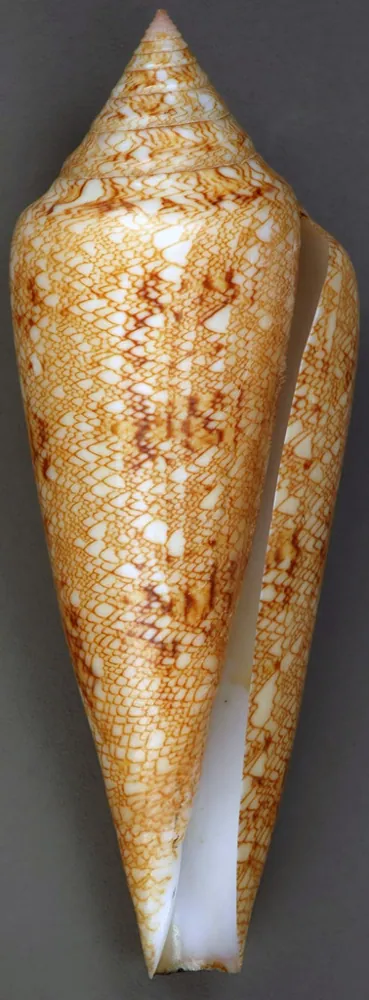
 Indlela yokusibona
- A relatively large, slender shell with a tall spire1
- Typical shell length is 8 to 12 cm, and it can reach 16 cm1
- A fine net-like pattern of orange-brown lines that enclose triangular spaces1
- Two or three bands of chestnut, hieroglyphic-like markings across the body1
- Tan colouring that can range from light golden to deep dark brown1
Ivamise ukudidaniswa ne: It is sometimes confused with the common Textile cone, and it has a similarity to the Bengal cone.1
Amandla obuthi
Ubuthi buphuma ngodosi.
Siyingozi kangakanani ebantwini?
Ingozi ebantwini: Kubi kakhuluUkuhlatshwa kudinga udokotela. Ukufa kuyivelakancane kakhulu. Uma sihlaba
- Ukubopha ngokucindezela nokuvimba ukunyakaza (pressure immobilisation): bopha ibhandeshi elinwebekayo eliqinile phezu kwenxeba bese ukhuphuka nesitho sonke, usiqinise nge-splint, futhi ugcine umuntu engashukumi nhlobo kuze kufike usizo.
- Ingwane enezindandatho eziluhlaza okwesibhakabhaka noma umnenke we-cone ungamenza umuntu ayeke ukuphefumula esaphapheme: biza usizo futhi ulungele ukumphefumulela (rescue breaths) kuze kufike i-ambulensi ithathe izintambo.
Njalo shayela kuqala inombolo yezimo eziphuthumayo (112, 000, 911). Lokhu kuyiseluleko sosizo lokuqala esijwayelekile, akusona iseluleko sezokwelapha. Izisekelo zosizo lokuqala
 Hlala uphephile
- Ungalokothi uthinte, ubambe noma ugcone isilwane sasendle, ngisho noma sincane, futhi ngisho noma sibukeka silele noma sifile.
- Sinike isikhala. Uma uhlangana naso, hlala uzolile, uhlehle kancane bese usiyeka sihambe ngendlela yaso.
- Uma sikuhlaba: hlala uzolile, ungashukumi, shayela inombolo yezimo eziphuthumayo (112, 000, 911) noma uye esibhedlela ngokushesha. Khumbula ukuthi besibukeka kanjani, isithombe siyasiza.
Asikuzingeli wena. Sisebenzisa ubuthi baso ukuze sibambe ukudla noma ukuzivikela, futhi singancamela ukucasha. Okwengeziwe mayelana nokuhlala uphephile
Kuphi emhlabeni?
Sikhulu kangakanani?
Side kangakanani?
 side njengezitini zamathoyizi ezingu-5 ezilandelanayo
 sihamba kancane kunomnenke wasengadini
Glory of the sea cone mkhulu kangakanani uma uqhathanisa NAWE?
Yizibalo nje kusiphequluli sakho. Akukho okulondolozwayo noma okuthunyelwa ndawo.
Sishesha kangakanani?

Amaqiniso
For about two centuries, this shell was regarded as the rarest shell in the world.1
Specimens were once valued in the thousands of U.S. dollars and were generally owned only by museums and wealthy private collectors.1
Today, shells can often be found from retailers or online auction sites for less than $100 U.S.1
Its habitat was not discovered until 1969.1
Improvements in diving technology, such as scuba, led to the discovery of far more shells.1
Umqothuli wezinganekwane
Inganekwane: A collector bought one at auction in 1792 and destroyed it to keep the value of another one he owned.
Iqiniso: This is an urban legend, a popular story that has spread among collectors. It is not an established fact.1
Lapho amaqiniso evela khona
- Conus gloriamaris (Wikipedia (CC BY-SA 4.0))
- Conus gloriamaris (iNaturalist): amagama nokuhlelwa ngezigaba.
- Venom Wiki: izinga lengozi, usayizi ojwayelekile nesiqagela sejubane kungokwethu. Bona ukuthi sikubala kanjani: Indlela esilinganisa ngayo ingozi.
Iqiniso ngalinye kuleli khasi linenombolo ekhomba umthombo walo. Uma senze iphutha, uxolo, singabathandi bezilwane, hhayi iphephabhuku lesayensi. Sitshele ku-[email protected] futhi sizolilungisa.
 Ufezela ulambile! I-Venom Wiki iwumsebenzi womuntu oyedwa: imahhala, ayinazo izikhangiso noma izilandeli. Isipho esincane sisiza ukuyigcina ku-inthanethi.Phakela ufezela
Okunye okuvela eqenjini elifanayo: Iminenke ye-cone nezingwane
 Geography coneIminenke ye-cone nezingwaneKuyabulala
 Greater blue-ringed octopusIminenke ye-cone nezingwaneKuyabulala
 Southern blue-ringed octopusIminenke ye-cone nezingwaneKuyabulala
 Blue sea dragonIminenke ye-cone nezingwaneKubuhlungu nje
 Common octopusIminenke ye-cone nezingwaneAkunangozi
 Giant Pacific octopusIminenke ye-cone nezingwaneAkunangozi
Futhi ihlala: ULwandlekazi iPacific
 Australian box jellyfishAma-jellyfish nezinye izilwane zasolwandle ezihlabayoKuyabulalaUngathinti
 Japanese pufferfishEzinye izilwane ezinoshevuKuyabulala
 Hawksbill sea turtleEzinye izilwane ezinoshevuKungabulala
 Irukandji jellyfishAma-jellyfish nezinye izilwane zasolwandle ezihlabayoKungabulalaUngathinti
 Reef stonefishIzinhlanzi ezinobuthiKungabulalaUngathinti
 Crown-of-thorns starfishIzinkalankala zasolwandle ezinameva, izinkanyezi zasolwandle nezikelemuKudinga udokotelaUngathinti