
 I-Afrika
 I-Asia
 I-Yurophu
 INingizimu Melika
 I-Australia ne-Oceania
 I-Antarctica
 ULwandlekazi iPacific
 ULwandlekazi i-Atlantic
 ULwandlekazi i-India
 ULwandlekazi i-Arctic
 Ulwandle iMediterranean
 Ulwandle Olubomvu
 Ulwandle iCaribbean
 Ulwandle iCoral
 Ulwandle lwaseNingizimu China
 Ulwandle lwasePhilippines
 Ulwandle i-Andaman
 Ulwandle i-North Sea
 Ulwandle lwaseTimor ne-Arafura
 Ichweba laseBengal
 Ichweba laseCalifornia
Horn shark
 Ameva anobuthi
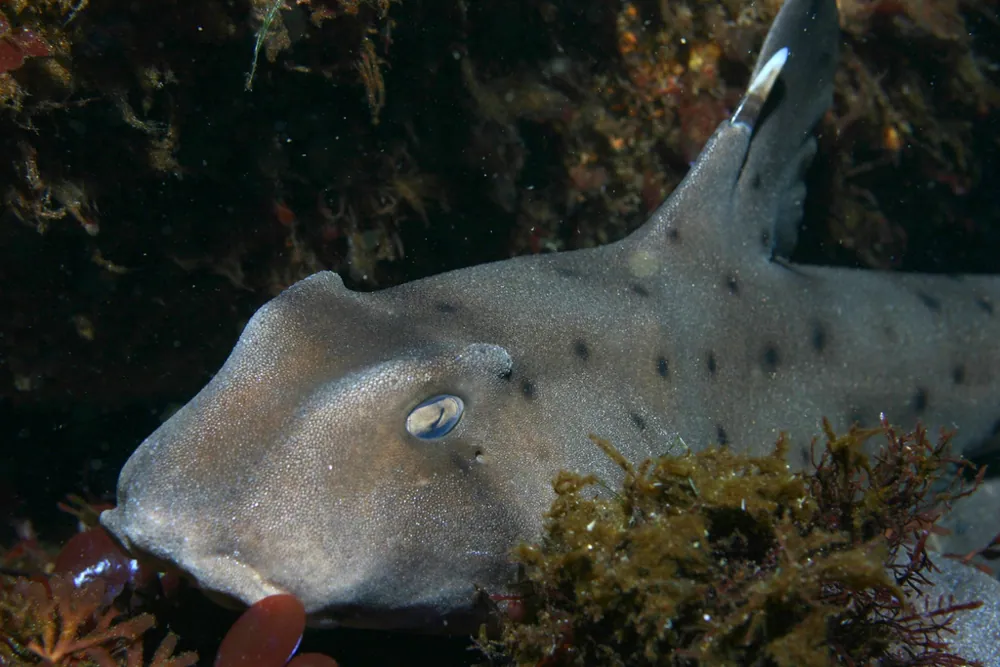
The horn shark is a small shark with a blunt head and two tall fins, each with a large spine at the front. It lives along the western coast of North America, from California to the Gulf of California. It spends its days hidden in caves and crevices and hunts at night.1



 Indlela yokusibona
Amandla obuthi
Ameva abukhali aphethe ubuthi. Ukusinyathela noma ukusibamba kubuhlungu.
Siyingozi kangakanani ebantwini?
Ingozi ebantwini: KuncaneNjengokuhlatshwa yinyosi noma ngaphansi. Cishe akunangozi ebantwini.Horn sharks are harmless unless they are harassed. They are not targeted by commercial or recreational fisheries, though small numbers are caught by accident.1
Senzani uma sesabile?
During the day they stay still in hiding places, but they swim away quickly if disturbed.1
 Uma ameva aso ekugwaza
- Faka inxeba emanzini ashisayo, ashisa ngendlela umuntu angakwazi ukuyibekezelela ngaphandle kokusha (yihlole ngesandla sakho), imizuzu engama-30 kuya kwengama-90. Thola usizo lwezokwelapha, ikakhulukazi kuma-stonefish nama-stingray.
Njalo shayela kuqala inombolo yezimo eziphuthumayo (112, 000, 911). Lokhu kuyiseluleko sosizo lokuqala esijwayelekile, akusona iseluleko sezokwelapha. Izisekelo zosizo lokuqala
 Hlala uphephile
- Ungalokothi uthinte, ubambe noma ugcone isilwane sasendle, ngisho noma sincane, futhi ngisho noma sibukeka silele noma sifile.
- Sinike isikhala. Uma uhlangana naso, hlala uzolile, uhlehle kancane bese usiyeka sihambe ngendlela yaso.
- Uma ameva aso ekugwaza: hlala uzolile, ungashukumi, shayela inombolo yezimo eziphuthumayo (112, 000, 911) noma uye esibhedlela ngokushesha. Khumbula ukuthi besibukeka kanjani, isithombe siyasiza.
Asikuzingeli wena. Sisebenzisa ubuthi baso ukuze sibambe ukudla noma ukuzivikela, futhi singancamela ukucasha. Okwengeziwe mayelana nokuhlala uphephile
Kuphi emhlabeni?
Sikhulu kangakanani?
Side kangakanani?
 side njengamakati asekhaya angu-2.5 kusuka ekhaleni kuya emsileni
 side njengobhanana abangu-7 abalandelanayo
 singabhukuda ubude bechibi elikhulu lokubhukuda (50 m) ngemizuzwana engu-9
Horn shark mkhulu kangakanani uma uqhathanisa NAWE?
Yizibalo nje kusiphequluli sakho. Akukho okulondolozwayo noma okuthunyelwa ndawo.
Sishesha kangakanani?

Amaqiniso
For its size, the horn shark has the strongest bite of any shark that has been measured.1
To pull prey loose, the shark pushes its head up with a downward stroke of its tail. No other shark has been seen doing this.1
Large horn sharks that eat many sea urchins can have purple-stained teeth and fin spines.1
A Pacific angelshark was filmed trying to swallow a juvenile horn shark, but spat it out because of the spines.1
Horn sharks have only 148 electroreceptors (ampullae of Lorenzini), far fewer than most sharks, which may have over 2,000. They rely mainly on smell to find food.1
A dropped tooth takes about 4 weeks to be replaced.1
Okongoti bobuthi
- Igama lesayensi
- Heterodontus francisci
- Iqembu
- Izinhlanzi ezinobuthi
- Umndeni
- Heterodontidae2
- Ukuhleleka
- Heterodontiformes
- Amazwekazi
- ULwandlekazi iPacific, Ichweba laseCalifornia, Izilwandlekazi
- Izinsana
- They lay eggs. From February to April, females lay up to 24 eggs, two at a time, every 11 to 14 days, and wedge the egg cases into crevices to protect them.1
- Simo saso endle
- Insufficient data (IUCN); population listed as stable on 10 October 20251
- Ingozi ebantwini
- 1 / 5: Kuncane3
Lapho amaqiniso evela khona
- Horn shark (Wikipedia (CC BY-SA 4.0))
- Heterodontus francisci (iNaturalist): amagama nokuhlelwa ngezigaba.
- Venom Wiki: izinga lengozi, usayizi ojwayelekile nesiqagela sejubane kungokwethu. Bona ukuthi sikubala kanjani: Indlela esilinganisa ngayo ingozi.
Iqiniso ngalinye kuleli khasi linenombolo ekhomba umthombo walo. Uma senze iphutha, uxolo, singabathandi bezilwane, hhayi iphephabhuku lesayensi. Sitshele ku-[email protected] futhi sizolilungisa.
 Ufezela ulambile! I-Venom Wiki iwumsebenzi womuntu oyedwa: imahhala, ayinazo izikhangiso noma izilandeli. Isipho esincane sisiza ukuyigcina ku-inthanethi.Phakela ufezela
Okunye okuvela eqenjini elifanayo: Izinhlanzi ezinobuthi
 Reef stonefishIzinhlanzi ezinobuthiKungabulalaUngathinti
 Red lionfishIzinhlanzi ezinobuthiKudinga udokotelaUngathinti
 Estuarine stonefishIzinhlanzi ezinobuthiKungabulalaUngathinti
 Short-tail stingrayIzinhlanzi ezinobuthiKungabulala
 Striped eel catfishIzinhlanzi ezinobuthiKungabulalaUngathinti
 Bluespotted ribbontail rayIzinhlanzi ezinobuthiKudinga udokotela
Futhi ihlala: ULwandlekazi iPacific
 Australian box jellyfishAma-jellyfish nezinye izilwane zasolwandle ezihlabayoKuyabulalaUngathinti
 Geography coneIminenke ye-cone nezingwaneKuyabulala
 Greater blue-ringed octopusIminenke ye-cone nezingwaneKuyabulala
 Japanese pufferfishEzinye izilwane ezinoshevuKuyabulala
 Southern blue-ringed octopusIminenke ye-cone nezingwaneKuyabulala
 Hawksbill sea turtleEzinye izilwane ezinoshevuKungabulala