
 I-Afrika
 I-Asia
 I-Yurophu
 INingizimu Melika
 I-Australia ne-Oceania
 I-Antarctica
 ULwandlekazi iPacific
 ULwandlekazi i-Atlantic
 ULwandlekazi i-India
 ULwandlekazi i-Arctic
 Ulwandle iMediterranean
 Ulwandle Olubomvu
 Ulwandle iCaribbean
 Ulwandle iCoral
 Ulwandle lwaseNingizimu China
 Ulwandle lwasePhilippines
 Ulwandle i-Andaman
 Ulwandle i-North Sea
 Ulwandle lwaseTimor ne-Arafura
 Ichweba laseBengal
 Ichweba laseCalifornia
Pumpkin toadlet
 Ushevu esikhumbeni sasoSidla: InyamaSinoshevu, asinabo ubuthi bokuluma noma bokuhlaba
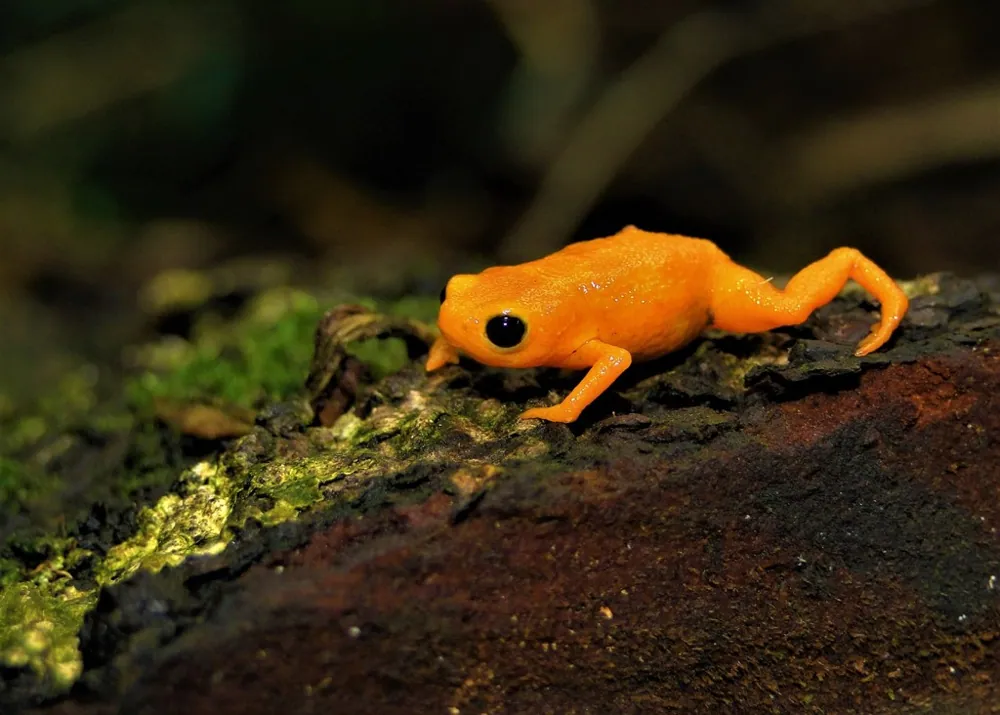
The pumpkin toadlet is a tiny, brightly coloured frog that lives in the leaf litter of the Atlantic rainforests of southeastern Brazil. Adults are bright yellow-orange, a warning sign that their skin and body carry a strong toxin. Scientists have found that the head and back of this frog glow under ultraviolet light.1

 Indlela yokusibona
- Adults are bright yellow-orange.1
- Newly hatched young are brown and well camouflaged.1
- It is very small, with adults measuring 12.5 to 19.7 mm from snout to vent.1
- Females tend to be larger than males.1
Ivamise ukudidaniswa ne: It is closely related to the red pumpkin toadlet (B. pitanga), which also glows under ultraviolet light and shares its inability to hear its own call.1
Amandla oshevu
Isikhumba saso sinoshevu. Kuyingozi ukusithinta, ukusikhotha noma ukusidla.
Ushevu waso wenzani?
This frog is poisonous rather than venomous, so it does not inject venom. Its main toxin is 11-oxotetrodotoxin, which is extremely rare in animals, even marine ones, and is four to five times more potent than tetrodotoxin. The toxins are found in the skin and ovaries but are mostly concentrated in the liver.1
Siyingozi kangakanani ebantwini?
Ingozi ebantwini: KubuhlunguKungaba buhlungu ngempela, kodwa cishe akukaze kube kubi kakhulu.Senzani uma sesabile?
Its bright yellow-orange colour is a warning display (aposematism) that tells predators it is toxic.1
 Uma umuntu esithintile noma esidlile
- Uma umuntu esithintile: geza izandla kahle futhi ungathinti amehlo noma umlomo. Uma ingane noma isilwane sasekhaya sisikhothile noma sisidlile: shayela isikhungo soshevu noma inombolo yezimo eziphuthumayo.
Njalo shayela kuqala inombolo yezimo eziphuthumayo (112, 000, 911). Lokhu kuyiseluleko sosizo lokuqala esijwayelekile, akusona iseluleko sezokwelapha. Izisekelo zosizo lokuqala
 Hlala uphephile
- Ungalokothi uthinte, ubambe noma ugcone isilwane sasendle, ngisho noma sincane, futhi ngisho noma sibukeka silele noma sifile.
- Sinike isikhala. Uma uhlangana naso, hlala uzolile, uhlehle kancane bese usiyeka sihambe ngendlela yaso.
- Uma usithintile noma usidlile: ungahlikihli amehlo noma umlomo wakho, geza izandla zakho futhi uthole usizo lwezokwelapha.
Asikuzingeli wena. Ushevu waso ukhona nje ukuze kungabikho okusidlayo. Okwengeziwe mayelana nokuhlala uphephile
Sikhulu kangakanani?
Side kangakanani?
 sifushane kunomunwe wakho omncane
 singahamba amamitha ali-100 ngemizuzwana engu-180 (umuntu oshesha kunabo bonke udinga engu-9,6)
Pumpkin toadlet mkhulu kangakanani uma uqhathanisa NAWE?
Yizibalo nje kusiphequluli sakho. Akukho okulondolozwayo noma okuthunyelwa ndawo.
Sishesha kangakanani?


Amaqiniso
In 2019, scientists found that the head and back of this frog glow under ultraviolet light because of fluorescent skeletons. Young frogs that have gained adult colours still do not glow.1
Adults cannot hear the frequency of their own calls because their ears are underdeveloped. They communicate with movements such as inflating the vocal sac, gaping the mouth and waving their arms.1
Its main toxin, 11-oxotetrodotoxin, is extremely rare in animals, even in marine species.1
Its young hatch directly into tiny toadlets, skipping the tadpole stage.1
It is among the largest frogs in its genus, Brachycephalus.1
Umqothuli wezinganekwane
Inganekwane: Its glow under ultraviolet light is a warning signal to predators.
Iqiniso: Studies suggest this is unlikely. Predators attack the frogs at the same rate whether or not they glow.1
Okongoti bobuthi
- Igama lesayensi
- Brachycephalus ephippium
- Iqembu
- Amaxoxo anoshevu, amaxoxo e-toad nama-newt
- Umndeni
- Brachycephalidae2
- Ukuhleleka
- Anura
- Amazwekazi
- INingizimu Melika
- Izinsana
- It breeds by direct development. The female lays a few eggs on land, which hatch into young toadlets with no tadpole stage.1
- Simo saso endle
- Not considered threatened1
- Ingozi ebantwini
- 2 / 5: Kubuhlungu3
Lapho amaqiniso evela khona
- Pumpkin toadlet (Wikipedia (CC BY-SA 4.0))
- Brachycephalus ephippium (iNaturalist): amagama nokuhlelwa ngezigaba.
- Venom Wiki: izinga lengozi, usayizi ojwayelekile nesiqagela sejubane kungokwethu. Bona ukuthi sikubala kanjani: Indlela esilinganisa ngayo ingozi.
Iqiniso ngalinye kuleli khasi linenombolo ekhomba umthombo walo. Uma senze iphutha, uxolo, singabathandi bezilwane, hhayi iphephabhuku lesayensi. Sitshele ku-[email protected] futhi sizolilungisa.
 Ufezela ulambile! I-Venom Wiki iwumsebenzi womuntu oyedwa: imahhala, ayinazo izikhangiso noma izilandeli. Isipho esincane sisiza ukuyigcina ku-inthanethi.Phakela ufezela
Okunye okuvela eqenjini elifanayo: Amaxoxo anoshevu, amaxoxo e-toad nama-newt
 Golden poison frogAmaxoxo anoshevu, amaxoxo e-toad nama-newtKuyabulalaUngathinti
 Cane toadAmaxoxo anoshevu, amaxoxo e-toad nama-newtKudinga udokotelaUngathinti
 Dyeing poison dart frogAmaxoxo anoshevu, amaxoxo e-toad nama-newtKubuhlungu njeUngathinti
 Black-legged poison frogAmaxoxo anoshevu, amaxoxo e-toad nama-newtKungabulalaUngathinti
 Bruno's casque-headed frogAmaxoxo anoshevu, amaxoxo e-toad nama-newtKudinga udokotelaUngathinti
 Harlequin poison frogAmaxoxo anoshevu, amaxoxo e-toad nama-newtKudinga udokotelaUngathinti
 Terciopelo
 Brazilian wandering spider
 Eyelash viper
 Golden lancehead
 South American bushmaster
 Peruvian giant centipede