
 I-Afrika
 I-Asia
 I-Yurophu
 INingizimu Melika
 I-Australia ne-Oceania
 I-Antarctica
 ULwandlekazi iPacific
 ULwandlekazi i-Atlantic
 ULwandlekazi i-India
 ULwandlekazi i-Arctic
 Ulwandle iMediterranean
 Ulwandle Olubomvu
 Ulwandle iCaribbean
 Ulwandle iCoral
 Ulwandle lwaseNingizimu China
 Ulwandle lwasePhilippines
 Ulwandle i-Andaman
 Ulwandle i-North Sea
 Ulwandle lwaseTimor ne-Arafura
 Ichweba laseBengal
 Ichweba laseCalifornia
Red-necked keelback
 Ukuluma
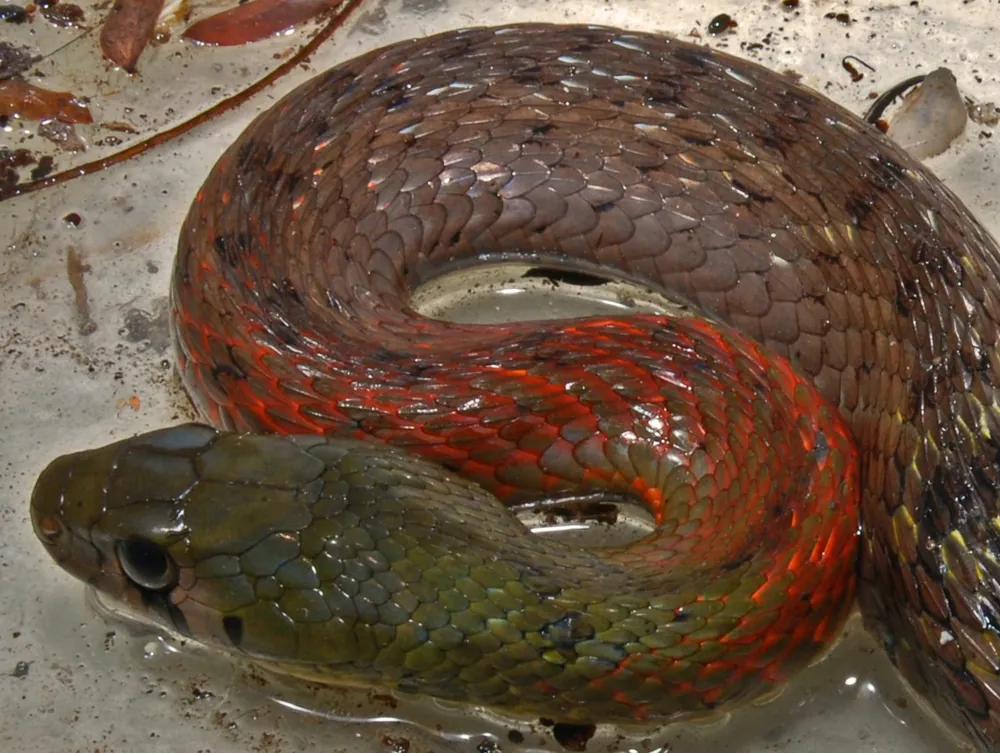
The red-necked keelback is a snake from the Indonesian islands of Java and Sumatra. It is unusual because it is venomous, which is rare for snakes in its family, and it was only recently reclassified as dangerous to people.1



 Indlela yokusibona
Amandla obuthi
Ubuthi buphuma ngamazinyo aso obuthi noma ngamazinyo uma siluma.
Ubuthi baso benzani?
This snake is rear-fanged, so its venom is delivered through grooved teeth at the back of the upper jaw rather than through hollow front fangs. Its venom can cause internal bleeding, including bleeding in the brain, nausea, and blood clotting problems such as disseminated intravascular coagulation. In animal tests, the venom caused kidney failure.1
Siyingozi kangakanani ebantwini?
Ingozi ebantwini: Kubi kakhuluUkulunywa kudinga udokotela. Ukufa kuyivelakancane kakhulu.After one fatal and several near-fatal envenomations, the snake was reclassified as dangerous. Most bites to people involve the front teeth and cause no harmful effects, but rare bites from the rear fangs can be lethal. Recent reports describe severe envenomation and organ failure, affecting the kidneys and liver, after even brief bites.1
Senzani uma sesabile?
When threatened, for example by being touched, it can burst its nuchal glands in the red neck, releasing stored toad toxins (bufotoxins) that cause fast heartbeat, drooling, convulsions and paralysis.1
 Uma siluma
- Care is needed when treating a bitten person. Injections should be avoided, as they may cause excessive bleeding.1
- Geza inxeba lokulunywa, gcina umuntu ezolile bese uthola usizo lwezokwelapha. Ezinye izinhlobo (njenge-boomslang) zingabulala emahoreni amaningi kamuva.
Njalo shayela kuqala inombolo yezimo eziphuthumayo (112, 000, 911). Lokhu kuyiseluleko sosizo lokuqala esijwayelekile, akusona iseluleko sezokwelapha. Izisekelo zosizo lokuqala
 Hlala uphephile
- Ungalokothi uthinte, ubambe noma ugcone isilwane sasendle, ngisho noma sincane, futhi ngisho noma sibukeka silele noma sifile.
- Sinike isikhala. Uma uhlangana naso, hlala uzolile, uhlehle kancane bese usiyeka sihambe ngendlela yaso.
- Uma sikuluma: hlala uzolile, ungashukumi, shayela inombolo yezimo eziphuthumayo (112, 000, 911) noma uye esibhedlela ngokushesha. Khumbula ukuthi besibukeka kanjani, isithombe siyasiza.
Asikuzingeli wena. Sisebenzisa ubuthi baso ukuze sibambe ukudla noma ukuzivikela, futhi singancamela ukucasha. Okwengeziwe mayelana nokuhlala uphephile
Sikhulu kangakanani?
Side kangakanani?
 side njengamakati asekhaya angu-2 kusuka ekhaleni kuya emsileni
 side njengobhanana abangu-5 abalandelanayo
 singahamba amamitha ali-100 ngemizuzwana engu-71 (umuntu oshesha kunabo bonke udinga engu-9,6)
Red-necked keelback mkhulu kangakanani uma uqhathanisa NAWE?
Yizibalo nje kusiphequluli sakho. Akukho okulondolozwayo noma okuthunyelwa ndawo.
Sishesha kangakanani?


Amaqiniso
It stores toxins from the toads it eats in glands in its neck, which it can release when threatened.1
Unusually for a member of the colubrid family, which is a large snake family, this species is venomous.1
Its venom ducts open onto grooved fangs at the back of the mouth, and chewing helps the venom enter a bite.1
During mating, several males may swarm around a single female.1
Umqothuli wezinganekwane
Inganekwane: The red-necked keelback is harmless because it was once thought to be.
Iqiniso: It is venomous. It was previously thought harmless, but after serious bites it was reclassified as dangerous.1
Lapho amaqiniso evela khona
- Rhabdophis subminiatus (Wikipedia (CC BY-SA 4.0))
- Rhabdophis subminiatus (iNaturalist): amagama nokuhlelwa ngezigaba.
- Venom Wiki: izinga lengozi, usayizi ojwayelekile nesiqagela sejubane kungokwethu. Bona ukuthi sikubala kanjani: Indlela esilinganisa ngayo ingozi.
Iqiniso ngalinye kuleli khasi linenombolo ekhomba umthombo walo. Uma senze iphutha, uxolo, singabathandi bezilwane, hhayi iphephabhuku lesayensi. Sitshele ku-[email protected] futhi sizolilungisa.
 Ufezela ulambile! I-Venom Wiki iwumsebenzi womuntu oyedwa: imahhala, ayinazo izikhangiso noma izilandeli. Isipho esincane sisiza ukuyigcina ku-inthanethi.Phakela ufezela
Okunye okuvela eqenjini elifanayo: Izinyoka ezinamazinyo obuthi ngemuva
 Brown tree snakeIzinyoka ezinamazinyo obuthi ngemuvaKubuhlungu nje
 Tiger keelbackIzinyoka ezinamazinyo obuthi ngemuvaKungabulala
 Green cat snakeIzinyoka ezinamazinyo obuthi ngemuvaKubuhlungu nje
 Mangrove snakeIzinyoka ezinamazinyo obuthi ngemuvaKubuhlungu nje
 Asian vine snakeIzinyoka ezinamazinyo obuthi ngemuvaAkunangozi
 Golden tree snakeIzinyoka ezinamazinyo obuthi ngemuvaAkunangozi
 Deathstalker
 Indian cobra
 Indian saw-scaled viper
 King cobra
 Ibululu
 Inhlangwane kaRussell