
 I-Afrika
 I-Asia
 I-Yurophu
 INingizimu Melika
 I-Australia ne-Oceania
 I-Antarctica
 ULwandlekazi iPacific
 ULwandlekazi i-Atlantic
 ULwandlekazi i-India
 ULwandlekazi i-Arctic
 Ulwandle iMediterranean
 Ulwandle Olubomvu
 Ulwandle iCaribbean
 Ulwandle iCoral
 Ulwandle lwaseNingizimu China
 Ulwandle lwasePhilippines
 Ulwandle i-Andaman
 Ulwandle i-North Sea
 Ulwandle lwaseTimor ne-Arafura
 Ichweba laseBengal
 Ichweba laseCalifornia
Santa Catalina rattlesnake
 Ukuluma
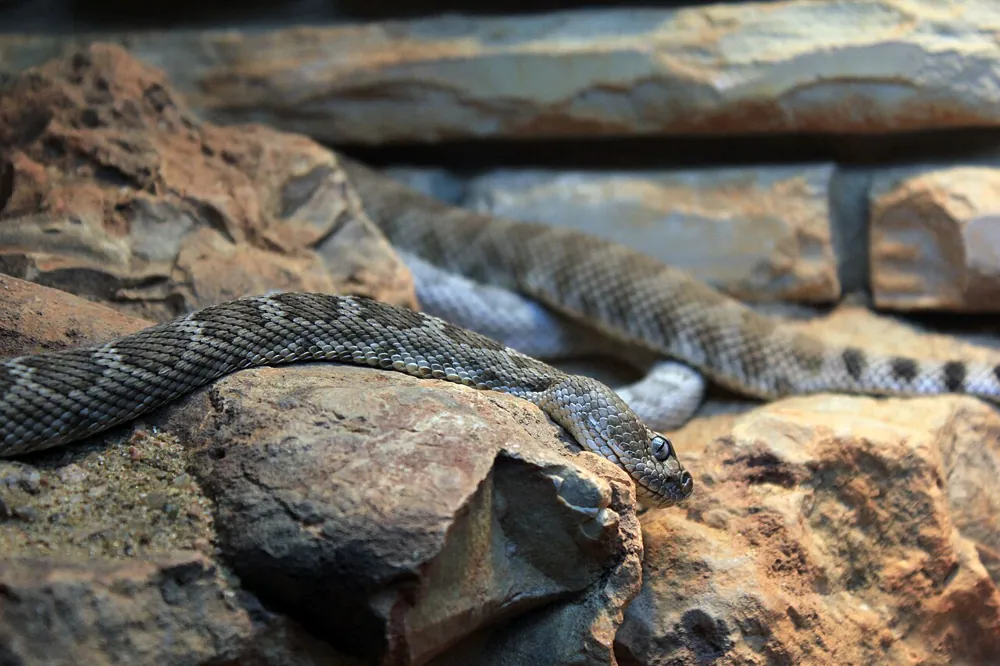
The Santa Catalina rattlesnake is a small, slender pit viper with a very unusual feature: it has no rattle. It lives only on Isla Santa Catalina, a small island in the Gulf of California off the coast of Baja California Sur, Mexico. It is critically endangered.1


 Indlela yokusibona
- It has no rattle. The tail tip falls off with each shed instead of forming new segments.1
- It is relatively slender and small, growing to a maximum of 73.1 cm.1
- The most common colour form has a light cream base with reddish-brown blotches down the back and black and white banding around the tail.1
- The other colour form is ash grey with darker grey blotches, and it still has tail banding.1
- It is mostly active at night and is often seen out in the open rather than hiding.1
Amandla obuthi
Ubuthi buphuma ngamazinyo aso obuthi noma ngamazinyo uma siluma.
Ubuthi baso benzani?
It is venomous, like all pit vipers. It holds its prey in its jaws until the venom takes effect, so the prey cannot escape before it succumbs.1
Siyingozi kangakanani ebantwini?
Ingozi ebantwini: Kubi kakhuluUkulunywa kudinga udokotela. Ukufa kuyivelakancane kakhulu.Senzani uma sesabile?
Unlike most rattlesnakes, it does not tend to hide, and because it has no rattle it gives no audible warning.1
 Uma siluma
- Gcina umuntu engashukumi futhi ezolile, gcina isitho esilunyiwe sisezingeni lenhliziyo, khipha izindandatho nezinto eziqinile, bese umusa esibhedlela ngokushesha.
Njalo shayela kuqala inombolo yezimo eziphuthumayo (112, 000, 911). Lokhu kuyiseluleko sosizo lokuqala esijwayelekile, akusona iseluleko sezokwelapha. Izisekelo zosizo lokuqala
 Hlala uphephile
- Ungalokothi uthinte, ubambe noma ugcone isilwane sasendle, ngisho noma sincane, futhi ngisho noma sibukeka silele noma sifile.
- Sinike isikhala. Uma uhlangana naso, hlala uzolile, uhlehle kancane bese usiyeka sihambe ngendlela yaso.
- Uma sikuluma: hlala uzolile, ungashukumi, shayela inombolo yezimo eziphuthumayo (112, 000, 911) noma uye esibhedlela ngokushesha. Khumbula ukuthi besibukeka kanjani, isithombe siyasiza.
Asikuzingeli wena. Sisebenzisa ubuthi baso ukuze sibambe ukudla noma ukuzivikela, futhi singancamela ukucasha. Okwengeziwe mayelana nokuhlala uphephile
Sikhulu kangakanani?
Side kangakanani?
 side njengobhanana abangu-4 abalandelanayo
 singahamba amamitha ali-100 ngemizuzwana engu-100 (umuntu oshesha kunabo bonke udinga engu-9,6)
Santa Catalina rattlesnake mkhulu kangakanani uma uqhathanisa NAWE?
Yizibalo nje kusiphequluli sakho. Akukho okulondolozwayo noma okuthunyelwa ndawo.
Sishesha kangakanani?


Amaqiniso
It is one of the few rattlesnakes that has lost its rattle. The tail tip falls off with each shed instead of forming a new segment.1
Although it is a rattlesnake, it is a swift and skilful climber, and individuals were most often found in low bush branches during the hottest month, July.1
Its main prey, the Santa Catalina deer mouse, lives only on this island, so the snake's food supply is also very limited.1
It does not hibernate, and the evidence suggests it is nocturnal even in winter.1
Its closest relative on the mainland is the red diamond rattlesnake, which eats a much wider range of prey, including frogs, birds and other snakes.1
Lapho amaqiniso evela khona
- Crotalus catalinensis (Wikipedia (CC BY-SA 4.0))
- Crotalus catalinensis (iNaturalist): amagama nokuhlelwa ngezigaba.
- Venom Wiki: izinga lengozi, usayizi ojwayelekile nesiqagela sejubane kungokwethu. Bona ukuthi sikubala kanjani: Indlela esilinganisa ngayo ingozi.
Iqiniso ngalinye kuleli khasi linenombolo ekhomba umthombo walo. Uma senze iphutha, uxolo, singabathandi bezilwane, hhayi iphephabhuku lesayensi. Sitshele ku-[email protected] futhi sizolilungisa.
 Ufezela ulambile! I-Venom Wiki iwumsebenzi womuntu oyedwa: imahhala, ayinazo izikhangiso noma izilandeli. Isipho esincane sisiza ukuyigcina ku-inthanethi.Phakela ufezela
 Eastern diamondback rattlesnake
 Timber rattlesnake
 Western diamondback rattlesnake
 Sidewinder
 Mojave rattlesnake
 Aruba rattlesnake
 Terciopelo
 Eastern coral snake
 Eyelash viper
 Arizona bark scorpion
 Brown recluse
 Cane toad