
 I-Afrika
 I-Asia
 I-Yurophu
 INingizimu Melika
 I-Australia ne-Oceania
 I-Antarctica
 ULwandlekazi iPacific
 ULwandlekazi i-Atlantic
 ULwandlekazi i-India
 ULwandlekazi i-Arctic
 Ulwandle iMediterranean
 Ulwandle Olubomvu
 Ulwandle iCaribbean
 Ulwandle iCoral
 Ulwandle lwaseNingizimu China
 Ulwandle lwasePhilippines
 Ulwandle i-Andaman
 Ulwandle i-North Sea
 Ulwandle lwaseTimor ne-Arafura
 Ichweba laseBengal
 Ichweba laseCalifornia
Speckled forest pitviper
 Ukuluma
The speckled forest-pitviper is a slender, tree-living snake from the equatorial forests of South America. It is venomous, and it is known mainly from rainforests in Colombia, Ecuador, Peru, Brazil and several neighbouring countries. Few people have been bitten by it, but the bites that have been recorded were serious.1
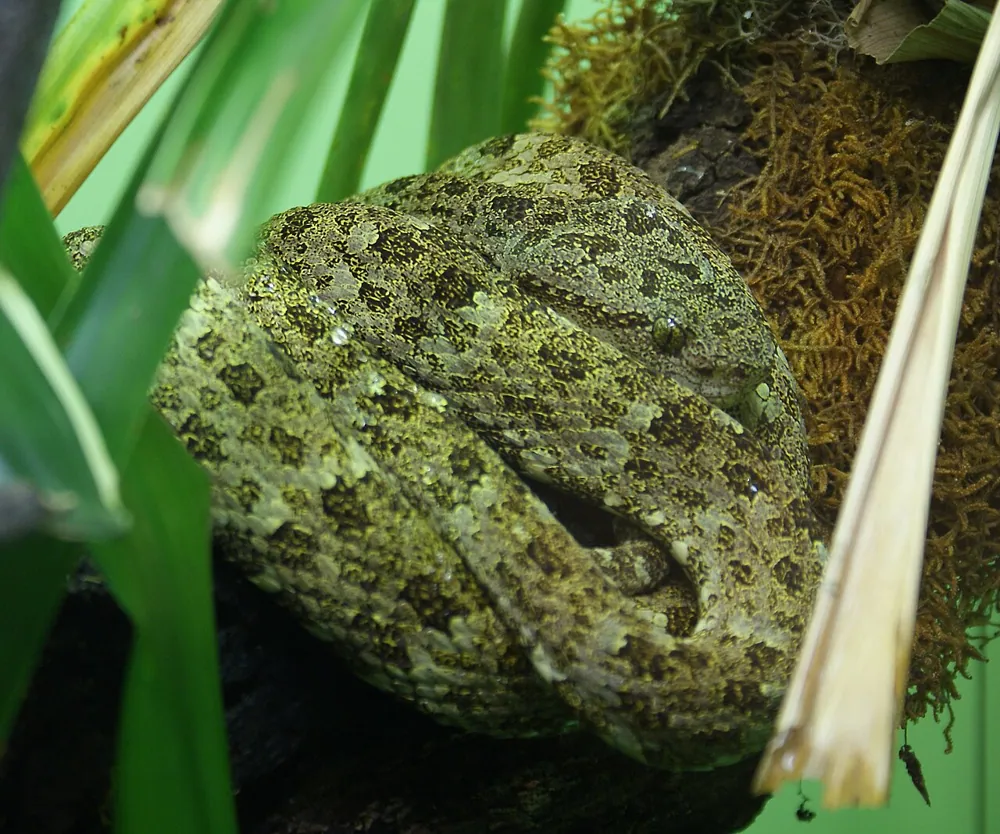
 Indlela yokusibona
- Slender body with a prehensile tail.1
- Very complex colour pattern, ranging from lavender grey to yellow green.1
- A row of bold white spots where the dorsal and ventral scales meet.1
- Mostly single subcaudal scales (the scales under the tail).1
Ivamise ukudidaniswa ne: It is distinguished from other members of the genus Bothrops by its mostly single subcaudal scales and the row of bold white spots where the dorsal and ventral scales meet.1
Amandla obuthi
Ubuthi buphuma ngamazinyo aso obuthi noma ngamazinyo uma siluma.
Ubuthi baso benzani?
Only two bites from this species have been documented. Both caused severe local swelling of the entire bitten limb. In the second case, tissue damage was so severe that the limb had to be amputated, even though antivenin treatment was given.1
Siyingozi kangakanani ebantwini?
Ingozi ebantwini: Kuyingozi kakhuluSingabulala umuntu ongatholi kwelashwa.Only two bites have been documented, so little is known about how dangerous this snake is. Both bites caused severe swelling and tissue damage, and one led to amputation.1
 Izindaba ezinhle: odokotela banomuthi (i-antivenom) noma indlela yokwelapha lokhu.1
 Uma siluma
- Gcina umuntu engashukumi futhi ezolile, gcina isitho esilunyiwe sisezingeni lenhliziyo, khipha izindandatho nezinto eziqinile, bese umusa esibhedlela ngokushesha.
Njalo shayela kuqala inombolo yezimo eziphuthumayo (112, 000, 911). Lokhu kuyiseluleko sosizo lokuqala esijwayelekile, akusona iseluleko sezokwelapha. Izisekelo zosizo lokuqala
 Hlala uphephile
- Ungalokothi uthinte, ubambe noma ugcone isilwane sasendle, ngisho noma sincane, futhi ngisho noma sibukeka silele noma sifile.
- Sinike isikhala. Uma uhlangana naso, hlala uzolile, uhlehle kancane bese usiyeka sihambe ngendlela yaso.
- Uma sikuluma: hlala uzolile, ungashukumi, shayela inombolo yezimo eziphuthumayo (112, 000, 911) noma uye esibhedlela ngokushesha. Khumbula ukuthi besibukeka kanjani, isithombe siyasiza.
Asikuzingeli wena. Sisebenzisa ubuthi baso ukuze sibambe ukudla noma ukuzivikela, futhi singancamela ukucasha. Okwengeziwe mayelana nokuhlala uphephile
Sikhulu kangakanani?
Side kangakanani?
 side njengamakati asekhaya angu-4 kusuka ekhaleni kuya emsileni
 side njengobhanana abangu-10 abalandelanayo
 singahamba amamitha ali-100 ngemizuzwana engu-97 (umuntu oshesha kunabo bonke udinga engu-9,6)
Speckled forest pitviper mkhulu kangakanani uma uqhathanisa NAWE?
Yizibalo nje kusiphequluli sakho. Akukho okulondolozwayo noma okuthunyelwa ndawo.
Sishesha kangakanani?


Amaqiniso
Lapho amaqiniso evela khona
- Bothrops taeniatus (Wikipedia (CC BY-SA 4.0))
- Bothrops taeniatus (iNaturalist): amagama nokuhlelwa ngezigaba.
- Venom Wiki: izinga lengozi, usayizi ojwayelekile nesiqagela sejubane kungokwethu. Bona ukuthi sikubala kanjani: Indlela esilinganisa ngayo ingozi.
Iqiniso ngalinye kuleli khasi linenombolo ekhomba umthombo walo. Uma senze iphutha, uxolo, singabathandi bezilwane, hhayi iphephabhuku lesayensi. Sitshele ku-[email protected] futhi sizolilungisa.
 Ufezela ulambile! I-Venom Wiki iwumsebenzi womuntu oyedwa: imahhala, ayinazo izikhangiso noma izilandeli. Isipho esincane sisiza ukuyigcina ku-inthanethi.Phakela ufezela
Okunye okuvela eqenjini elifanayo: Ama-pit viper
 Terciopelo
 Eyelash viper
 Golden lancehead
 South American bushmaster
 Common lancehead
 Jararaca
.jpg)
Futhi ihlala: INingizimu Melika
 Golden poison frogAmaxoxo anoshevu, amaxoxo e-toad nama-newtKuyabulalaUngathinti
 Brazilian wandering spiderIzicabucabuKungabulala
 Cane toadAmaxoxo anoshevu, amaxoxo e-toad nama-newtKudinga udokotelaUngathinti
 Peruvian giant centipedeIzinkumeKudinga udokotela
 Bullet antIzintuthwaneKubuhlungu nje
 Common vampire batIzilwane ezincelisayo ezinobuthiKubuhlungu nje