
 Abibirem
 Asia
Asia Yuropu
 Amerika Anaafoɔ
 Australia ne Oceania
 Antarctica
 Pacific Po
 Atlantic Po
 India Po
 Arctic Po
 Mediterranean Po
 Po Kɔkɔɔ
 Caribbean Po
 Coral Po
 China Anaafoɔ Po
 Philippine Po
 Andaman Po
 Atifi Po
 Timor ne Arafura Po
 Bengal Ɛpo Ano
 California Ɛpo Ano
Black mamba
 Ka
KaThe black mamba is a long, fast, highly venomous snake that lives in parts of sub-Saharan Africa. It can climb trees as well as move across the ground. It is one of the most feared snakes in Africa because its venom acts quickly.1


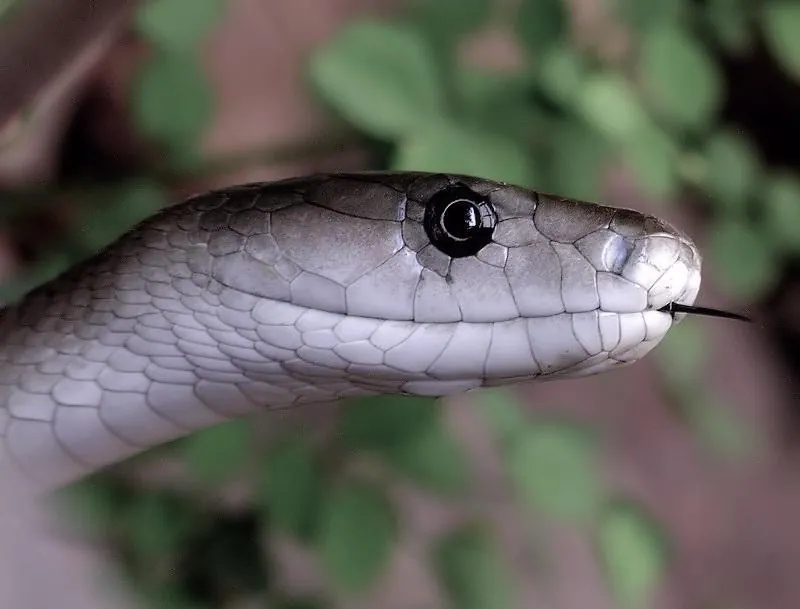
 Sɛdeɛ wobɛhunu no
- Long, slender body with a coffin-shaped head and a slight brow ridge1
- Body colour is usually olive, yellowish-brown, khaki or grey, rarely black1
- Greyish-white underbelly1
- Inside of the mouth is dark bluish-grey to nearly black, shown when threatened1
- Young snakes are paler, typically grey or olive green, and darken with age1
Wɔtaa fa no sɛ: It is often confused with the eastern green mamba, its closest relative. The two were once grouped together as one species before being separated.1
Bɔre ahoɔden
Bɔre fi ne se mu ba bere a ɔka.
Ne bɔre yɛ dɛn?
Its venom is mainly neurotoxic, meaning it attacks the nerves. Symptoms often start within ten minutes of a bite. The venom is frequently fatal unless antivenom is given.1
Ne asiane ma nnipa te sɛn?
Asiane ma nnipa: ƐkumMmoa a asiane wɔ wɔn ho sen biara wɔ wiase no mu baako.It attacks people only when threatened or cornered. A survey in South Africa from 1957 to 1979 recorded 2,553 venomous snakebites, of which 75 were confirmed as black mamba bites. The World Health Organization classes it as a snake of medical importance.1
 Asɛmpa: dɔkotafoɔ wɔ aduro (antivenom) anaa ayaresa ma yei.1
Ɛyɛ dɛn bere a ehu aka no?
When threatened, it opens its inky-black mouth, spreads a narrow neck flap, hisses and may strike several times in quick succession.1
 Sɛ ɛka a
- Antivenom is the treatment for a black mamba bite, so get to a hospital as fast as possible.1
- Ma onipa no ntena dinn na ne bo nnwo, yi kawa ne nneɛma a ɛkyere no den, na kɔ ayaresabea ntɛm: antivenom ne ayaresa no.
Di kan frɛ wo ahohiahia nɔma (112, 000, 911). Yei yɛ mmoa a ɛdi kan ho akwankyerɛ, ɛnyɛ dɔkota afotuo. Mmoa a ɛdi kan ho nsɛm titiriw
 Hwɛ wo ho so
- Mfa wo nsa nka wiram aboa biara, nkyere no na mfa no nni agorɔ, sɛ ɔyɛ ketewa mpo, na sɛ ɛte sɛ ɔrededa anaa wawu mpo a.
- Ma no kwan. Sɛ wohyia baako a, ma wo bo nnwo, san w'akyi brɛoo na ma ɔnkɔ ne kwan.
- Sɛ baako ka wo a: ma wo bo nnwo, tena dinn, frɛ wo ahohiahia nɔma (112, 000, 911) anaa kɔ ayaresabea ntɛm. Kae sɛdeɛ na ɛte, mfonini bɛboa.
Ɛnhwehwɛ wo sɛ ɛbɛpira wo. Ɛde ne bɔre kyere aduane anaa ɛbɔ ne ho ban, na ɛpɛ sɛ ɛhinta sene biribiara. Nsɛm pii fa ahobammɔ ho
Wiase mu baabi bɛn?
Ne kɛseɛ te sɛn?
Ne tenten te sɛn?
Ne mu duru te sɛn?
 ne tenten te sɛ nkraman 4 a wɔde hwene ne dua to ntoatoasoɔ mu
 ne tenten te sɛ kwadu 25 a wɔde to ntoatoasoɔ mu
 ne mu duru bɛyɛ sɛ fie agyinamoa
 ɛbɛtumi atu mita 100 wɔ anibu 22 mu (onipa a ɔwɔ ntɛm sen biara hia 9.6)
Black mamba kɛseɛ te sɛn sɛ wode toto WO ho a?
Akontabuo kɛkɛ wɔ wo browser mu. Wɔnkora hwee, na wɔmfa hwee nkɔ baabiara.
Ne ntɛm te sɛn?

Nsɛm
It is the second-longest venomous snake in the world, after the king cobra. It is the longest venomous snake in Africa.1
It can lift as much as 40% of its body length off the ground, so bites can land on the upper body.1
Honey badgers and mongooses have some resistance to its venom, and they sometimes hunt mambas.1
Its digestive system can fully digest a meal in eight to ten hours.1
Its fangs can be up to 6.5 mm long.1
Its name in some tribal languages means "dassie catcher", because it sometimes hunts the rock hyrax, also called a dassie.1
Atosɛm sɛefoɔ
Atosɛm: The black mamba is black, and it is always aggressive.
Nokorɛ: Its skin is usually grey, olive or brown. The name comes from the dark inside of its mouth. It usually avoids people and attacks only when threatened or cornered.1
Ma bɔre ho animdefoɔ
- Nyansahu din
- Dendroaspis polylepis
- Kuo
- Cobra, mamba ne krait
- Abusua
- Elapidae2
- Nhyehyɛeɛ (Order)
- Squamata
- Asaase akɛseɛ
- Abibirem
- Mmofra nketewa
- It lays eggs. A female lays a clutch of 6 to 17 eggs, and the young are 40 to 60 cm long when they hatch.1
- Mfeɛ a ɔtena ase
- bɛyɛ mfeɛ 111
- Sɛdeɛ ɔte wɔ kwaem
- Least Concern1
- Asiane ma nnipa
- 5 / 5: Ɛkum3
Baabi a nsɛm no fi
- Black mamba (Wikipedia (CC BY-SA 4.0))
- Dendroaspis polylepis (iNaturalist): din ne nkyekyɛmu.
- Venom Wiki: asiane gyinabea, kɛseɛ a ɛtaa yɛ ne ntɛm susuo no yɛ yɛn ankasa deɛ. Hwɛ sɛdeɛ yɛbu no: Sɛdeɛ yɛkyerɛ asiane gyinabea.
Nsɛm biara a ɛwɔ kratafa yi so wɔ nɔma a ɛkyerɛ ne fibea. Sɛ yɛfom biribi a, kafra, yɛyɛ mmoa ho akɔnnɔfoɔ, ɛnyɛ nyansahu nwoma. Ka kyerɛ yɛn wɔ [email protected] na yɛbɛsiesie.
 Ɔkɔm de akekantwerɛ no! Onipa baako na ɔyɛ Venom Wiki: ɛyɛ kwa, dawurubɔ nni so na biribiara nni so a ɛdi w'akyi. Akyɛdeɛ ketewa bi boa ma ɛkɔ so tena internet so.Ma akekantwere no aduane
 Egyptian cobra
 Cape cobra
 Eastern green mamba
 Jameson's mamba
 Western green mamba
 Ashe's spitting cobra
 Deathstalker
 Puff adder
 Boomslang
 Fat-tailed scorpion
 Gaboon viper
 Western honey bee