
 Abibirem
 Asia
Asia Yuropu
 Amerika Anaafoɔ
 Australia ne Oceania
 Antarctica
 Pacific Po
 Atlantic Po
 India Po
 Arctic Po
 Mediterranean Po
 Po Kɔkɔɔ
 Caribbean Po
 Coral Po
 China Anaafoɔ Po
 Philippine Po
 Andaman Po
 Atifi Po
 Timor ne Arafura Po
 Bengal Ɛpo Ano
 California Ɛpo Ano
Chinese cobra
 Ka
KaThe Chinese cobra is a venomous snake from southern China and a few neighbouring countries and islands. It is one of the most common venomous snakes in China, and it has caused many snakebites there.1
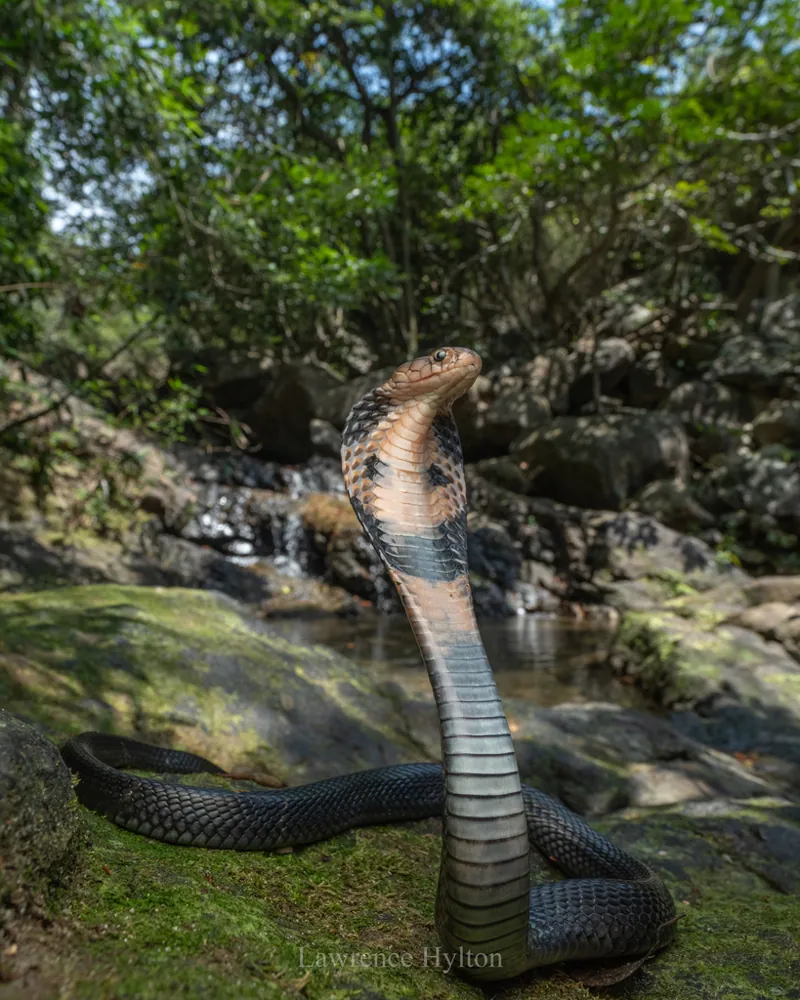
 Sɛdeɛ wobɛhunu no
- The hood marking varies. It can look like spectacles, a mask, a horseshoe or the letter O, and it is often linked to a pale throat area on at least one side.1
- The body is iridescent black, with widely spaced yellow double lines running across it.1
- The underside is pearl or slate-coloured. The upper colour is usually brown, grey or black, sometimes with narrow pale lines, which are especially clear in young snakes.1
- Typical adults are 1.2 to 1.5 metres long.1
Wɔtaa fa no sɛ: It is sometimes confused with the monocled cobra (Naja kaouthia). The Chinese cobra has lower counts of ventral and subcaudal scales, which are the belly and tail scales. Sex should be taken into account when comparing these counts.1
Bɔre ahoɔden
Bɔre fi ne se mu ba bere a ɔka.
Ne bɔre yɛ dɛn?
The Chinese cobra is a highly venomous member of the true cobras. Local symptoms at the bite include darkening of the wound, redness, swelling, pain and numbness, and blisters and necrosis (death of tissue) almost always follow. Necrosis can last for years after the person has otherwise recovered. Whole-body symptoms can include chest discomfort, fever, sore throat, difficulty swallowing, loss of voice, weak limbs, unsteady walking, lockjaw and difficulty breathing.1
Ne asiane ma nnipa te sɛn?
Asiane ma nnipa: Asiane kɛseɛ womƐtumi kum onipa a wɔnhwɛ no yareɛ.It is one of the most common venomous snakes in China and has caused many snakebite incidents there. Deaths occasionally occur, but they are much rarer than they used to be.1
 Asɛmpa: dɔkotafoɔ wɔ aduro (antivenom) anaa ayaresa ma yei.1
Ɛyɛ dɛn bere a ehu aka no?
Adults can be aggressive, and young snakes are more nervous and more likely to be aggressive, but it usually escapes to avoid a confrontation.1
 Sɛ ɛka a
- Ma onipa no ntena dinn na ne bo nnwo, yi kawa ne nneɛma a ɛkyere no den, na kɔ ayaresabea ntɛm: antivenom ne ayaresa no.
- Sɛ ɛtu bɔre gu n'ani mu a, fa nsuo kronkron pii hohoro n'ani ntɛm ara.
Di kan frɛ wo ahohiahia nɔma (112, 000, 911). Yei yɛ mmoa a ɛdi kan ho akwankyerɛ, ɛnyɛ dɔkota afotuo. Mmoa a ɛdi kan ho nsɛm titiriw
 Hwɛ wo ho so
- Mfa wo nsa nka wiram aboa biara, nkyere no na mfa no nni agorɔ, sɛ ɔyɛ ketewa mpo, na sɛ ɛte sɛ ɔrededa anaa wawu mpo a.
- Ma no kwan. Sɛ wohyia baako a, ma wo bo nnwo, san w'akyi brɛoo na ma ɔnkɔ ne kwan.
- Sɛ baako ka wo a: ma wo bo nnwo, tena dinn, frɛ wo ahohiahia nɔma (112, 000, 911) anaa kɔ ayaresabea ntɛm. Kae sɛdeɛ na ɛte, mfonini bɛboa.
Ɛnhwehwɛ wo sɛ ɛbɛpira wo. Ɛde ne bɔre kyere aduane anaa ɛbɔ ne ho ban, na ɛpɛ sɛ ɛhinta sene biribiara. Nsɛm pii fa ahobammɔ ho
Wiase mu baabi bɛn?
Ne kɛseɛ te sɛn?
Ne tenten te sɛn?
 ne tenten te sɛ fie agyinamoa 4 a wɔde hwene ne dua to ntoatoasoɔ mu
 ne tenten te sɛ kwadu 11 a wɔde to ntoatoasoɔ mu
 ɛbɛtumi atu mita 100 wɔ anibu 48 mu (onipa a ɔwɔ ntɛm sen biara hia 9.6)
Chinese cobra kɛseɛ te sɛn sɛ wode toto WO ho a?
Akontabuo kɛkɛ wɔ wo browser mu. Wɔnkora hwee, na wɔmfa hwee nkɔ baabiara.
Ne ntɛm te sɛn?


Nsɛm
Necrosis from a bite can continue for many years after the victim has recovered in general.1
A snake kept at a snake farm gave an average venom yield of about 250.8 mg, of which about 80 mg was dry weight.1
Its fangs are always erect and sit at the front of the upper jaw, as in other elapid snakes.1
Baabi a nsɛm no fi
- Chinese cobra (Wikipedia (CC BY-SA 4.0))
- Naja atra (iNaturalist): din ne nkyekyɛmu.
- Venom Wiki: asiane gyinabea, kɛseɛ a ɛtaa yɛ ne ntɛm susuo no yɛ yɛn ankasa deɛ. Hwɛ sɛdeɛ yɛbu no: Sɛdeɛ yɛkyerɛ asiane gyinabea.
Nsɛm biara a ɛwɔ kratafa yi so wɔ nɔma a ɛkyerɛ ne fibea. Sɛ yɛfom biribi a, kafra, yɛyɛ mmoa ho akɔnnɔfoɔ, ɛnyɛ nyansahu nwoma. Ka kyerɛ yɛn wɔ [email protected] na yɛbɛsiesie.
 Ɔkɔm de akekantwerɛ no! Onipa baako na ɔyɛ Venom Wiki: ɛyɛ kwa, dawurubɔ nni so na biribiara nni so a ɛdi w'akyi. Akyɛdeɛ ketewa bi boa ma ɛkɔ so tena internet so.Ma akekantwere no aduane
 Indian cobra
 King cobra
 Caspian cobra
 Common krait
 Malayan krait
 Many-banded krait
 Deathstalker
 Indian saw-scaled viper
 Puff adder
 Russell ɔnanka
 Asian giant hornet
 Komodo dragon