
 Abibirem
 Asia
Asia Yuropu
 Amerika Anaafoɔ
 Australia ne Oceania
 Antarctica
 Pacific Po
 Atlantic Po
 India Po
 Arctic Po
 Mediterranean Po
 Po Kɔkɔɔ
 Caribbean Po
 Coral Po
 China Anaafoɔ Po
 Philippine Po
 Andaman Po
 Atifi Po
 Timor ne Arafura Po
 Bengal Ɛpo Ano
 California Ɛpo Ano
Common rain spider
 Ka
KaThe common rain spider is a large huntsman spider that lives across southern Africa. It often comes indoors, especially before rain, and it hunts geckos. Its size and striking leg markings make it look frightening, but its bite is not dangerous to people.1

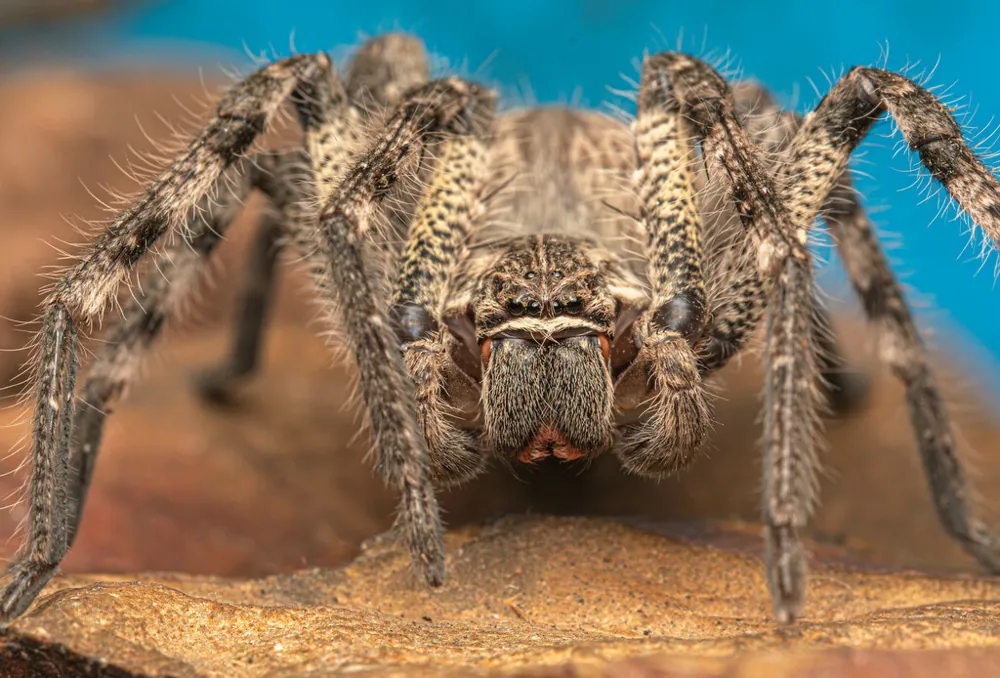
 Sɛdeɛ wobɛhunu no
- A large huntsman spider. Its body can reach about 4 cm and its legs about 11 cm.1
- Both males and females are roughly the same size.1
- When threatened, it lifts into a threat pose that shows yellow and black bands on the underside of its legs.1
- Females build large round silk egg sacs with twigs and leaves woven in.1
Bɔre ahoɔden
Bɔre fi ne se mu ba bere a ɔka.
Ne bɔre yɛ dɛn?
Its bite causes a burning sensation and swelling. The swelling lasts for a few days. Recovery is spontaneous and complete.1
Ne asiane ma nnipa te sɛn?
Asiane ma nnipa: Ɛnyɛ denƐte sɛ wowa wɔ anaa ɛnnu saa. Ɛkame ayɛ sɛ ɛnni asiane ma nnipa.In humans, the bite is no more dangerous than a bee sting. Many gardeners are bitten by protective females guarding their egg sacs.1
Ɛyɛ dɛn bere a ehu aka no?
It lifts into a threat pose that shows yellow and black banding on the underside of its legs, and females guard their egg sacs aggressively.1
 Sɛ ɛka a
- Hohoro baabi a ɛkaa no na fa ice pack hyɛ so ma yaw no. Hwehwɛ dɔkota mmoa sɛ yaw no mu yɛ den, ɛtrɛtrɛw anaa onipa no ho ntɔ no a.
Di kan frɛ wo ahohiahia nɔma (112, 000, 911). Yei yɛ mmoa a ɛdi kan ho akwankyerɛ, ɛnyɛ dɔkota afotuo. Mmoa a ɛdi kan ho nsɛm titiriw
 Hwɛ wo ho so
- Mfa wo nsa nka wiram aboa biara, nkyere no na mfa no nni agorɔ, sɛ ɔyɛ ketewa mpo, na sɛ ɛte sɛ ɔrededa anaa wawu mpo a.
- Ma no kwan. Sɛ wohyia baako a, ma wo bo nnwo, san w'akyi brɛoo na ma ɔnkɔ ne kwan.
- Sɛ baako ka wo a: ma wo bo nnwo, tena dinn, frɛ wo ahohiahia nɔma (112, 000, 911) anaa kɔ ayaresabea ntɛm. Kae sɛdeɛ na ɛte, mfonini bɛboa.
Ɛnhwehwɛ wo sɛ ɛbɛpira wo. Ɛde ne bɔre kyere aduane anaa ɛbɔ ne ho ban, na ɛpɛ sɛ ɛhinta sene biribiara. Nsɛm pii fa ahobammɔ ho
Wiase mu baabi bɛn?
Ne kɛseɛ te sɛn?
Ne tenten te sɛn?
 ne tenten bɛyɛ sɛ paper clip
 ɛbɛtumi atu mita 100 wɔ anibu 210 mu (onipa a ɔwɔ ntɛm sen biara hia 9.6)
Common rain spider kɛseɛ te sɛn sɛ wode toto WO ho a?
Akontabuo kɛkɛ wɔ wo browser mu. Wɔnkora hwee, na wɔmfa hwee nkɔ baabiara.
Ne ntɛm te sɛn?


Nsɛm
Atosɛm sɛefoɔ
Atosɛm: A guinea pig died within 7 minutes after a rain spider bit it in a 1959 experiment, so the spider's venom must be deadly.
Nokorɛ: Further research on anaesthetised guinea pigs showed the original animal died of shock, not from the venom. In humans, the bite is no more dangerous than a bee sting.1
Ma bɔre ho animdefoɔ
- Nyansahu din
- Palystes superciliosus
- Kuo
- Ananse
- Abusua
- Sparassidae2
- Nhyehyɛeɛ (Order)
- Araneae
- Asaase akɛseɛ
- Abibirem
- Mmofra nketewa
- Females lay eggs in a large silk egg sac, about three sacs over their two-year lives. The spiderlings hatch inside the sac and chew their way out about three weeks later.1
- Mfeɛ a ɔtena ase
- bɛyɛ mfeɛ 21
- Asiane ma nnipa
- 1 / 5: Ɛnyɛ den3
Baabi a nsɛm no fi
- Palystes superciliosus (Wikipedia (CC BY-SA 4.0))
- Palystes superciliosus (iNaturalist): din ne nkyekyɛmu.
- Venom Wiki: asiane gyinabea, kɛseɛ a ɛtaa yɛ ne ntɛm susuo no yɛ yɛn ankasa deɛ. Hwɛ sɛdeɛ yɛbu no: Sɛdeɛ yɛkyerɛ asiane gyinabea.
Nsɛm biara a ɛwɔ kratafa yi so wɔ nɔma a ɛkyerɛ ne fibea. Sɛ yɛfom biribi a, kafra, yɛyɛ mmoa ho akɔnnɔfoɔ, ɛnyɛ nyansahu nwoma. Ka kyerɛ yɛn wɔ [email protected] na yɛbɛsiesie.
 Ɔkɔm de akekantwerɛ no! Onipa baako na ɔyɛ Venom Wiki: ɛyɛ kwa, dawurubɔ nni so na biribiara nni so a ɛdi w'akyi. Akyɛdeɛ ketewa bi boa ma ɛkɔ so tena internet so.Ma akekantwere no aduane
 Mediterranean black widow
 Six-eyed sand spider
 Brown widow
 Noble false widow
 Darwin's bark spider
 Wasp spider
 Black mamba
 Deathstalker
 Egyptian cobra
 Puff adder
 Boomslang
 Fat-tailed scorpion