
 Abibirem
 Asia
Asia Yuropu
 Amerika Anaafoɔ
 Australia ne Oceania
 Antarctica
 Pacific Po
 Atlantic Po
 India Po
 Arctic Po
 Mediterranean Po
 Po Kɔkɔɔ
 Caribbean Po
 Coral Po
 China Anaafoɔ Po
 Philippine Po
 Andaman Po
 Atifi Po
 Timor ne Arafura Po
 Bengal Ɛpo Ano
 California Ɛpo Ano
Darevsky's viper
 Ka
KaDarevsky's viper is a small venomous snake that lives high in the mountains of northwestern Armenia, northeastern Turkey and southern Georgia. Its bite is painful and causes swelling, but it does not appear to be life-threatening to adults. It is a rare animal, classed as critically endangered.1



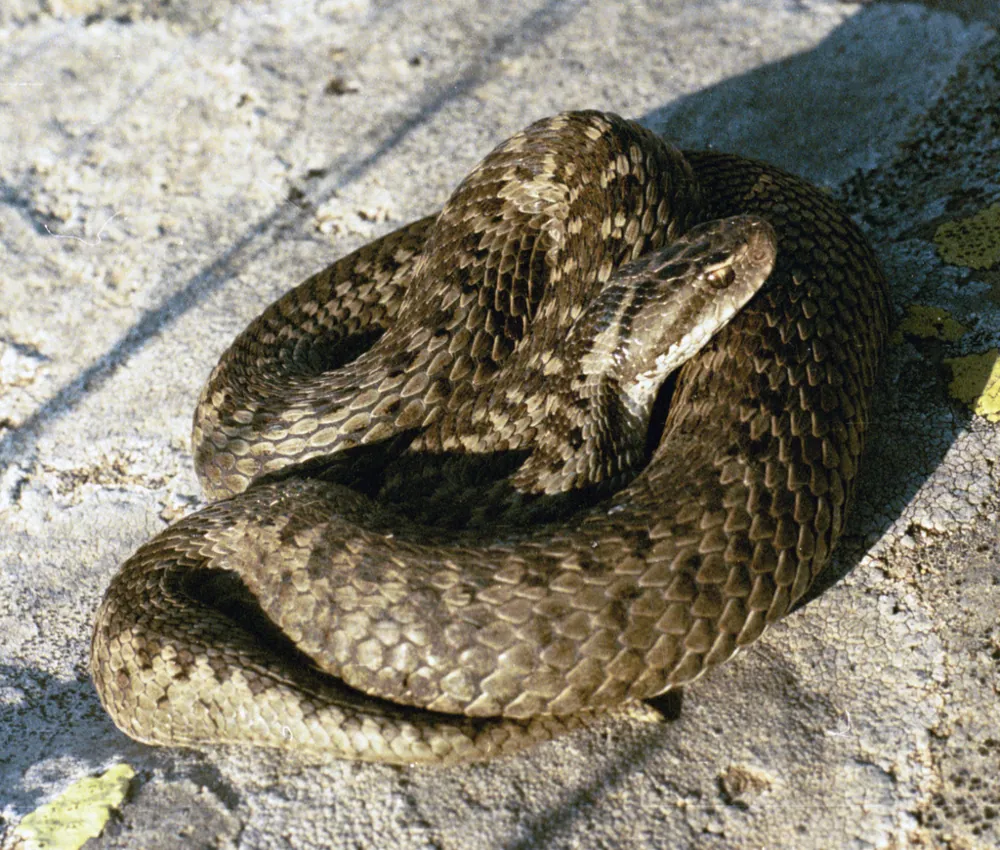
 Sɛdeɛ wobɛhunu no
- Light brown to grey background colour with a dark brown to black zigzag pattern along the back, often broken into pieces.1
- A single row of small dark blotches on each side of the body.1
- Belly with many grey or black dots. Females have a greyer belly, while males' bellies are almost black.1
- Chin shields and lip scales are white, with a few dark fang-shaped marks on the lip scales.1
- Adult males are brighter, with a yellow tint and a dark, often black, pattern. Females are browner, with a fainter pattern. Females reach up to 42.1 cm in total length.1
Wɔtaa fa no sɛ: It is often compared with Vipera eriwanensis. That species has a pinkish tint on its lip scales, while Darevsky's viper has white lip scales with dark fang-shaped marks.1
Bɔre ahoɔden
Bɔre fi ne se mu ba bere a ɔka.
Ne bɔre yɛ dɛn?
Its venom is potent, and it is a relatively small venomous snake. A bite causes pain and local swelling around the wound. The bite does not appear to be life-threatening to adult humans.1
Ne asiane ma nnipa te sɛn?
Asiane ma nnipa: Ɛyɛ yawƐtumi yɛ yaw paa, nanso ɛkame ayɛ sɛ ɛnyɛ asiane kɛseɛ da.The bite is painful and causes local swelling, but it appears not to be life-threatening to adult humans.1
 Sɛ ɛka a
- Ma onipa no ntena dinn na ne bo nnwo, ma nsa anaa nan a ɛkaa no no nna pɛpɛɛpɛ ne ne koma (ɛnkɔ soro, ɛnsiane fam), yi kawa ne nneɛma a ɛkyere no den, na kɔ ayaresabea ntɛm.
Di kan frɛ wo ahohiahia nɔma (112, 000, 911). Yei yɛ mmoa a ɛdi kan ho akwankyerɛ, ɛnyɛ dɔkota afotuo. Mmoa a ɛdi kan ho nsɛm titiriw
 Hwɛ wo ho so
- Mfa wo nsa nka wiram aboa biara, nkyere no na mfa no nni agorɔ, sɛ ɔyɛ ketewa mpo, na sɛ ɛte sɛ ɔrededa anaa wawu mpo a.
- Ma no kwan. Sɛ wohyia baako a, ma wo bo nnwo, san w'akyi brɛoo na ma ɔnkɔ ne kwan.
- Sɛ baako ka wo a: ma wo bo nnwo, tena dinn, frɛ wo ahohiahia nɔma (112, 000, 911) anaa kɔ ayaresabea ntɛm. Kae sɛdeɛ na ɛte, mfonini bɛboa.
Ɛnhwehwɛ wo sɛ ɛbɛpira wo. Ɛde ne bɔre kyere aduane anaa ɛbɔ ne ho ban, na ɛpɛ sɛ ɛhinta sene biribiara. Nsɛm pii fa ahobammɔ ho
Wiase mu baabi bɛn?
Ne kɛseɛ te sɛn?
Ne tenten te sɛn?
Ne mu duru te sɛn?
 ne tenten te sɛ kwadu 2,5 a wɔde to ntoatoasoɔ mu
 ne tenten te sɛ agodeɛ blɔk 13 a wɔde to ntoatoasoɔ mu
 ne mu yɛ hare araa sɛ worente nka wɔ wo nsa so
 ɛbɛtumi atu mita 100 wɔ anibu 120 mu (onipa a ɔwɔ ntɛm sen biara hia 9.6)
Darevsky's viper kɛseɛ te sɛn sɛ wode toto WO ho a?
Akontabuo kɛkɛ wɔ wo browser mu. Wɔnkora hwee, na wɔmfa hwee nkɔ baabiara.
Ne ntɛm te sɛn?


Nsɛm
Its digestion is very fast. In captive tests at 4 to 7 °C, a meal of fuzzy rat was digested in only 3 days.1
Remains of this snake have been found in the droppings of a beech marten, although little is known about its natural enemies.1
Newborns feed on the yolk left inside them for their first two weeks, and they grow without eating before their first shed.1
It is active during the day and moves into rocky deposits to keep its body at about 26 to 28 °C.1
Ma bɔre ho animdefoɔ
- Nyansahu din
- Vipera darevskii
- Kuo
- Viper ne adder
- Abusua
- Viperidae2
- Nhyehyɛeɛ (Order)
- Squamata
- Asaase akɛseɛ
- Asia
- Mmofra nketewa
- It is ovoviviparous, meaning the eggs hatch inside the mother and she gives birth to live young. She has 4 to 8 babies between September and early October.1
- Sɛdeɛ ɔte wɔ kwaem
- Critically endangered (IUCN Red List)1
- Asiane ma nnipa
- 2 / 5: Ɛyɛ yaw3
Baabi a nsɛm no fi
- Vipera darevskii (Wikipedia (CC BY-SA 4.0))
- Vipera darevskii (iNaturalist): din ne nkyekyɛmu.
- Venom Wiki: asiane gyinabea, kɛseɛ a ɛtaa yɛ ne ntɛm susuo no yɛ yɛn ankasa deɛ. Hwɛ sɛdeɛ yɛbu no: Sɛdeɛ yɛkyerɛ asiane gyinabea.
Nsɛm biara a ɛwɔ kratafa yi so wɔ nɔma a ɛkyerɛ ne fibea. Sɛ yɛfom biribi a, kafra, yɛyɛ mmoa ho akɔnnɔfoɔ, ɛnyɛ nyansahu nwoma. Ka kyerɛ yɛn wɔ [email protected] na yɛbɛsiesie.
 Ɔkɔm de akekantwerɛ no! Onipa baako na ɔyɛ Venom Wiki: ɛyɛ kwa, dawurubɔ nni so na biribiara nni so a ɛdi w'akyi. Akyɛdeɛ ketewa bi boa ma ɛkɔ so tena internet so.Ma akekantwere no aduane
 Indian saw-scaled viper
 Puff adder
 Russell ɔnanka
 Common European adder
 Eastern Russell's viper
 Northeast African carpet viper
 Deathstalker
 Indian cobra
 King cobra
 Asian giant hornet
 Komodo dragon
 Spanish fly